Composting – Take One Step Forward

I thought it would be good to use composting as a way to introduce something my spouse and I call, One Step Forward. The One Step Forward framework provides some background information about a given topic, a few how-to’s, and resources you can use to learn more about the topic or pursue your own actions.

The following question was posed to a Food Coop employee, “What is one thing everyone can do to live more sustainably?” An honest answer came back. “One thing our family struggles with–because we don’t have the systems in place–is composting. It’s not hard, and it’s something we all could do. And, it could be an easy way to get your kids involved, especially because a lot of kids are learning it at school.” As a consequence of this question and answer, I thought it would be good to use composting as a way to introduce something my spouse and I call, One Step Forward. The One Step Forward framework provides some background information about a given topic, a few how-to’s, and resources you can use to learn more about the topic or pursue your own actions.

Rather than start with the composting process, let’s take a quick look at the origins of materials that go into composts. In your home the places of origin typically include the kitchen, indoor plantings, and the yard (or other green space). Here we are generally talking food wastes and yard/plant trimmings. If you take a look at the latest information on the municipal solid waste stream in the United States, you quickly see nearly 30% of the weight consists of these two categories. Much of this material finds its way into gigantic holes in the ground and is buried. Unfortunately, much of the material in a landfill does not decompose very quickly. Researchers have pulled out 70+ year old newspapers and years old banana peels. The specific landfill conditions greatly impact the decomposition rate of its contents. If you want to learn more about the contents of landfills or about garbage, look at the late William Rathje’s Tucson Garbage Project, read the book Garbology (nerd alert: Ann Marie and I love this book), or find a copy of the National Geographic ChannelMegastructures episode titled, Garbage Mountain. Composting and recycling can reduce and potentially eliminate this contribution to the waste stream.
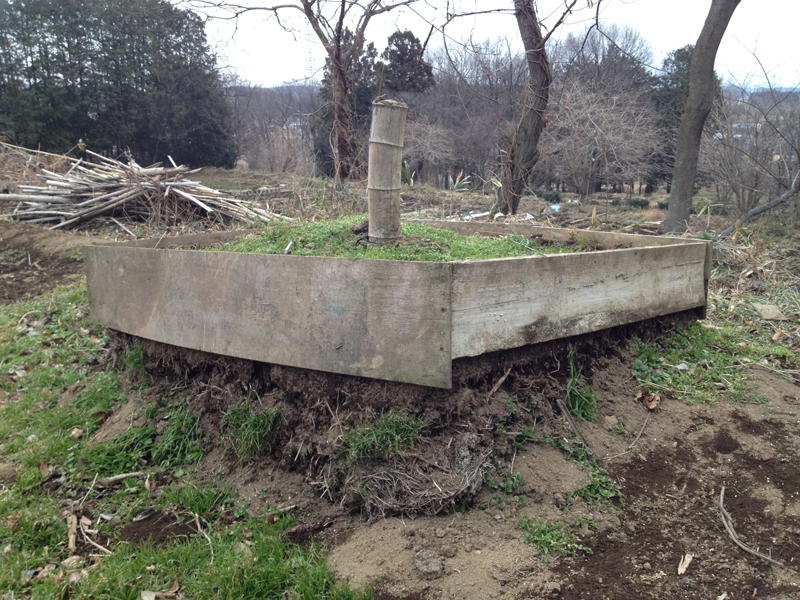
Wood frame used to collect compostables adjacent to garden.

Composting takes advantage of the natural processes used to break down organic matter, materials composed primarily of carbon, hydrogen, oxygen, nitrogen and a few other elements. Good compost strikes a balance among the properties of the input materials. A roughly 2:1 mixture of browns (carbon rich materials) and greens (nitrogen rich materials) yields a pile that will feed the naturally occurring microorganisms and generate the final product in a reasonable time. So what are some examples of browns and greens? Think dry materials for browns, such as dried leaves, sawdust, shredded newspaper, or even the fabric from the Three Tines studio. Food scraps, coffee grounds, fresh grass clippings, and newly pulled weeds all fall into the greens category. Avoid placing high fat materials or meats into the compost bucket. You need much higher temperatures to break down these kinds of materials most effectively. Once you have your brown and green mixture add water – just the right amount of moisture. I like to describe this as the amount of water needed to form the mixture into a ball that holds its shape and doesn’t drip. Now, you will be feeding organisms that need oxygen to survive. As a consequence, you simply mix the pile at some regular interval, perhaps daily or every other day, to get air to all corners.
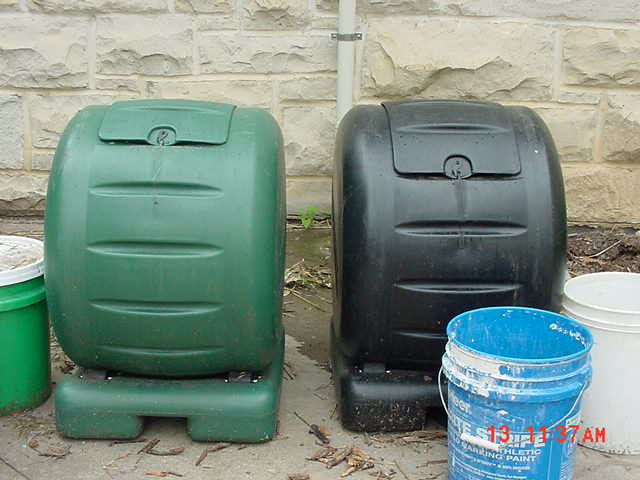
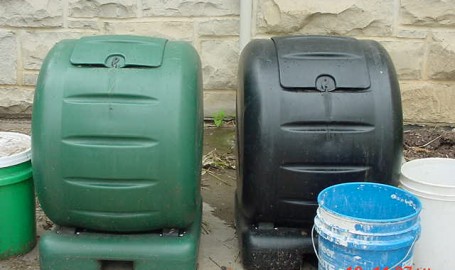
Envirocycle rolling compact composter

In the kitchen collect your food scraps in a simple bucket with a lid and keep it under the sink. Periodically empty the bucket into the location of your compost bin or bins. I have seen homes with limited space use a prefabricated bin that tumbles the contents, such as the envirocycle, or employ a compact system in a yard using the green cone when small amounts of waste are generated. A larger compost bin or set of bins can be constructed of reused lumber, such as old pallets, or purchased as an assembly. Whatever your situation composting provides an experimental learning adventure, removes wastes from landfills, and generates a rich material to use as fertilizer in your gardens or in your potted plants. For additional information, check out the Rodale Book of Composting, your local extension service, or the quick start guide for home composting.

Enjoy these new adventures by taking One Step Forward and let me know how it goes!

Post originally appeared at ThreeTines.com/Blog
Building Community in the Kitchen

On a hilltop tucked into the northern section of the Kanto Plain in Tochigi Prefecture, Japan is the Asian Rural Institute (ARI), a rural leadership training center and working organic farm. ARI grows and prepares over 90% of what they eat, including fresh fruit, vegetables, rice, wheat and soybeans.

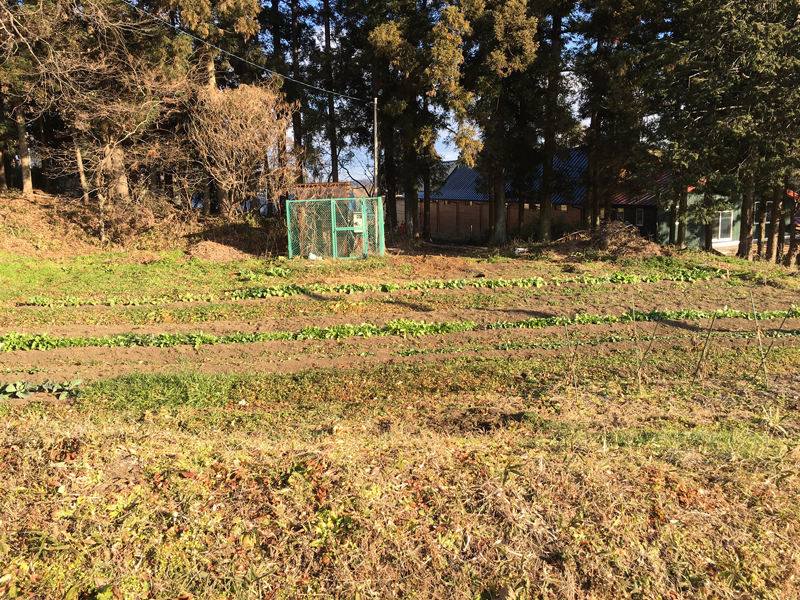
Garden plot with fresh greens — in winter!

On a hilltop tucked into the northern section of the Kanto Plain in Tochigi Prefecture, Japan is the Asian Rural Institute (ARI), a rural leadership training center and working organic farm. ARI grows and prepares over 90% of what they eat, including fresh fruit, vegetables, rice, wheat and soybeans. In addition they raise pigs, chickens, fish and goats while only occupying 9 hectares (22 acres) of land. They do this all while training rural leaders from around the world to promote peace AND deal with the ever present legacy of the March 11, 2011 earthquake, tsunami, and contamination associated with the Daiichi nuclear power plant meltdown.

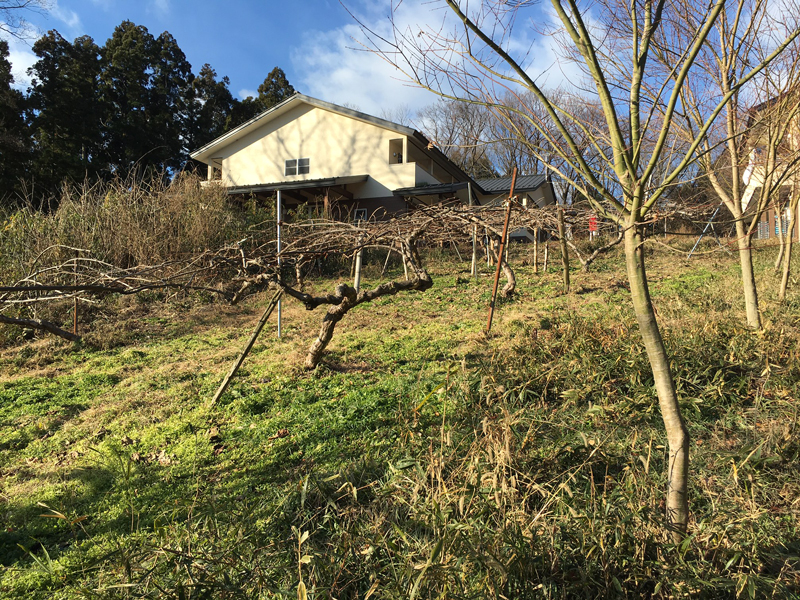
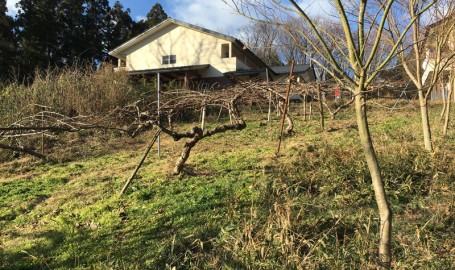
Hillside kiwi fruit orchard during winter

It is all this that brought me from Minnesota to Japan to lead a one-month environmental research course at ARI. While the students worked on their research projects they were also required to participate in what ARI calls “Food Life” responsibilities. Each day the crop and vegetables team (comprised of college students, ARI staff and volunteers) harvested and delivered produce to the kitchen while the animal team provided fresh, cleaned eggs – sometimes in light snow! Remember that ARI only brings in 10% of its food; the rest comes from their organic farm. Staples such as ground wheat, rice, and pressed oils are accessed in large storage containers, and a few cold cellars keep recently dug root vegetables and greens crisp. How does this suite of material get transformed into food on our plates? The short answer – it takes a community – a cooking community.

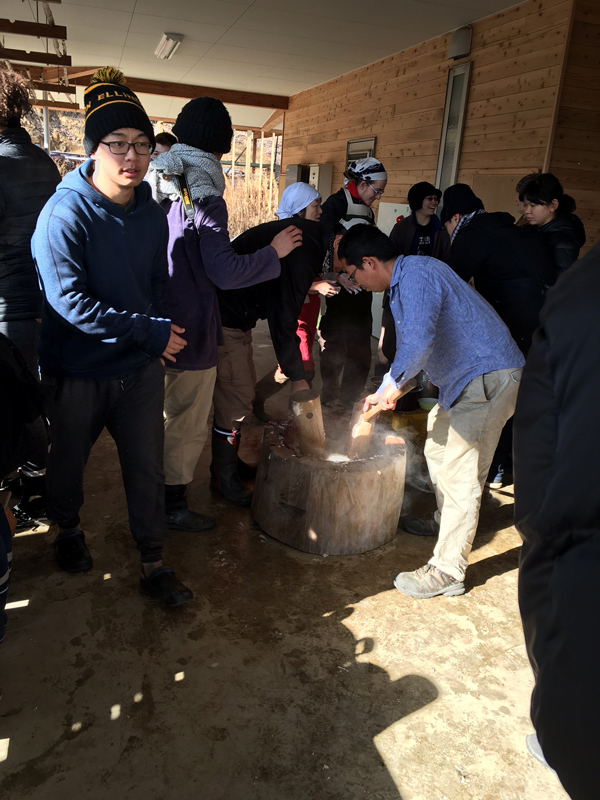
Taking turns pounding cooked rice to make mochi (rice dumplings)

Every day different members of the ARI community – volunteers, staff, and participants – take responsibility for preparing meals. A few of my students, who were a bit unfamiliar with the kitchen, got quite wide-eyed when they were expected to cook – not only cook, but invited to create dishes reminiscent of home. How does one blend cuisine from Japan, Philippines, India, Germany, Thailand, Norway, Cameroon, South Africa, and the United States? Well, it gets… interesting. Every meal becomes an adventure and a creative expression. The kitchen becomes a place of meaningful conversation where people share their life’s stories and how food deeply connects them to memories and to other people. While cutting vegetables for a Philippine inspired noodle stir-fry we discovered how Gil became interested in animal husbandry and studied veterinary medicine before coming to ARI. After volunteering to make six different sheet cakes for an upcoming wedding, we learned about Nagaland, a mountainous state in Northeast India, home to the groom and his cousin, the latter an ARI staff member. There is nothing like learning to bake cakes with freshly ground wheat flour. Being a chemist has some advantages, especially in the kitchen! The German volunteers periodically experimented with ingredients – trying to replicate dishes inspired from home with ingredients found in the ARI kitchen. Even though the seasons put certain limits on the ingredients and rice found its way into every meal, the imaginative efforts of the human mind gave us numerous variations to enjoy.

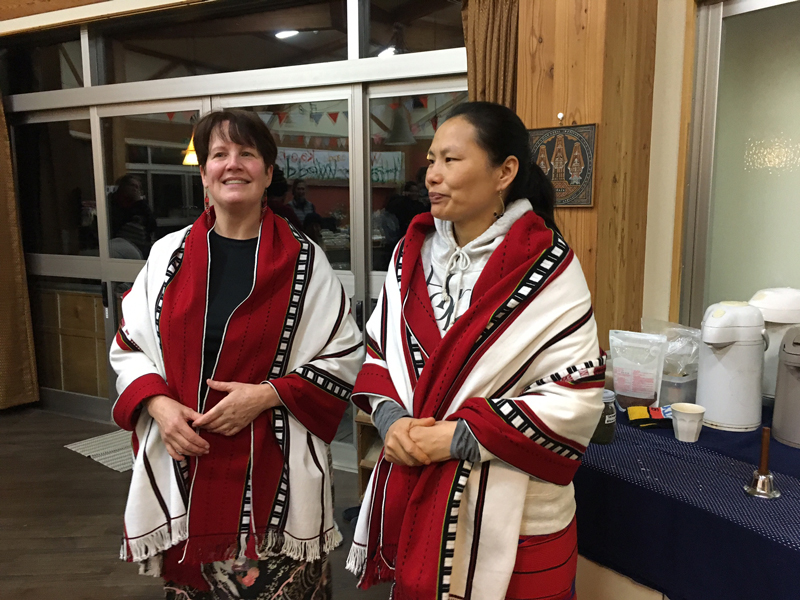
Cathy & Achivo convey thank you for wedding cake baking with Nagaland dress and food

In each and every case, the food simultaneously served as an offering and an invitation. Expressions of individual or small group collaboration offered sustenance, thanksgiving for the food resources, and respect for the time and energy it took to plant, nurture, harvest, prepare and cook. After the food was delivered to the tables all were invited to partake in the cross-cultural adventure laid before them. We listened to stories and told stories – about ourselves, our hopes and dreams, and our aspirations for the world. Sitting around the table sharing food three times a day provided the stage for building a community at ARI and in extending that community outward into the world that we may live together.


Enjoy the opportunities to live together around your table or that of another! Peace.

This post originally appeared on threetines.com