Timeline to Displacement
To help us to understand why the Lutheran World Federation Service to Refugees served so many Baltic Lutheran DPs, this chronology page documents converging forces that led tens of thousands of Latvians, Lithuanians and Estonians to flee their homes and become displaced in Germany by the mid-1940s. The story does not begin with the onset of World War II, but with a revolution in the Russian Empire, which had colonized the Baltics in the 18th century.
1917-1919
From Russian Revolution to Baltic Independence
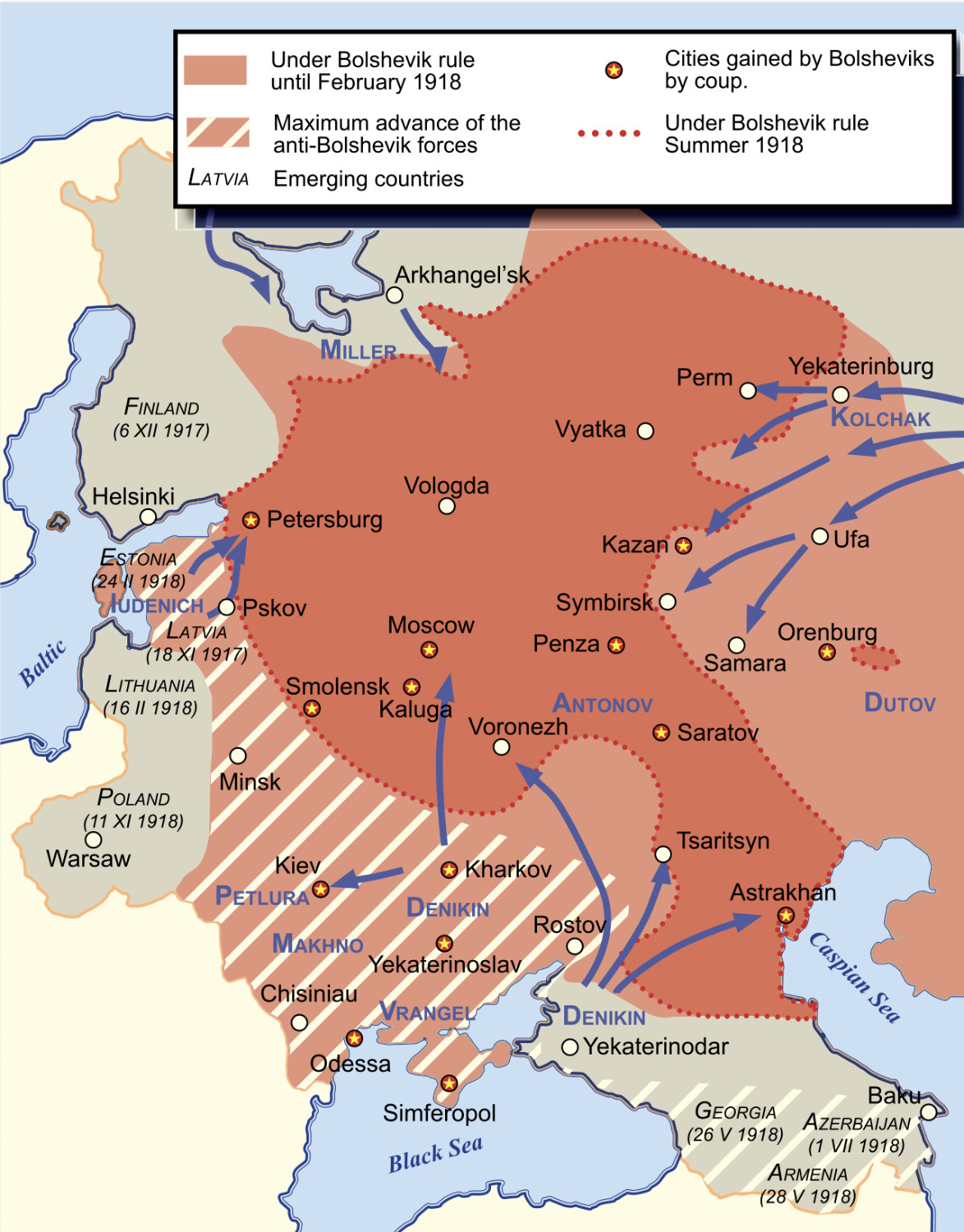
In the Revolution of 1917-1919, the Bolsheviks, a radical Marxist faction led by Vladimir Lenin, drove an uprising against Russia's czarist state. Compounded by the instability brought by World War I, the Russian revolt led to in the abdication of Czar Nicholas II in 1917 and ultimately the establishment of the Soviet Union (USSR) in 1922.1 In the power vacuum that opened as the Bolshevik leadership sought to consolidate power, the Baltic states of Latvia, Lithuania and Estonia each declared and fought for their independence from Russia between 1918-1920.2 This political transformation carried implications for the status of churches in the region, as well. 3
1919-1939
Baltic Independence and the Churches
With their newfound independence, the Baltic states could determine the religious structures in their respective states.
Lutheranism was the dominant Christian denomination in Latvia and Estonia. “In Estonia some 800,000 Lutherans constituted over three quarters of the population, while some 1,094,000 Lutherans made up 56.6 per cent of Latvia’s population… there were tens of thousands more in Lithuania.”4 Lithuania was majority Catholic where Lutherans were a recognized minority church. 5
The Baltic governments allowed the Lutheran churches in their jurisdictions to grow. They built churches and fostered community among each other. Meanwhile, the Christian churches within the USSR faced great persecution by the Bolsheviks. Within the Soviet ideology of class conflict, religion was deemed bourgeois. Like all other traditional social structures, which the Soviets claimed hindered the advancement of the proletariat, the churches must be dismantled. However, it is important to note that the Russian Orthodox Church was the most persecuted within the USSR, while the Lutheran Churches were granted certain privileges, presumably in order to create a rift between the denominations.6
NSDAP ascends in Germany
Germany in the aftermath of World War I saw immense social, political and economic instability, as the stark terms of the Versailles Treaty made recovery all the more difficult. Diverse political parties, including German communist factions, continued to vie for power in the weak Weimar Republic. Among them, the National Socialist German Workers' Party (NSDAP), founded in 1922 and led by Adolf Hitler, had as its platform pillars anti-communism, anti-Semitism, and ethnic nationalism, and the nationalization of industry and other state interests.
Though its early attempts to seize power by putsch were unsuccessful, voter support for the NSDAP in state and national elections increased steadily until 1933 when Adolf Hitler was elected Chancellor. Political opponents were dealt with violenty, and when President Paul von Hindenberg died in 1934, Hitler eliminated the role and declared himself "Führer," ruling often by emergency decree.
The Lutheran and Catholic Churches of Germany did not stand in open opposition to the rise of National Socialism or its cooption of the churches in state ideology. Theological movements such as the "Bekennende Kirche" (confessing church), associated with Lutheran pastors Martin Niemöller, Dietrich Bonhoeffer and Karl Barth rejected the nationalist Christianity being shaped by Nazism.
Lutheran World Convention established
While the aftermath of World War I saw the rise of authoritarism and new nationalisms, the massive devastation of the war also provoked new cooperations among the Christian churches. The roots of the World Council of Churches can be found in this period, though its official founding did not come until 1937.
Lutheran churches likewise formed coalitions to facilitate more efficient aid dispersal to the congregations that needed it. The Lutheran World Convention (LWC) was established in 1923 with the intention that its member churches might “...edify one another and...strengthen one another in our common faith.”7 Their first conference, held in Eisenach, Germany, was attended by 147 delegates representing 22 countries across four continents.8 Two more meetings followed, at which “Christians were learning the fine art of helping each other to bear heavy burdens."9 Preparations for a LWC meeting in Philadelphia in 1940 were halted, however, by the outbreak of World War II.10
Soviet Anti-Religious Propaganda
Propaganda is a mass communication tool used by large institutions such governments to persuade their audiences to adopt a belief. Soviet ideology's insistence that religion slowed progress and was thus of no use to the new proletariat future was depicted in state propaganda like these posters from the 1920s. They are emblematic of the religious oppression enacted within the USSR.
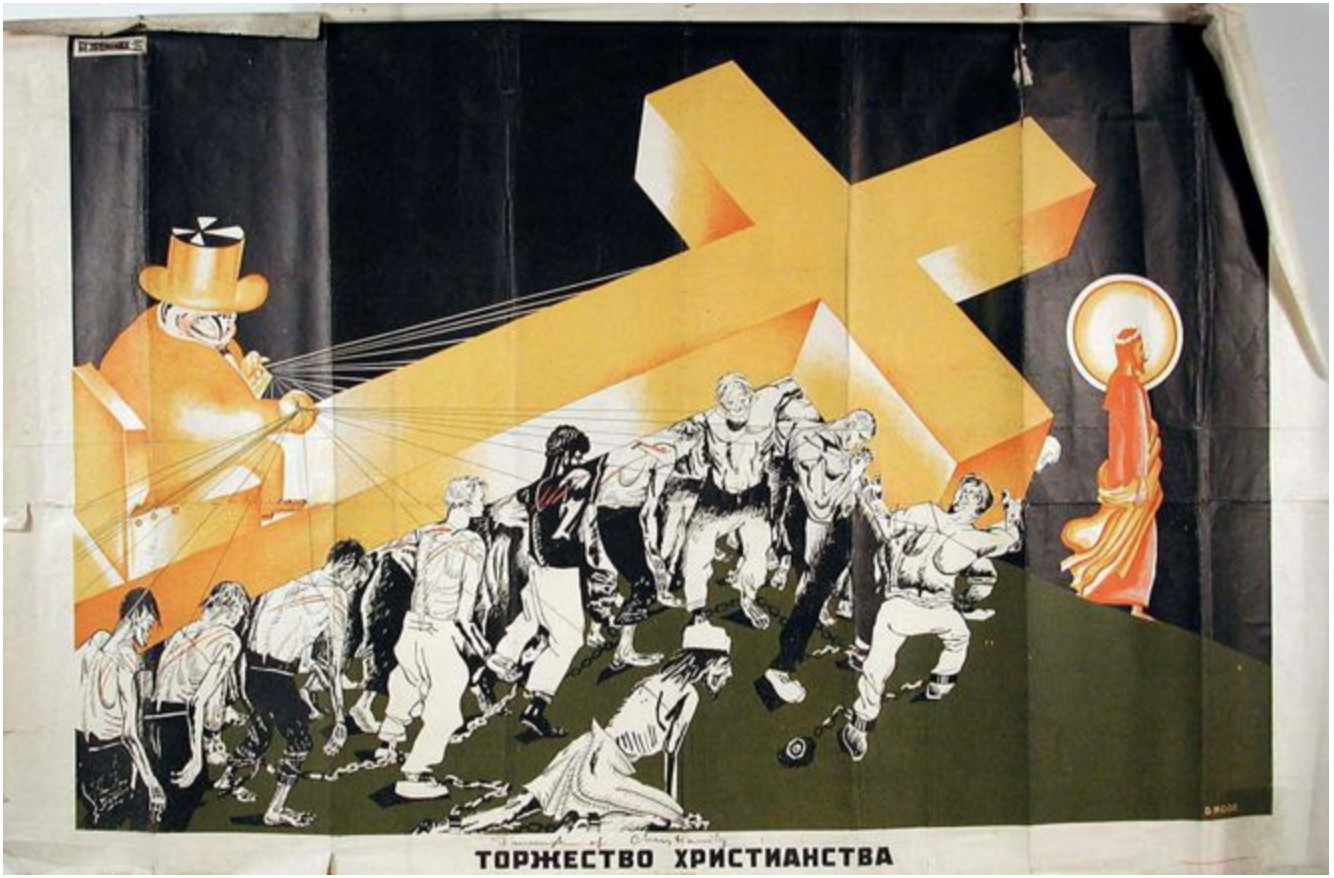
Translation (Russian): торжество христианства - "The triumph of Christianity"
Translation by Arevik Armenakyan (St. Olaf, Class of '28)
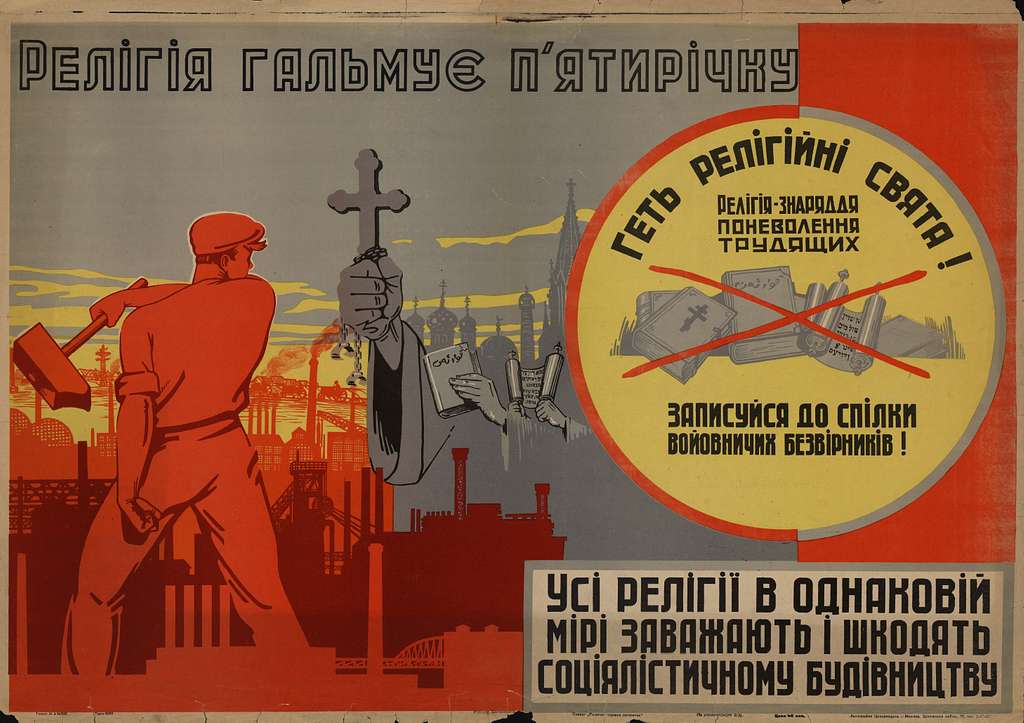
Translation (Ukrainian): ...
1939
Molotov-Ribbentrop Pact
Invasion of Poland
Baltic Mutual Assistance Treaties
Through intimidation tactics, the Soviet Union convinced all three Baltic States to sign Pacts of Defense and Mutual Assistance Treaties (MATs). The MATs enabled Soviet military forces to occupy Estonia, Latvia, and Lithuania without resistance.
Estonia signed the Soviet's Mutual Assistance Treaty (MAT) on September 28 after the USSR flew military planes over the Estonian capital, Tallinn, as an act of intimidation.15 16,000 Estonian troops faced 25,000 Soviet troops. Latvia soon followed and signed a MAT with the USSR on October 5. 20,000 Latvian troops faced 30,000 Soviet troops. Finally, Lithuania signed a MAT with the USSR on October 10. There were 20,000 Soviet troops present.16
"Volksdeutsche" Resettlements
Volksdeutsche or "ethnic Germans" was a term to describe those with German heritage who resided outside of Germany, such as in Poland, the Baltics, and further Eastern European countries including Romania and Ukraine. Historian Doris L. Bergen contends that notion of Volksdeutsche was created with the purpose of expanding National Socialism rule into Eastern Europe via "Umsiedlung" or Resettlement.17 The Nazi government initiated a massive resettlement campaign of ethnic Germans from the Baltics into other parts of Eastern Europe between October 1939 to May 1940. 14,000 "Volkdeutsche" left Estonia, and 51,000 left Latvia in 1939. In 1940, 7,000 Volksdeutsche left Estonia and 10,500 left Latvia.18
These resettlements stoked a rise of anti-Semitism and pro-Nazi sentiment among those ethnic Germans, as well as expanded the ranks of Germany's SS military units. Ethnic Germans were made beneficiaries of land taken from Jewish people who were deported or murdered. Yet the definition of "Volksdeutsch" remained loose and often relied on a display of Nazi allegiance. Whether through intermarriage, language, or insufficient show of Nazi support, not all ethnic Germans followed this particular definition of “Germanness,” making them vulnerable to deportation themselves or having their children taken and sent to a “more German” family.19
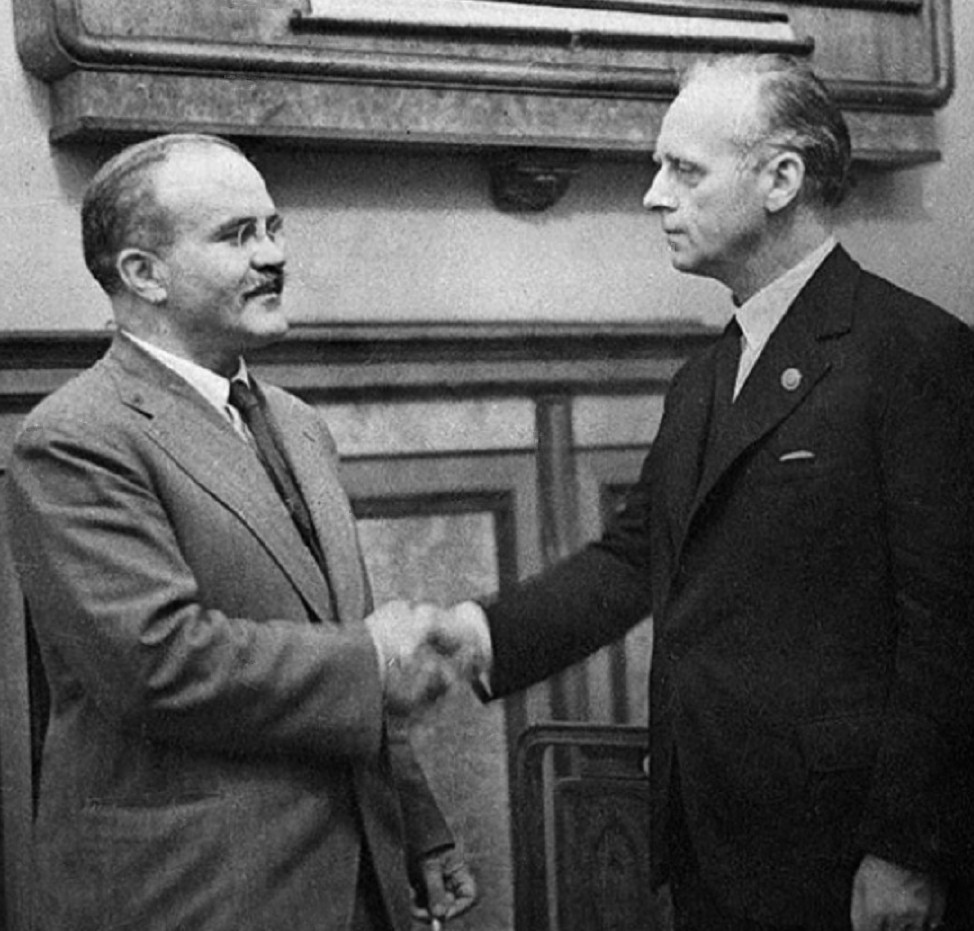
Vyacheslav Molotov, Foreign Minister of the Soviet Union (left), shaking hands with Joachim von Ribbentrop, the Foreign Minister of Germany (right).
Mapping the Molotov-Ribbentrop Pact
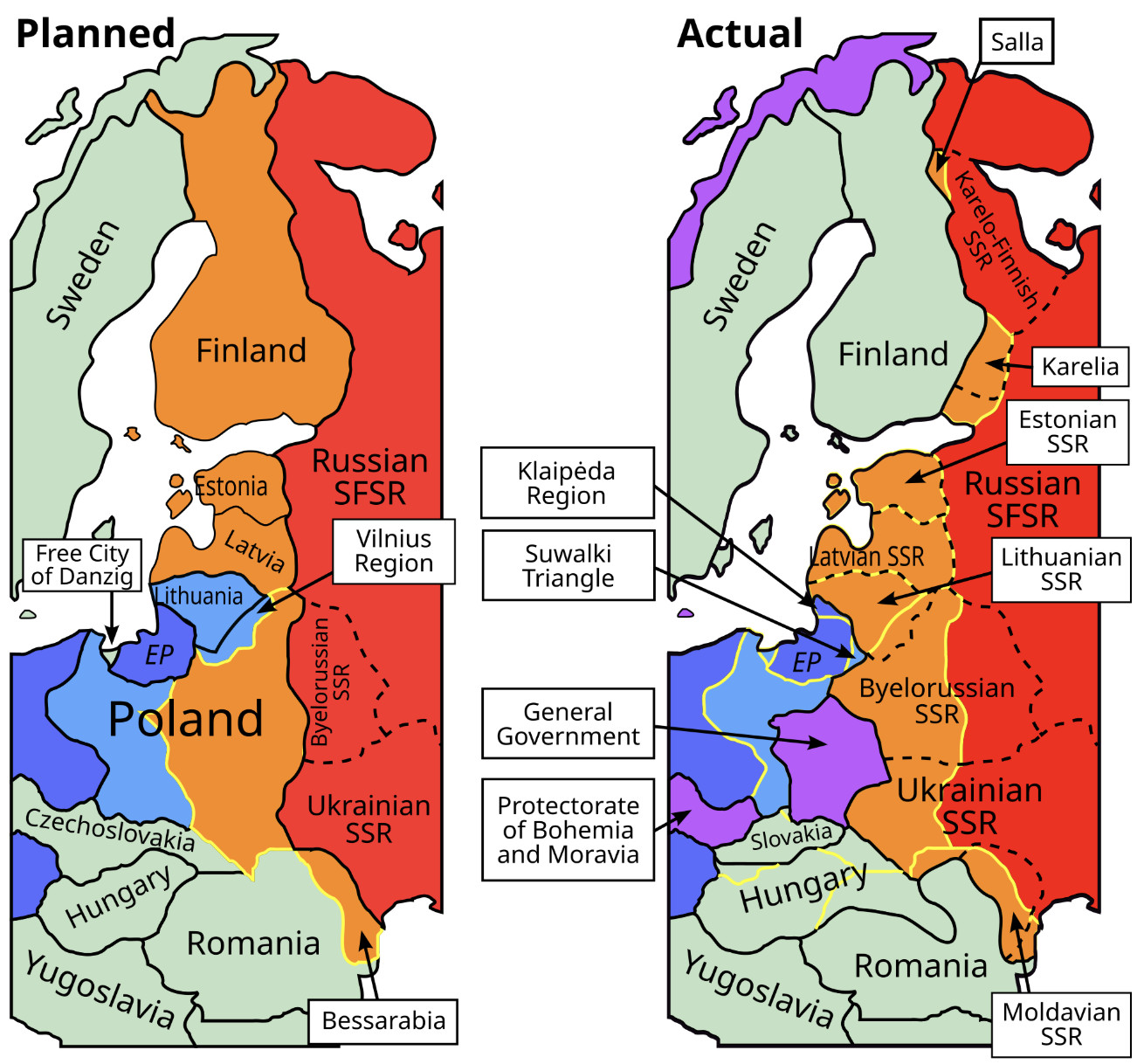
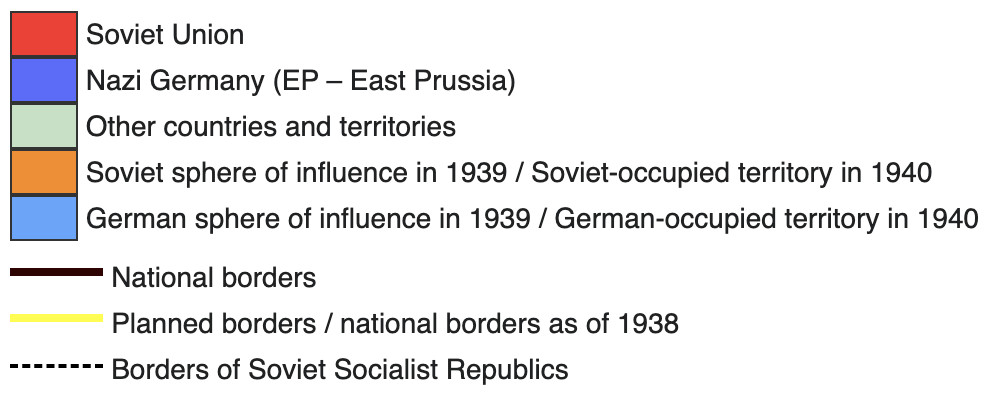
While Germany and the USSR had planned on splitting Europe fairly evenly, this did not curb either country from pursuing its imperial ambitions.
The image to the left depicts the intended areas of German and Soviet rule described in the Molotov-Ribbentrop Pact. The image on the right shows what actually transpired in 1940 during World War II.
To read the conditions of the Molotov-Ribbentrop Pact in their entirety, visit Fordham University's English translation:
1940
First Soviet Occupation of the Baltics
The USSR set up a military blockade of the Baltic states from June 12 to 17, 1940. The Soviet Red Army first occupied Lithuania on June 15, followed by Latvia on June 16 and Estonia on June 17.20 In July, the Soviet Secret police (NKVD) were established in Latvia, Lithuania, and Estonia. The NKVD enforced the USSR's rules within the Baltics, and its policies became harsher the more power it gained over the government structures.21
Baltic States annexed by the USSR
The Baltics states were annexed by the USSR in quick succession: Lithuania was annexed by the Soviet Union on August 3, followed by Latvia on August 5 and Estonia on August 6.22
With these annexations, the religious oppression these countries had been spared from during their short 20-year period of independence resumed under Stalin, who by this point was actively purging any sites of political competition, including organized religion.
Soviet Suppression of Religion in the Baltics
“Shortly after the Soviet troops invaded the republics, the Baltic governments were requested to suppress all religious activities... [and the] Union of Anti-Religious Fighters” was established.23 The following religious activities became prohibited by the Soviet Union upon occupation and annexation of the Baltic states:
-
- No “Divine services outside church premises”
- No "Baptisms, Church marriages, and Funerals [for] party members and their families.”24
- No religious affiliations for soldiers or state employees25 (including teachers).26
- No Bible camps or most Christian youth organizations.
- No religious subjects were taught in schools around 6 weeks after the Soviet occupation.
- No Sundays are designated as days of rest (To prevent parents from instilling religious influences on their children, the Soviets would designate different days of rest for each family member).
- No religious publications via burning them.
- No Church radio broadcasting (Estonia only, temporary)27
1941
The “June Deportations”
Once the Soviet Union gained power in Estonia, Latvia, and Lithuania, the Red Army conducted mass deportations in the middle of the night. The Baltic states recognize and remember these violent events in silence still today.28 The victims did not belong to one set group. Rather, the NKVD rounded up people of any age, nationality, sex, political standing, or religious affiliation. Only Orthodox Russians seemed to be relatively untouched.29
Between June 13-14, 10,299 Estonians and 14,693 Latvians were arrested and deported.30 Between June 14-19, around 17,000 Lithuanians were taken and moved to labor camps.31 At the end of the First Soviet Occupation, around 34,250 Latvians were deported. Then, 71,000 were either “killed, wounded, [or] missing."32 60,000 Estonians "perished or vanished" post-independence.33 Finally, 52,000 Lithuanians were deported.34
German Occupation of the Baltics
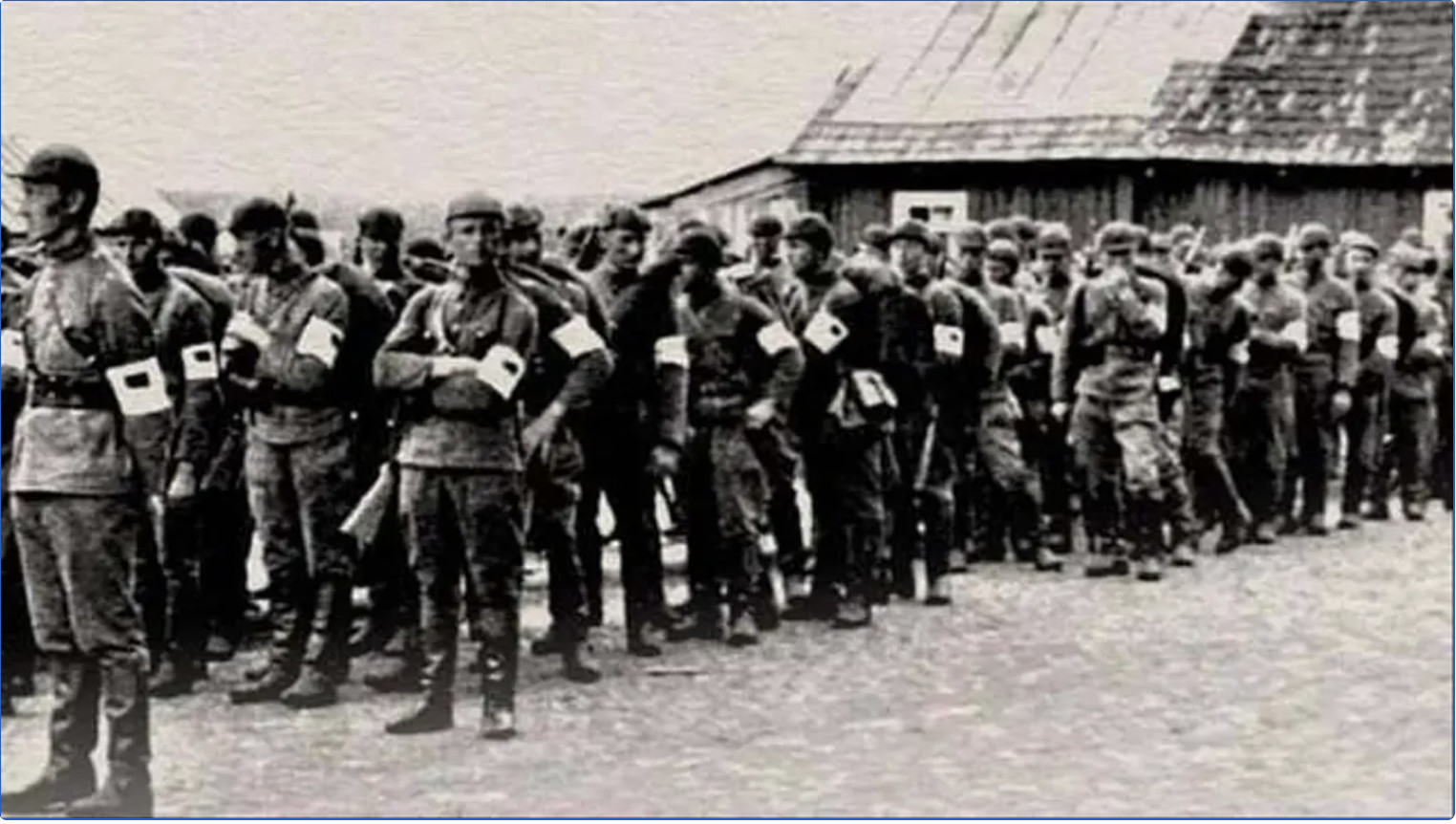
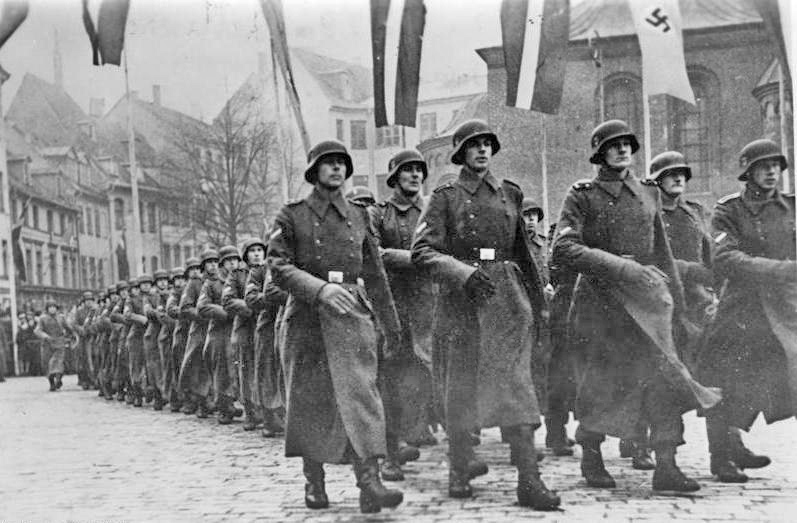
The German army began its invasion of the Baltics in June 1941, when it entered Lithuania. Latvia and Estonia were reached in July.35 This was a German military campaign to capture the territories surrounding the USSR, effectively breaking the Molotov-Ribbentrop Pact, and eventually capturing the Soviet Union itself by invading Moscow. By that time, many of the Volksdeutsche had been resettled elsewhere in Eastern Europe, so "non-Aryans" were employed to aid in the German war efforts.36 Some volunteered believing Germany to be a liberating force from Soviet occupation. Some may have accepted Nazi ideology, while others complied out of fear of what would happen if they did not.37 Lithuanian volunteers were harder to secure, so the Germans invented a new task force under the guise of fighting Bolshevism.38 Some would serve in the military as Waffen-SS soldiers or openly support Nazi ideology while others gave medical aid to Nazi soldiers or collected taxes.39
It should be noted that the Nazis were less discriminatory toward the Baltic people compared to their more southern counterparts, such as the Poles or Ukrainians, because they were considered by the Nazis as higher up on the racial hierarchy.40 The Jewish populations also suffered greatly with the arrival of the Germans. Some people’s jobs included seizing and redistributing property previously held by Jewish people or putting Jews into ghettos.41
Whatever their exact participation or motivations may have been, it is estimated that "60,000 Estonians, 100,000 Latvians, [and] 40,000 Lithuanians... had sworn oaths of allegiance to Hitler and taken up arms against the Soviets."42
Racial Ideology in the Baltics
The German military occupiers were less discriminatory toward the Baltic people compared to Eastern Europeans further south, such as the Poles or Ukrainians, because they were considered within National Socialist ideology to be above them in racial hierarchy. However, the Jewish population suffered greatly with the arrival of the German army, including at the hands of their fellow citizens. By associating Judaism with Bolshevism, the National Socialists stoked anti-Jewish sentiment among the Baltics. Some Baltic people participated in seizing and redistributing property held by Jewish people or putting Jews into ghettos.43
1943
'Churches in Exile'
In the lead-up to the 1944 Soviet invasion, a number of Baltic Lutheran Church leaders and clergy began to depart their home countries for western Germany, often under real or anticipated threat. Among them were many who became affiliated with the Lutheran World Federation Service to Refugees, including Archbishop of the Evangelical Lutheran Church of Latvia Teodors Grīnbergs, and Latvian pastors Edgars Kiploks, Janis Rozentals, Edmunds Smits and Gustavs Kness-Knezinskis. Through the pastoral care of these and many other clergy members and laypeople serving the spiritual needs of Baltic Lutherans in the displacement camps, the so-called “Churches in Exile” were formed.
UNRRA
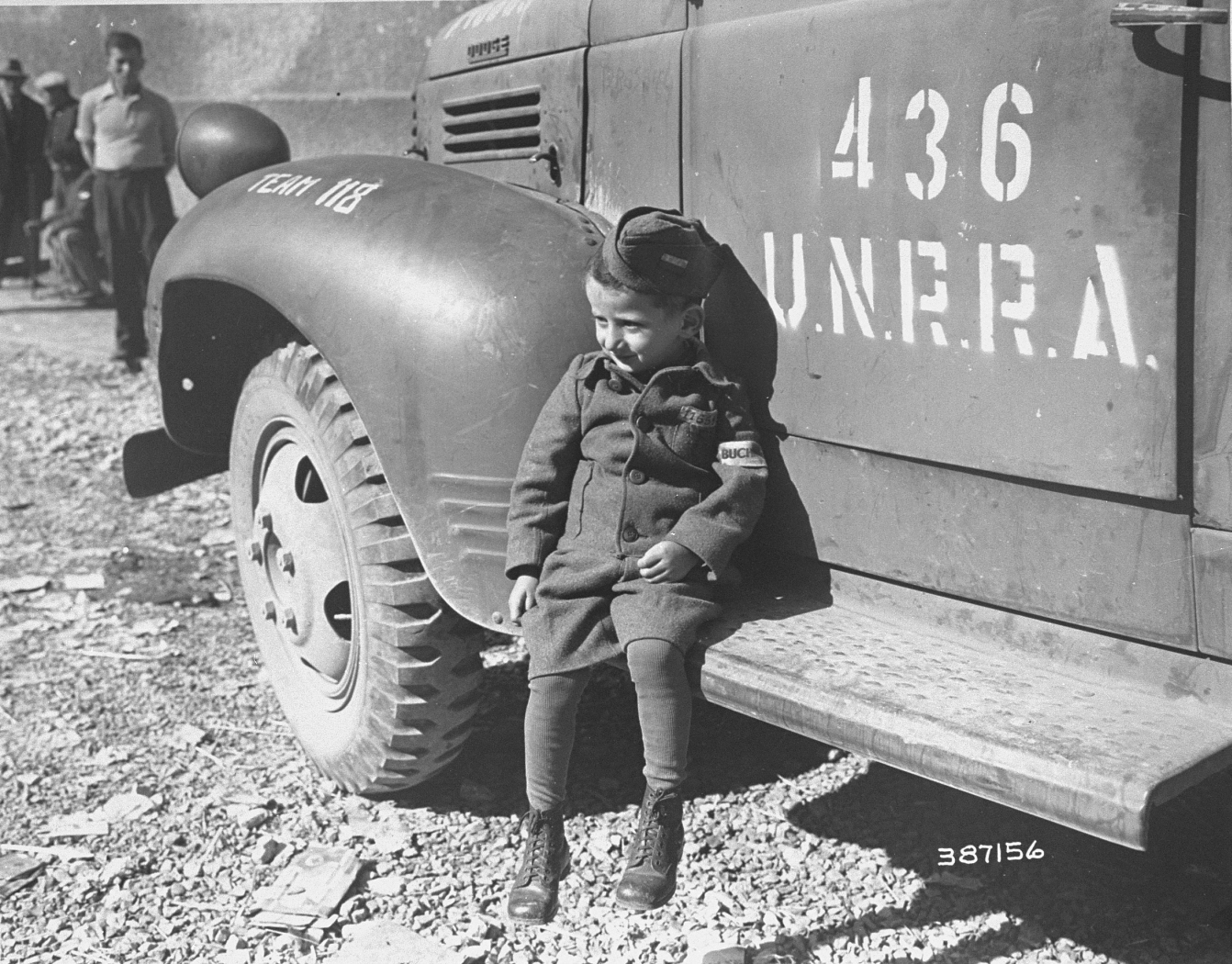
The United Nations Relief and Rehabilitation Administration (UNRRA) was signed into existence at the White House on November 9, 1943, to form a response to the mass displacement of refugees in the chaos of WWII. The organization was created to “provide economic assistance to European nations… [as well as] repatriate and assist the refugees who would come under Allied control. The US government funded close to half of UNRRA's budget.”44 It was headed by Herbert Lehman, then two more successors, before it was succeeded by the IRO (International Refugee Organization) in 1947.
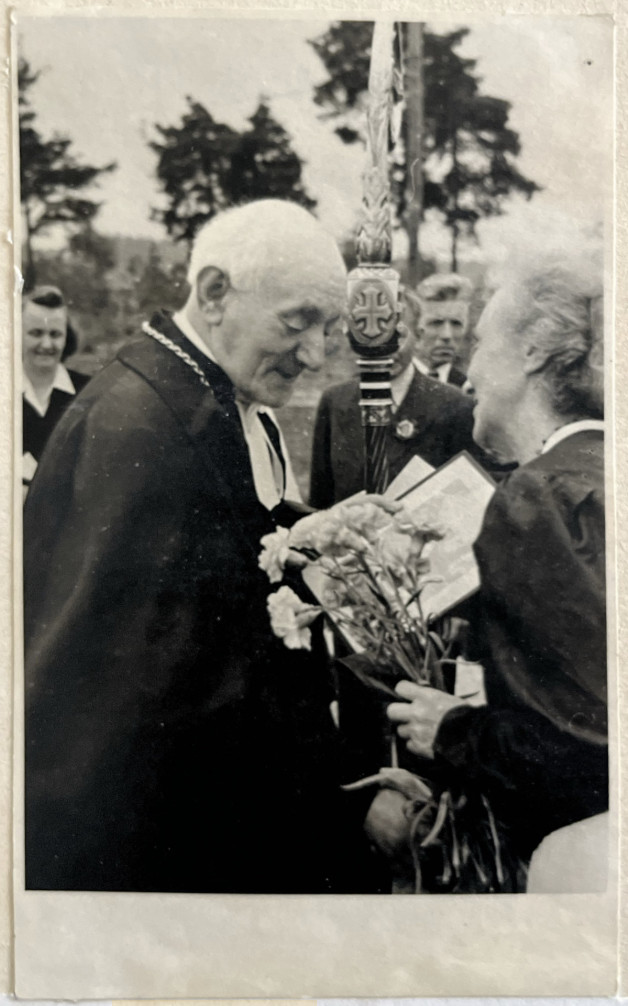
"Archbishop Grīnbergs frequently visits his people in their camps, in spite of his 79 years." (Captioned in the LWF-SR 1947-1949 Report Photographic Section)
"...There were two German policemen with rifles pointing at us. I stood up fast and pulled out [my ration book] and explained that we were refugees from Latvia escaping the Communists"
Andrejs Eglitis, Latvian refugee and former Luftwaffe fighter pilot who fled his unit with his friend to Danzig in January 1945.45
1944
Second Soviet Occupation
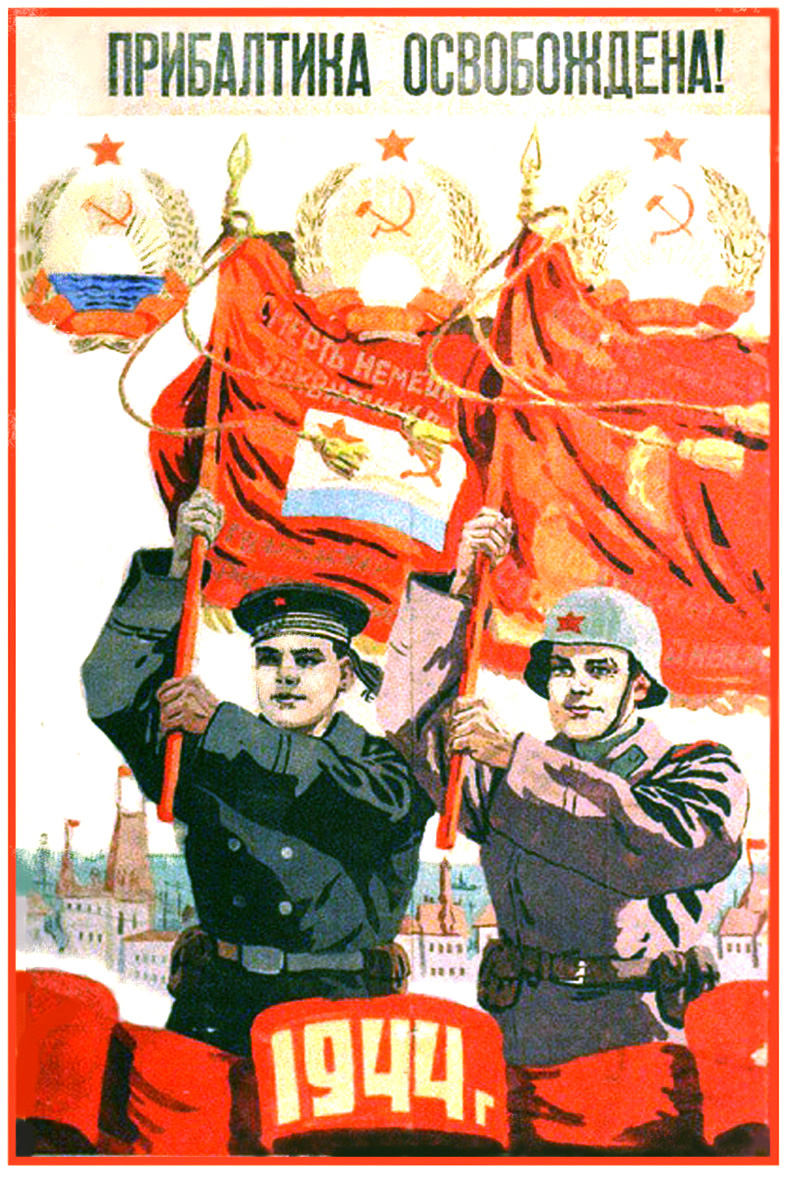
Germany started to lose ground to the USSR in December of 1943. When the German army began to retreat, the USSR proceeded to occupy and control the Baltic states once again.
The religious persecution in the second Soviet occupation was more tame compared with the first. By this time, the Soviet Union had begun to allow certain religious practices if the churches agreed to publicly follow Soviet ideology. This "Great Compromise" was established thanks to the efforts of the Russian Orthodox Church. Church hierarchy or other leadership would be granted privileges in return for loyal service to the state. However, the Soviet Union did not scale back its efforts to reduce "the body of believers through atheistic propaganda, administrative pressure, and outright persecution."46 Protestant churches that agreed to propagate and follow Soviet ideology, notably some Baptists and Seventh-Day Adventists, were allowed to continue practicing their faiths.47 Many Baltic Lutherans, meanwhile, hearing that the Red Army was approaching, fled their homelands before the Soviets even arrived.48
Translation: Прибалтика освобождена - The Baltic states have been liberated. смерть немецк… (On the flag) - Death to Germans or Death to Germany.
Translation by Arevik Armenakyan (St. Olaf, Class of '28)
1945
The War Ends
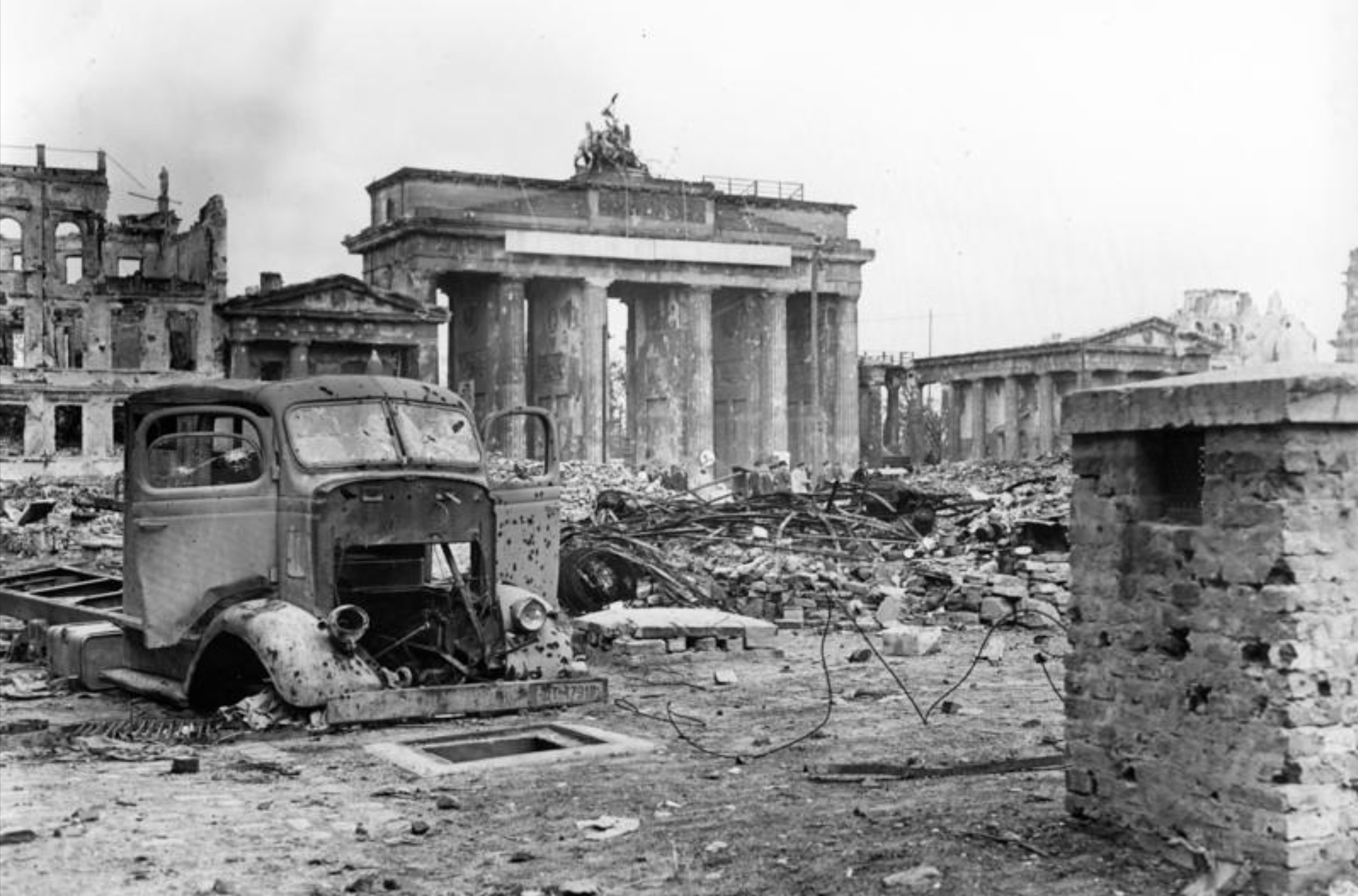
On May 7, 1945, Germany surrender to the Allies unconditionally, marking the end of the war in Europe. On August 9, Japan's Emperor Hirohito signed to the terms of the Potsdam Declaration. On September 9, Japan's Foreign Minister signed the instrument of surrender, marking the official end of World War II.
Displaced Persons
Even before the fighting had ceased, the Allied powers were making plans for how to cope with the massive humanitarian crisis in the aftermath of the war. Germany had to be denazified, demilitarized, decentralized and democratized. The full scale of industrialized murder in the Holocaust was coming to light. The war had displaced an estimated 40 million people from their homes across Europe; 11 million Displaced Persons (DPs) were living in Germany when the war ended.
Expulsions
About 12 million ethnic Germans entered Germany as a result of expulsions from the eastern territories that Germany had overtaken in the war.49 These expulsions and flights often were ad hoc, disorganized, and violent.50 Once the Potsdam Agreement stated that their expulsion were “to be effected in an orderly and humane manner,” they became more organized, yet still resulted in loss of possessions, harassment, and poor travel conditions.51 Most of the expulsions ended by 1949, leaving many ethnic Germans to settle in Germany or further abroad.52
"The old spirit of nationalism which divides humanity and severs the ties of faith and friendship must be overcome by the Spirit of God which comprehends the whole world within its love... Because Lutherans need each other so desperately, it is imperative that an organization such as the Lutheran World Federation be created and supported."53
1947
Lutheran World Federation is Formed
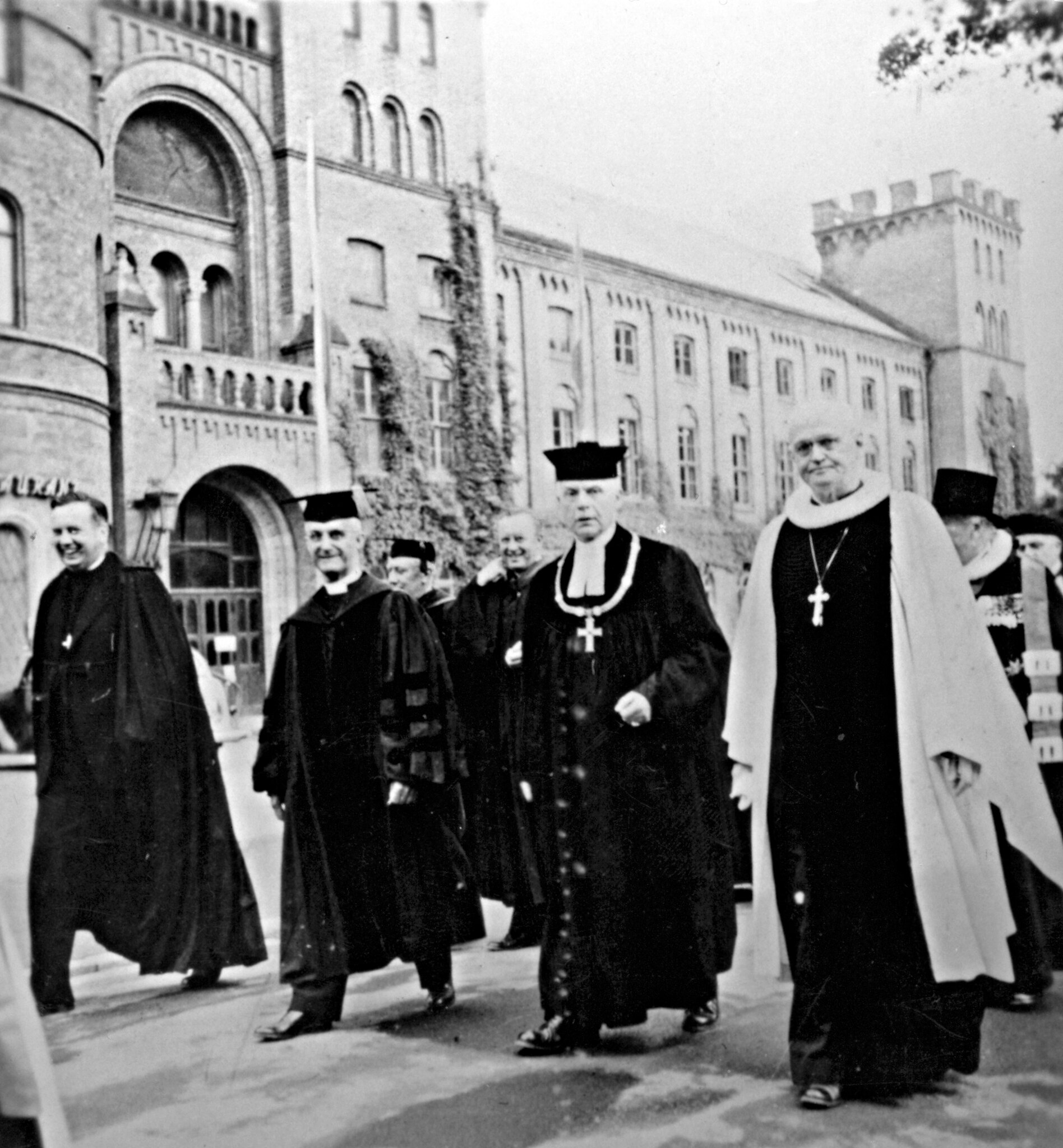
Near the end of World War II, it became apparent that the structure of the Lutheran World Convention was not strong enough to meet the new challenges facing the Lutheran Church. Again, a looming humanitarian crisis drove the LWC member churches into action. To coordinate aid effectively to Lutheran DPs in Europe, the LWC was restructured as a new organization: the Lutheran World Federation.
This first assembly was held June 30 - July 6, 1947 in Lund, Sweden, and was attended by 184 delegates from 49 church bodies and 22 countries. Visit the Film Archive to see footage from the assembly. At the meeting, Executive Secretary Dr. Sylvester C. Michelfelder outlined the organization's strategy and mission going forward. Its first initiative would be Service to Refugees, led by Howard Hong from 1947-1949, with Stewart W. Herman joining to oversee Resettlement Services in 1948.
Notes
- Orlando Figes, The Story of Russia (New York: Metropolitan Books, 2022), 189.
- Tony Judt, Postwar: A History of Europe since 1945, (Penguin Press, 2005), 644 & Wentz, The Lutheran Churches of the World: 1952, 644.
- Edgar C. Duin, Lutheranism Under The Tsars And The Soviets. Vol. 2., (Xerox University Microfilms, 1975), 672-677.
- Eugene B. Shirley and M. D. (Michael D. ). Rowe, Candle in the Wind: Religion in the Soviet Union (Ethics and Public Policy Center, 1989), 45.
- Carl E. Lund-Quist et al., Lutheran Churches of the World (Augsburg Publishing House, 1957), 200-201.
- Eugene B. Shirley and M. D. (Michael D. ). Rowe, Candle in the Wind, 28-29.
- Abdell Ross Wentz, ed., The Lutheran Churches of the World: 1952, (The Lutheran World Federation, 1952), 28.
- Wentz ed., Lutheran Churches of the World, 26-27.
- Wentz ed., Lutheran Churches of the World, 27.
- Wentz ed., Lutheran Churches of the World, 30.
- Romuald J. Misiunas and Rein Taagepera, The Baltic States, Years of Dependence, 1940-1990 (University of California Press, 1983; repr., University of California Press, 1983), 15.
- Nasaw, The Last Million, 27.
- “The Invasion of Poland,” The National WWII Museum, October 17, 2023, https://www.nationalww2museum.org/war/articles/invasion-poland-september-1939.
- “Britain and France declare war on Germany,” History.com, Last Updated: June 30, 2025, https://www.history.com/this-day-in-history/september-3/britain-and-france-declare-war-on-germany.
- Romuald J. Misiunas and Rein Taagepera, The Baltic States, 15.
- “Timeline: Soviet occupation of the Baltic states,” Regions Historical events, Communist Crimes, June 16, 2020, https://communistcrimes.org/en/timeline-soviet-occupation-baltic-states.
- Bergen, Doris L. “The Nazi Concept of ‘Volksdeutsche’ and the Exacerbation of Anti-Semitism in Eastern Europe, 1939-45.” Journal of Contemporary History 29, no. 4 (1994): 569-82. http://www.jstor.org/stable/260679.
- Communist Crimes, “Timeline,” https://communistcrimes.org/en/timeline-soviet-occupation-baltic-states.
- Bergen, Doris L. “The Nazi Concept of ‘Volksdeutsche'", 572.
- Communist Crimes, “Timeline,” https://communistcrimes.org/en/timeline-soviet-occupation-baltic-states.
- Duin, Lutheranism, 807.
- Communist Crimes, “Timeline,” https://communistcrimes.org/en/timeline-soviet-occupation-baltic-states.
- Duin, Lutheranism, 811-813.
- Duin, Lutheranism, 812-813.
- Duin, Lutheranism, 813.
- Duin, Lutheranism, 815
- Duin, Lutheranism, 813-814.
- Romuald J. Misiunas and Rein Taagepera, The Baltic States, Years of Dependence, 1940-1990 (University of California Press, 1983; repr., University of California Press, 1983).
- Duin, Lutheranism, 809.
- Duin, Lutheranism, 809-810.
- “The First Mass Deportation of Lithuanian Residents, 14–19 June 1941,” Virtual Exhibition, Museum of Occupations and Freedom Fights, Accessed Oct. 1, 2026, https://olkm.lt/en/exhibitions/the-first-mass-deportation-of-lithuanian-residents-14-19-june-1941/.
- Duin, Lutheranism, 811.
- Duin, Lutheranism, 811.
- Duin, Lutheranism, 811.
- David Nasaw, The Last Million: Europe’s Displaced Persons from World War to Cold War, (Penguin Press, 2020), 29.
- Nasaw, The Last Million, 29.
- Nasaw, The Last Million, 30.
- Nasaw, The Last Million, 40.
- Nasaw, The Last Million, 31.
- Nasaw, The Last Million, 30.
- Nasaw, The Last Million, 31.
- Nasaw, The Last Million, 29-41.
- Nasaw, The Last Million, 30-37.
- “United Nations Relief and Rehabilitation Administration,” Holocaust Encyclopedia, Holocaust Museum, https://encyclopedia.ushmm.org/content/en/article/united-nations-relief-and-rehabilitation-administration.
- Nasaw, The Last Million, 44-45.
- Eugene B. Shirley and M. D. (Michael D. ). Rowe, Candle in the Wind, 51-52.
- Eugene B. Shirley and M. D. (Michael D. ). Rowe, Candle in the Wind, 55.
- Nasaw, The Last Million, 45-46.
- Mark Wyman, DPs: Europe’s Displaced Persons, 1945-1951 (Ithaca, N.Y.: Cornell University Press, 2014), 20.
- Ulrich Merten, Forgotten Voices.
- Ulrich Merten, Forgotten Voices, 10.
- Ulrich Merten, Forgotten Voices, 20.
- Wentz ed., Lutheran Churches of the World, 19-20.
(?)Lat,
Images
- (Heading), Lutheran World Federation Service to Refugees 1947-1949, Photographic Section, used with permission of the Lutheran World Federation and Evangelical Lutheran Church in America.
- Map of the Baltic States and the Soviet Union, including the Eastern Bloc border change. Contributors to Wikimedia Projects.“File:Eastern Bloc Border Change 1938-1948.” Wikimedia Commons, December 6, 2020. https://commons.wikimedia.org/wiki/File:EasternBloc_BorderChange38-48-tr.svg.
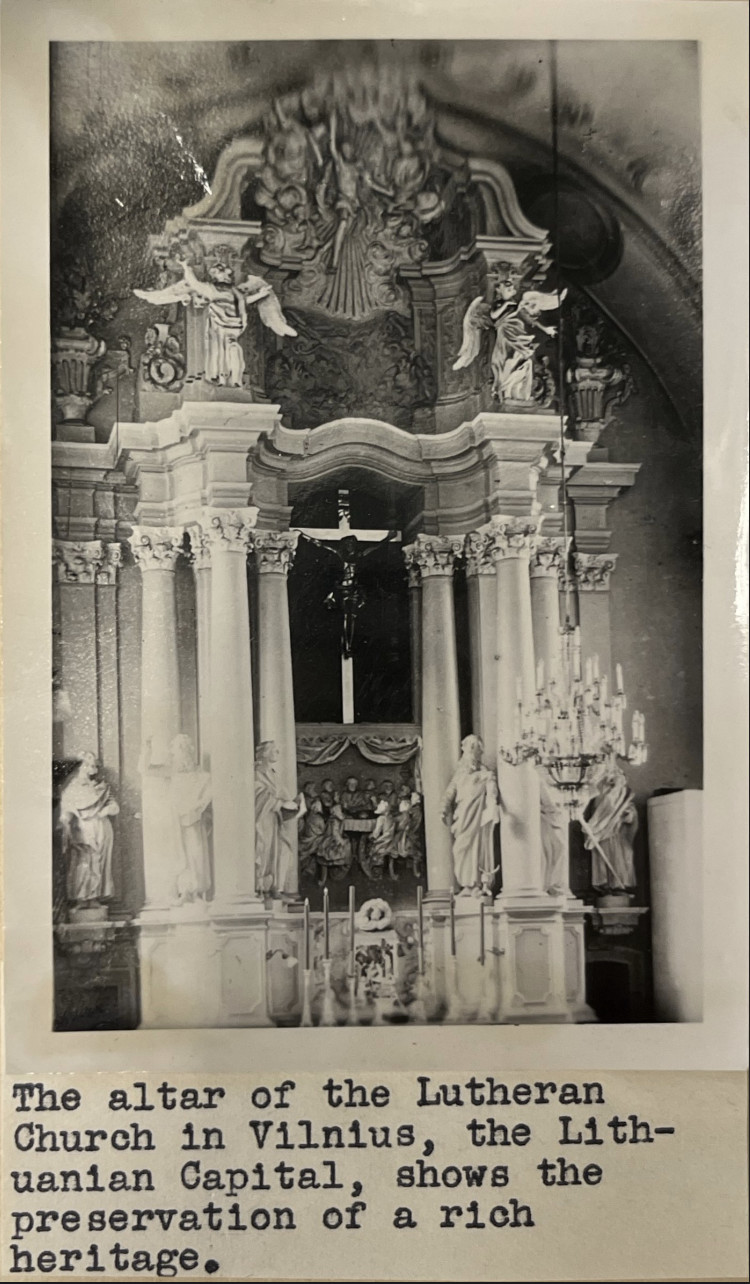
- Altar of the Lutheran Church at Vilnius, Lithuania. Lutheran World Federation Service to Refugees 1947-1949, Photographic Section, used with permission.
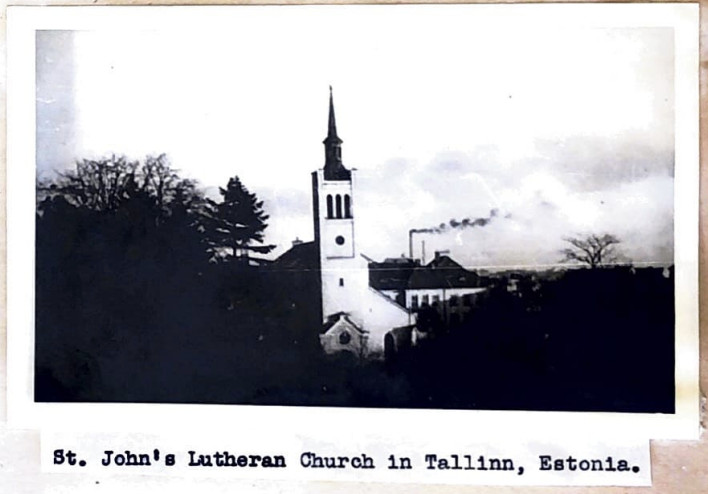
- St. John's Lutheran Church in Tallinn, Estonia. Lutheran World Federation Service to Refugees 1947-1949, Photographic Section, used with permission.
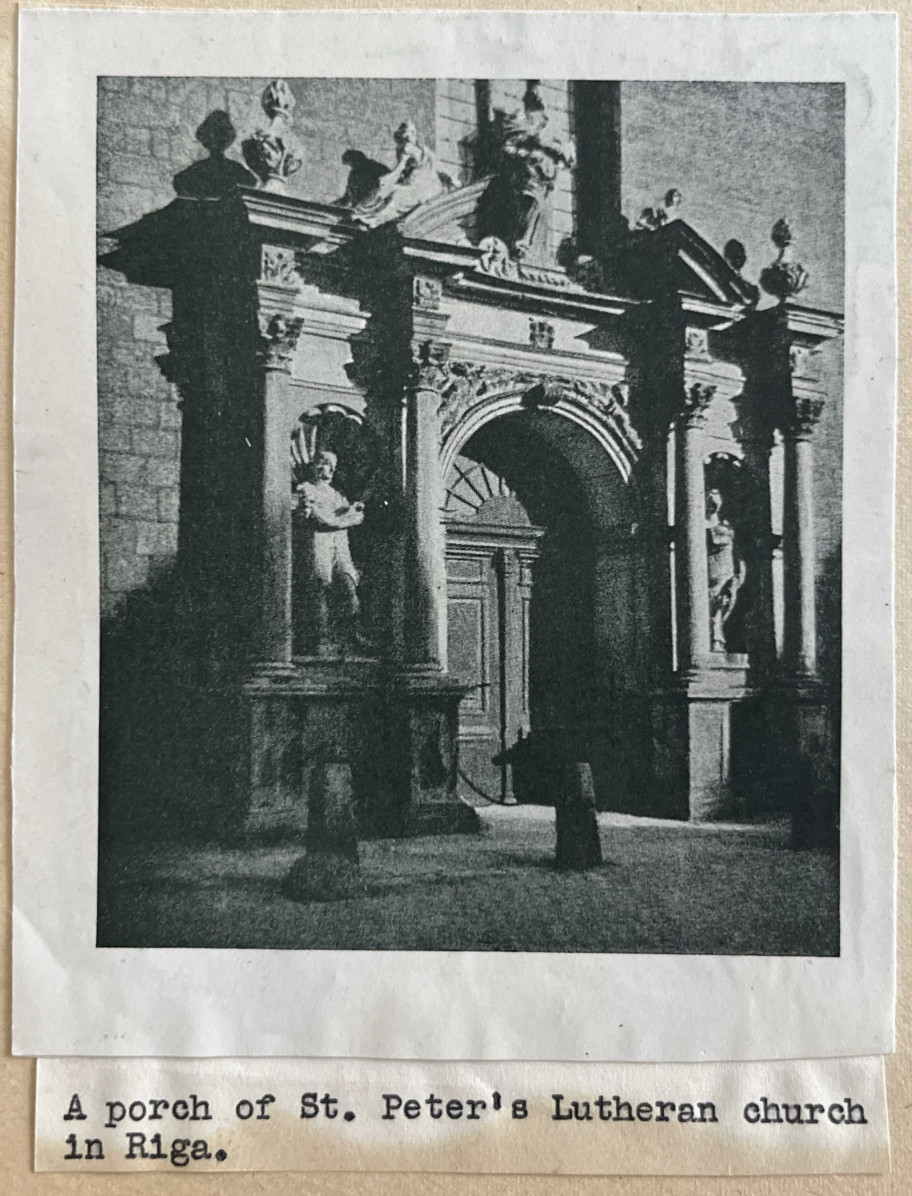
- St. Peter's Lutheran Church in Riga, Latvia. Lutheran World Federation Service to Refugees 1947-1949, Photographic Section, used with permission.
- Propaganda Poster 1, Торжество Христианства (The triumph of Christianity), Soviet Political Poster, The Sergo Grigorian Collection, Wikimedia Commons, https://commons.wikimedia.org/wiki/File:%D0%9C%D0%BE%D0%BE%D1%80._%D0%A2%D0%BE%D1%80%D0%B6%D0%B5%D1%81%D1%82%D0%B2%D0%BE_%D0%A5%D1%80%D0%B8%D1%81%D1%82%D0%B8%D0%B0%D0%BD%D1%81%D1%82%D0%B2%D0%B0.jpg.
- Propaganda Poster 2, Релігія гальмує п'ятирічку (Religion is holding back the Five-Year Plan), Российская государственная библиотека (Russian State Library), Wikimedia Commons, https://commons.wikimedia.org/wiki/File:%D0%A0%D0%B5%D0%BB%D1%96%D0%B3%D1%96%D1%8F_%D0%B3%D0%B0%D0%BB%D1%8C%D0%BC%D1%83%D1%94_%D0%BF%27%D1%8F%D1%82%D0%B8%D1%80%D1%96%D1%87%D0%BA%D1%83.jpg.
- Molotov-Ribbentrop photo. Молотов и Риббентроп crop (Molotov and Ribbentrop (cropped)), Победа. Фотодокументы (Victory. Photographic records.), Mikhail Mikhaylovich Kalashnikov, Wikimedia Commons, https://commons.wikimedia.org/wiki/File:%D0%9C%D0%BE%D0%BB%D0%BE%D1%82%D0%BE%D0%B2_%D0%B8_%D0%A0%D0%B8%D0%B1%D0%B1%D0%B5%D0%BD%D1%82%D1%80%D0%BE%D0%BF_crop.png.
- Molotov-Ribbentrop Pact reality, Nazi-Soviet 1941, English Wikipedia, Mosedschurte (Original Uploader), Wikimedia Commons, https://commons.wikimedia.org/wiki/File:Nazi-Soviet_1941.png.
- Baltic 1941 soldiers 1, Lined up Lithuanian rebels (Lithuanian Activist Front) during the June Uprising in Lithuania, 1941, Lithuanian Special Archives, Wikimedia Commons, https://commons.wikimedia.org/wiki/File:Lined_up_Lithuanian_rebels_(Lithuanian_Activist_Front)_during_the_June_Uprising_in_Lithuania,_1941_(2).jpg.
- Baltic 1941 soldiers 2, Lettland; Appell der SS-Legion, Deutsches Bundesarchiv (German Federal Archive), Unknown author, Wikimedia Commons, https://commons.wikimedia.org/wiki/File:Bundesarchiv_Bild_183-J16133,_Lettland,_Appell_der_SS-Legion.jpg.
- Latvian Archibishop Grunbergs with three women, Lutheran World Federation Service to Refugees 1947-1949, Photographic Section, used with permission.
- Child with UNRRA vehicle, Buchenwald Children 90250, United States Holocaust Memorial Museum, Wikimedia Commons, https://commons.wikimedia.org/wiki/File:Buchenwald_Children_90250.jpg.
- Propaganda Poster 3, 1944 Poster The Baltic States are liberated!, Collection: Kalnroze, Wikimedia Commons, https://commons.wikimedia.org/wiki/File:1944.Poster.The_Baltic_States_are_liberated!.jpg.
- Carl, Bundesarchiv, B 145 Bild-P054320 / Weinrother,. "Brandenburg Gate, Berlin, 1945," World History Encyclopedia, April 28, 2025, https://www.worldhistory.org/image/20401/brandenburg-gate-berlin-1945/. Carl, Bundesarchiv, B 145 Bild-P054320 / Weinrother,. "Brandenburg Gate, Berlin, 1945," World History Encyclopedia, April 28, 2025, https://www.worldhistory.org/image/20401/brandenburg-gate-berlin-1945/.
- Dr. Franklin Clark Fry (USA), Prof. Abdel Ross Wentz (USA), the Rt. Rev. Hans Meiser (Germany), Dr. Johan Arnd Aasgaard (USA) at the LWF First General Assembly in Lund, Sweden, 1947. Lutheran World Federation Flickr collection; used with permission of Lutheran World Federation.
