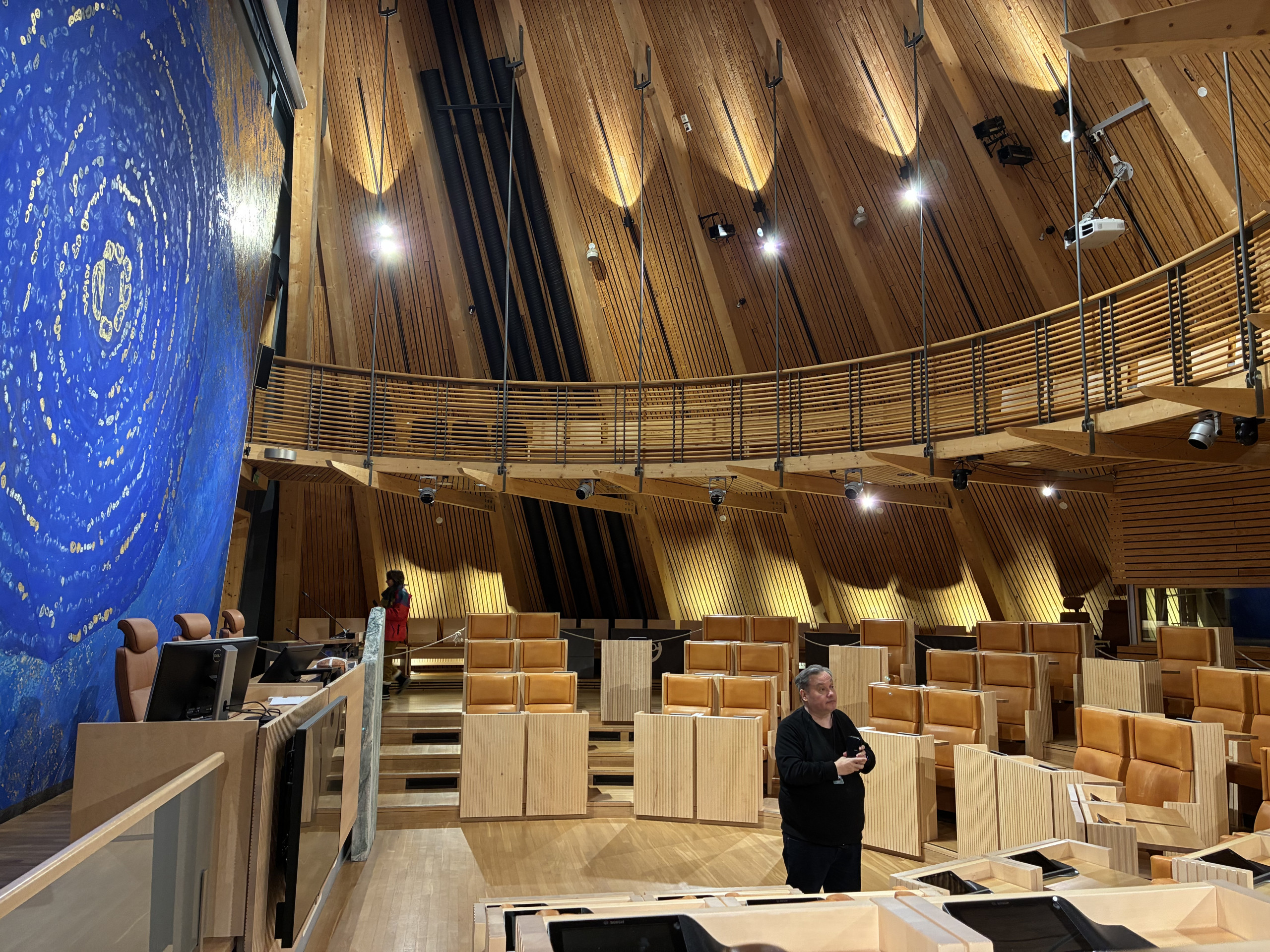
The darkness arrives in full force in December. As the solstice gets closer, the daylight hours are limited to between around 10am and 3pm, although if the weather is cloudy, it’s not uncommon to go days without really seeing the sun. I coped with the darkness in part by scheduling a trip up to northern Norway, where they truly experience mørketiden (“the dark time”). Other highlights included a visit from my colleague Kari Dorer here in Oslo and celebrating the Christmas season with neighbors, strangers, and friends.
Finishing writing projects
My colleague Kjerstin Moody and I put the finishing touches on a chapter we’ve co-written on nature poetry in the Nordic context. This will be published in the Routledge Companion to Nordic Literature, which will hopefully come out in the next year or so.
A visit from Minnesota
Kari was in town for the final conference marking the 200-year anniversary of organized migration from Norway to the US at the National Library. She and I had dinner and went to see an Afrofuturist play titled Sukker (Sugar) at Det norske teateret. In the play, characters travel through time and meet different Black historical figures who have shaped Norwegian society. There was also a lot of satirical commentary on race relations in Norway today, especially within cultural institutions like museums.
Journey North
The most famous struggle over dam construction in Norway was the Alta/Kautokeino controversy. This political debate was most heated from 1978-1982. I had previously visited Alta in the summertime, but I wasn’t far along enough in my research to work in local archives yet. In summer 2023, I started corresponding with the staff at the Alta Museum, who generously sent digitized materials from the archives of the People’s Campaign against the Development of the Alta/Kautokeino Watershed, so that I and my CURI student researchers could work on it. Still, I wanted to visit the archive in person to see some of these materials firsthand and comb the archives for anything significant we might have missed.
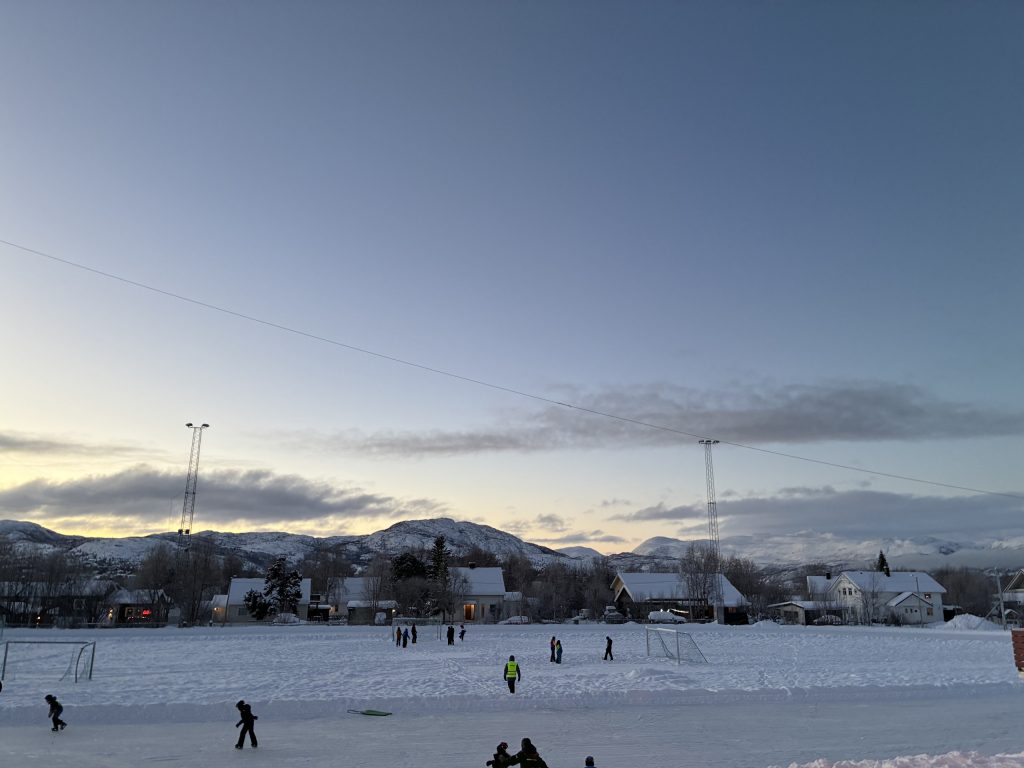
On our first day in town, I went to the archives while Ryan and Annabel went to Sámi Siida to learn about reindeer herding. Since the tourist season hadn’t really started yet, they were lucky enough to be the only people on the tour and were able to ask their guide a lot of questions. It turns out he had until recently worked at the Sámi parliament, so he told us to say “hi” to some friends there. The next day, I took Annabel along to the archives, while Ryan went to Bossekop school and worked with some kids during English class. He loved talking to them about fishing–one kid even offered to take him out on their family fishing boat if he ever came back for another visit. Our plan was to drive to Karasjok that afternoon. This was supposed to take just a couple of hours, but it was snowing and the roads were slippery. We hadn’t realized how much the cold weather would drain the battery of our electric car, so we had to make more stops than we anticipated, but we did make it eventually (with only about 6% battery left!).
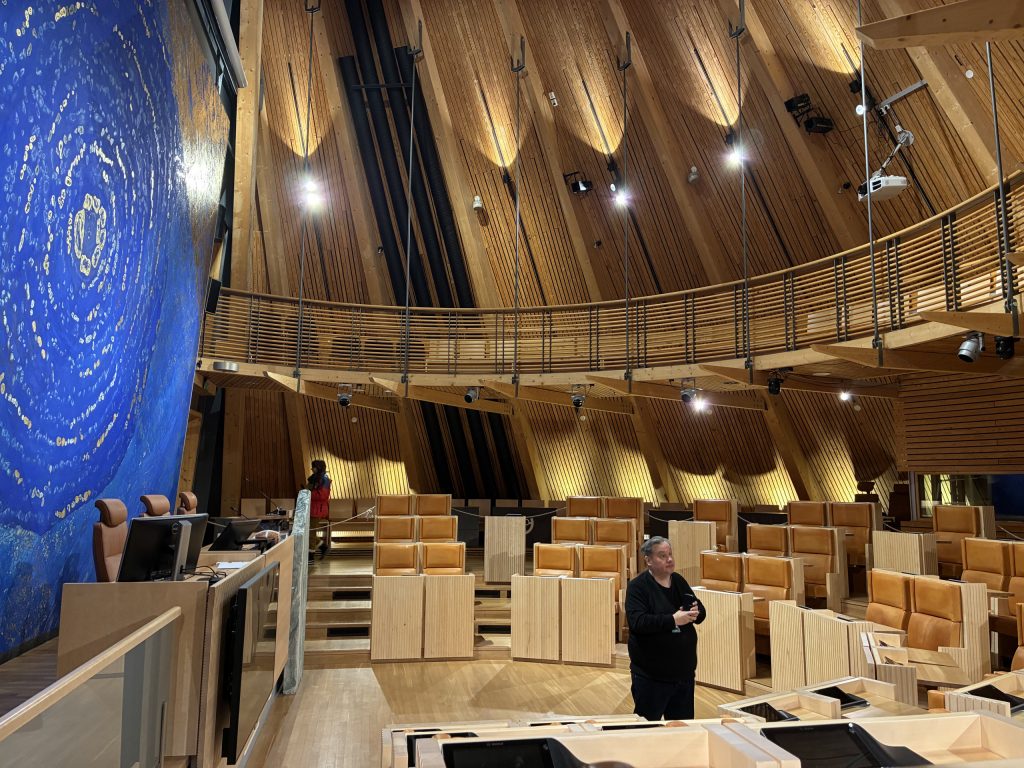
In Karasjok, we visited the contemporary art gallery (the larger Sámi museum is closed while they move to a new facility). We also took a tour of the Sámi parliament from an excellent guide. (I really liked the symmetry of taking Annabel on a tour of both the Norwegian and Sámi parliaments in one year.) The parliament building also functions as a kind of national library for Sámi topics, so I was also able to find some great resources there. I found it really moving to be in the parliament building, because many of the activists involved in the struggle against the Alta/Kautokeino dam were motivated by their desire for more political agency and autonomy for the Sámi in Norway. Although many would like to see the parliament have significantly more power than it does, the parliament represents an incredible achievement by many ordinary people who made great personal sacrifices in the service of a cause they deeply believed in. I couldn’t help but be struck by how comparatively little political power Native people have in the US, and how much they too deserve to have beautiful political and cultural institutions that represent their history and interests.
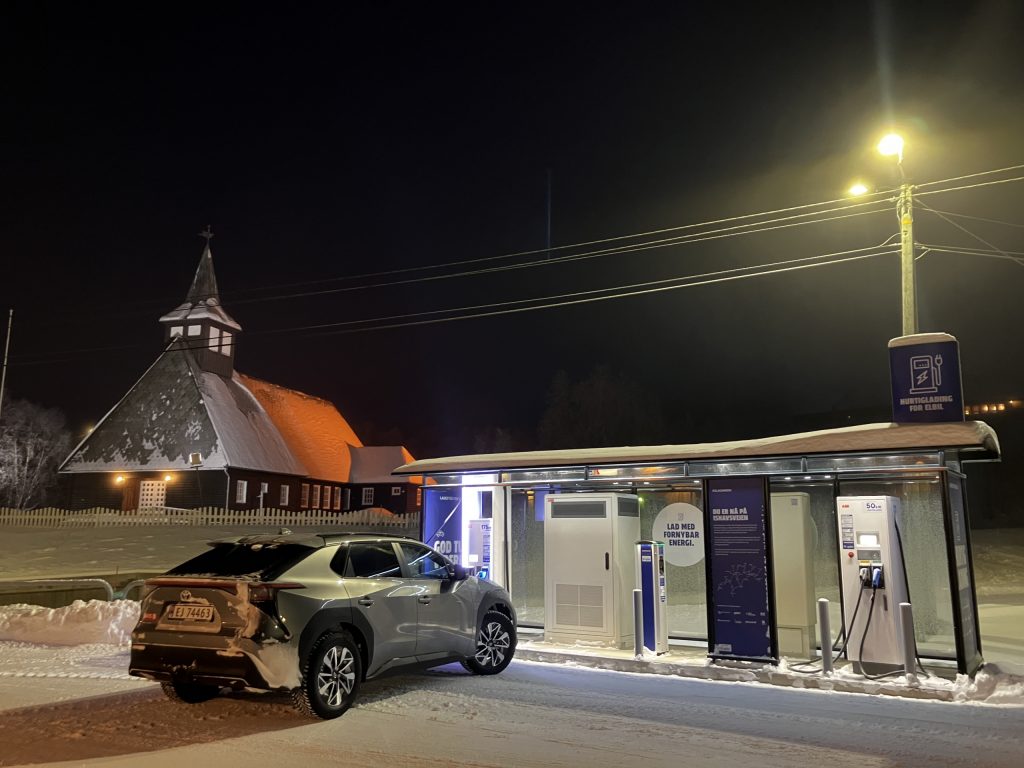
The weather was still bad on the drive to Kautokeino, so we didn’t really make it in time to see anything there. Ryan had to be back in Alta early the next day, since he’d been invited to visit another class at the school. We did see some weak northern lights on the drive. We pulled off into a parking area and got out of the car to gaze at them for awhile.
Notodden: Industrial heritage site
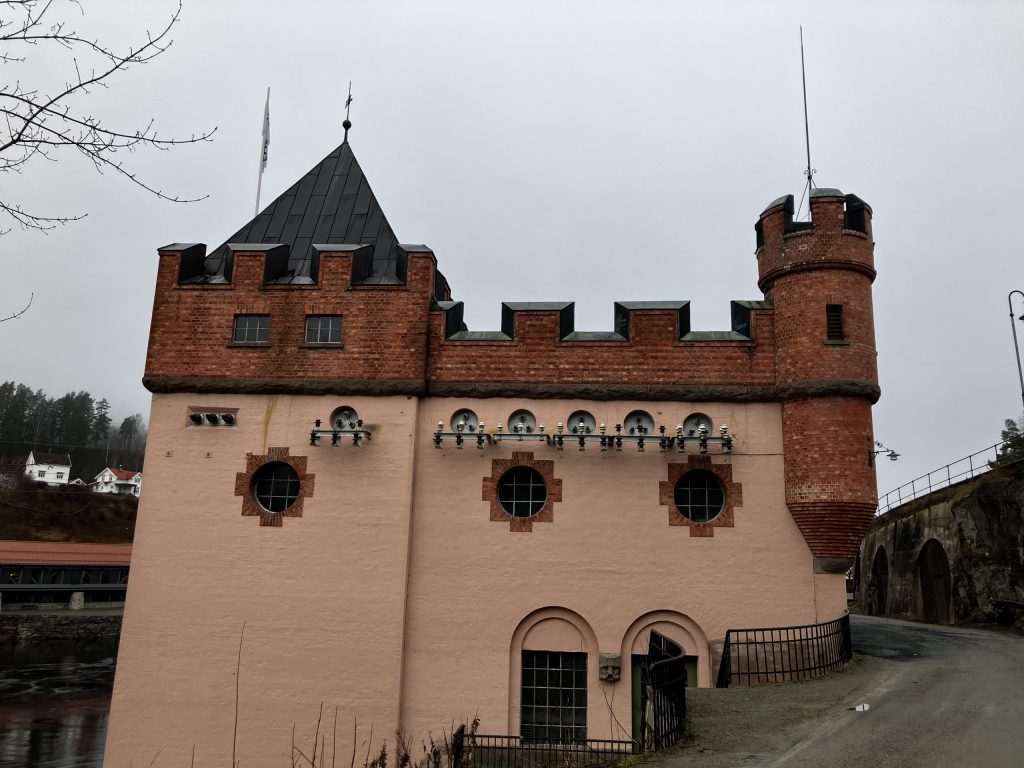
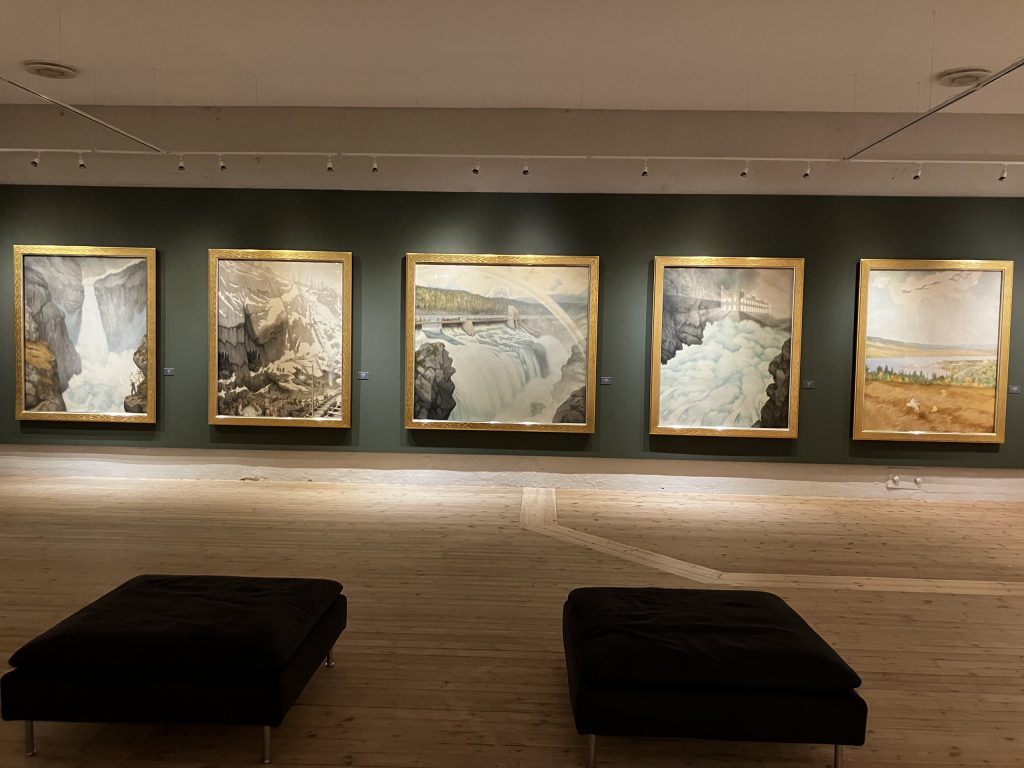
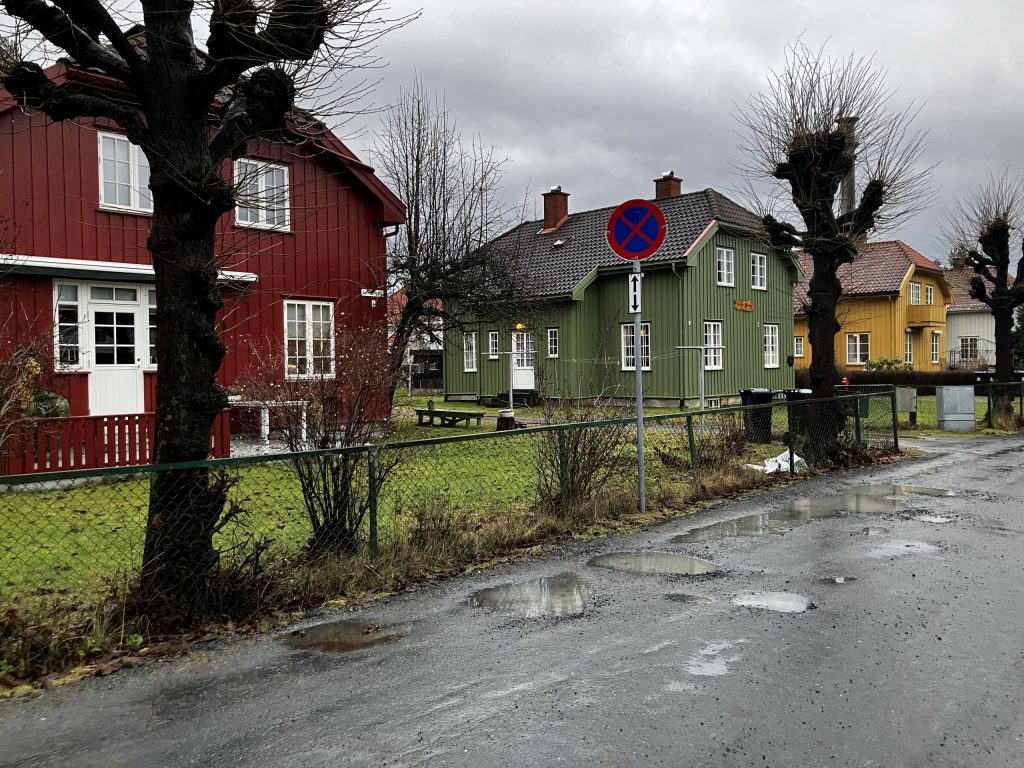
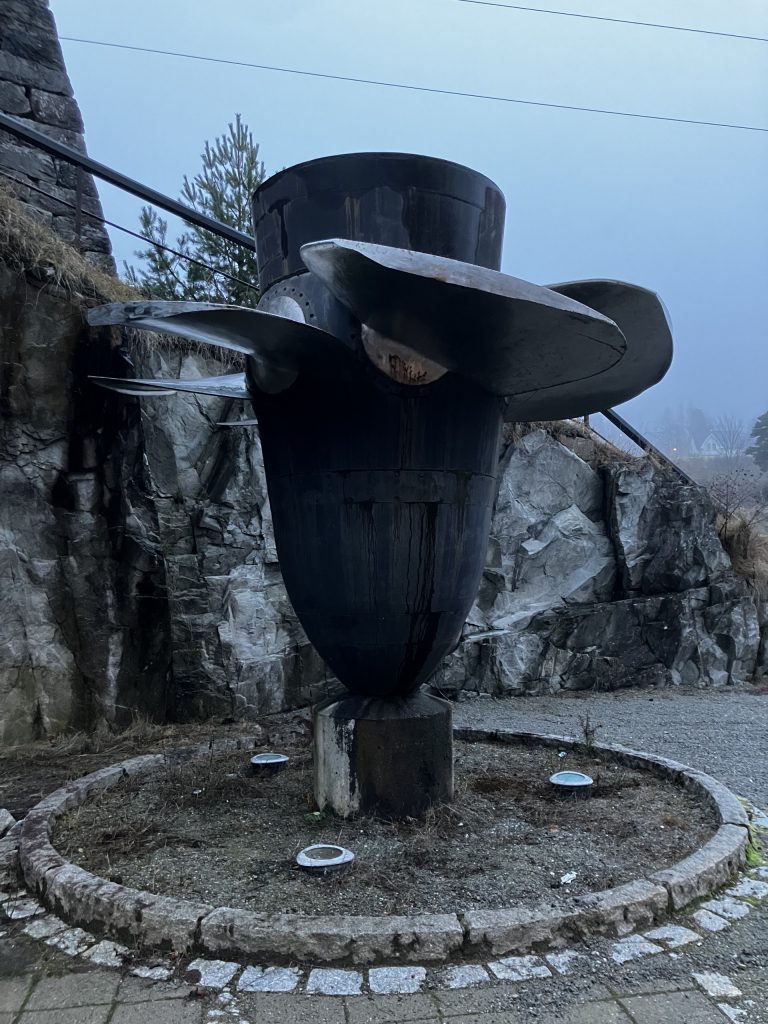
A few days after we returned from Alta, I made a quick trip to Notodden. This town is on the other end of the same watershed as the Vemork power plant we visited in October. The entire watershed, including the dams, factories, and transport infrastructure along the way, has been designated a Unesco world heritage site. In Notodden, an old factory building has been converted into the Telemark Art Museum. One of the most notable works they exhibit is a series of murals by Theodor Kittelsen, an artist famous for illustrating Asbjørnsen and Moe’s collection of Norwegian folktales. A staff member at the museum showed me the murals and answered my questions. Otherwise, I explored various locations in this “company town,” including the impressive administration building on the hill (still in use), the neat rows of former worker housing, and the looming factory buildings down by the shoreline. Notodden also had a fabulous local library with an in-depth local history section.
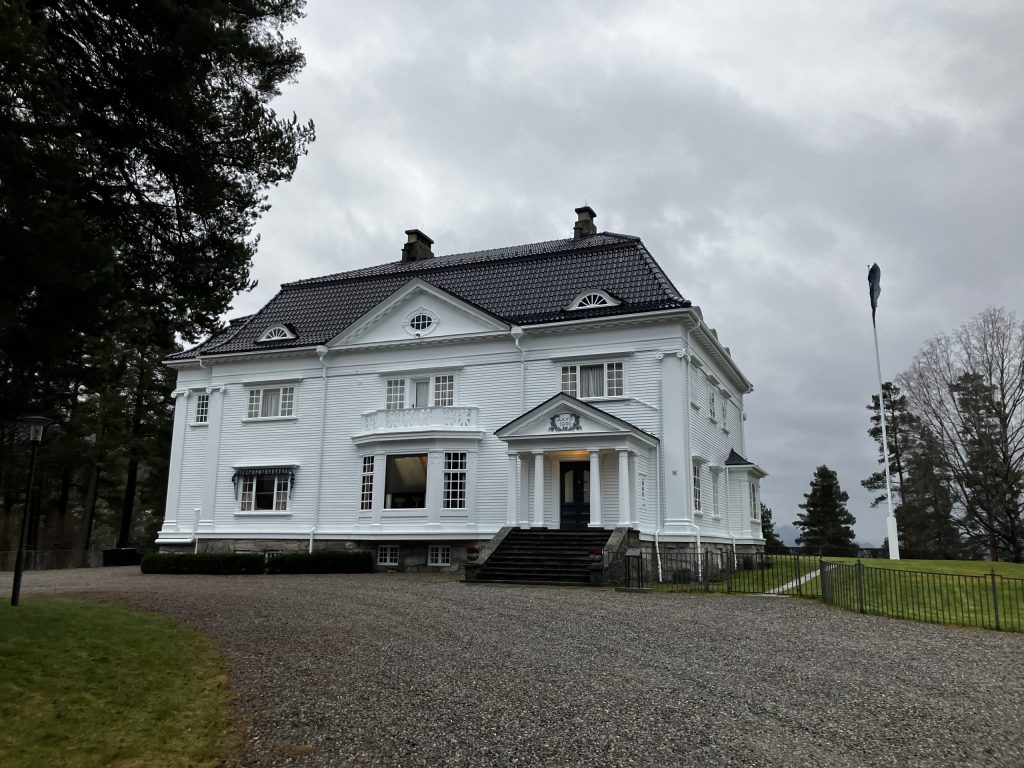
Julekos (Christmas coziness)
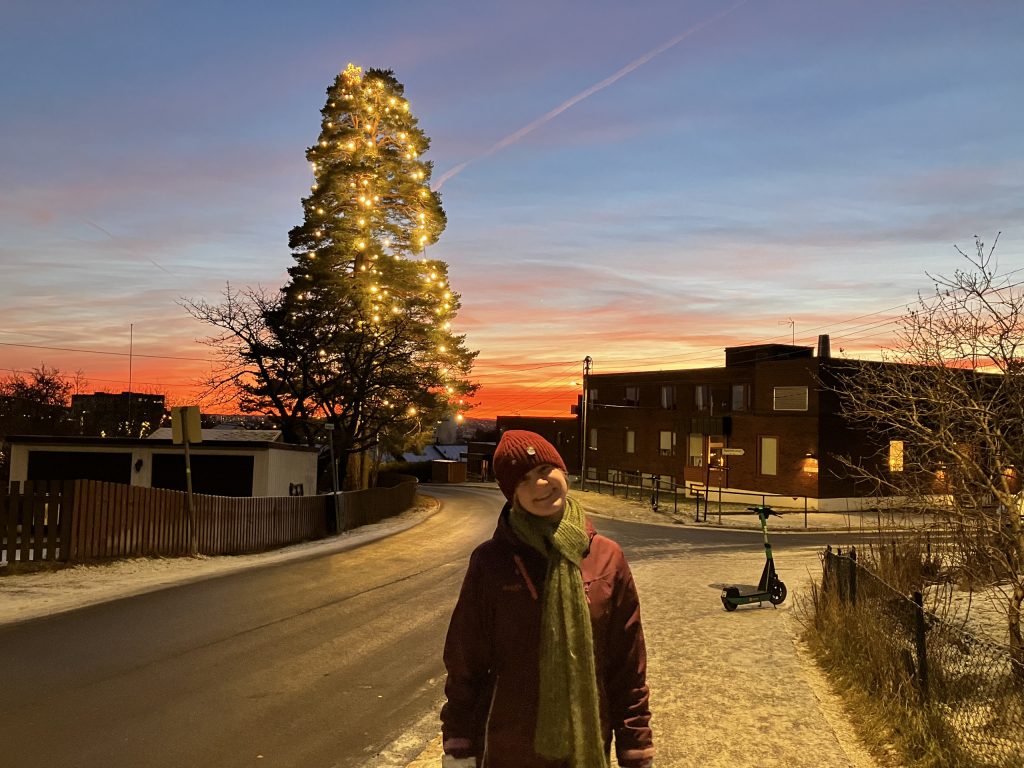
We decided not to travel back to the US for Christmas, but instead lean into our year in Norway by embracing the holiday season here. Norway goes all in for Christmas, something that was already obvious at the beginning of December, when decorations began to appear everywhere. For some reason, we missed the Christmas tree lighting ceremonies this year, but it’s very common for each apartment building or neighborhood to gather for the lighting of a tree for the season. In our neighborhood, a huge spruce tree in someone’s yard was lit up all month. We bought our own Christmas tree from a neighbor, who told us her parents have had a Christmas tree lot in Oslo for fifty years. They sell a small selection of the trees from their own front yard, so we were able to walk only about five minutes to pick out our tree, plus we made a new neighborhood friend.
We kicked off our celebration by seeing a Ukrainian dance company perform the Nutcracker in the nearby suburb of Lillestrøm, where Annabel has been taking dance classes. The next night, some friends had us over for a dinner of rakfisk, which is a traditional festive dish from their mom’s home region of Norway. The family is divided over whether or not rakfisk is actually tasty. We ate a fairly mild version with lefse, green onion, and a white sauce with fennel, and all of us enjoyed it, even the eleven-year-old.
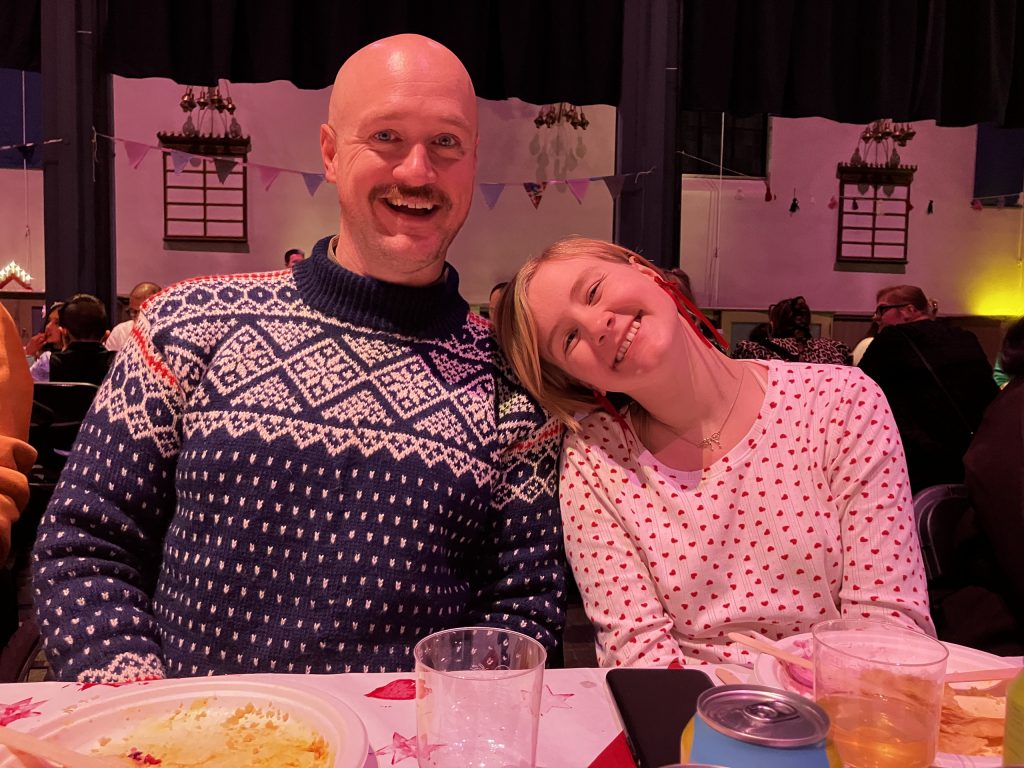
On Christmas Eve, we attended an åpen julaften (open Christmas eve) at a church near Annabel’s school that has been converted to a community center. A volunteer from the center had come to parents’ night at Annabel’s school to advertise it. They served a vegan dinner and planned some fun activities for the kids. Everyone sat at long tables, and we sang and danced around the Christmas tree, which is also a Norwegian tradition. It was heartwarming to celebrate with people who didn’t necessarily have family to be with, like international students, a few older Norwegians, and some newly arrived immigrants.
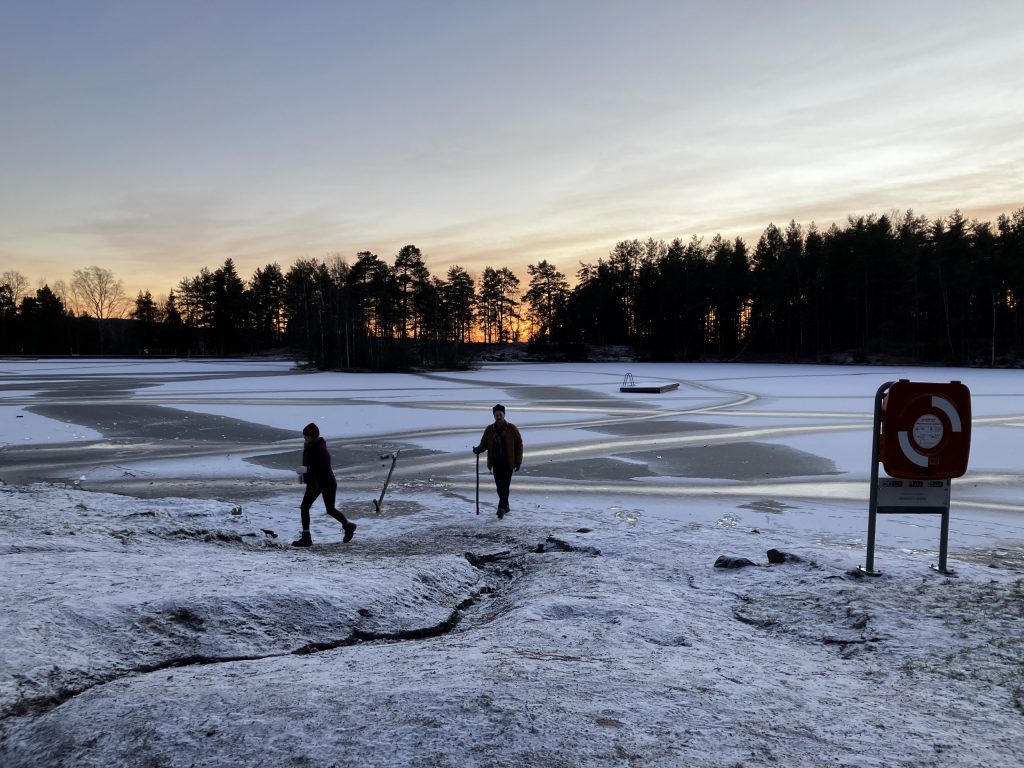
The period between Christmas and New Year’s is called romjula, and it is very quiet in Norway. Stores have limited hours or are closed entirely, and people mostly spend time with family, maybe skiing (if there is snow, which there wasn’t in Oslo), hiking, or going to museums. We went to the Munch Museum. We also realized our local lake had frozen over enough to walk on, so some friends joined us to build a bonfire on the shore, and we played around on the ice.
Some people from our friends’ apartment building hosted a big New Year’s Eve party with 20+ guests, including quite a few kids. We all chipped in on sushi and brought our own drinks. One thing we enjoy about Norwegian social gatherings is how much people enjoy just sitting around the table after dinner and talking. They don’t necessarily feel the need to do any other activities (although the kids played a lot of UNO and hide and seek to keep busy). At midnight, we all went out to see people set off fireworks. This wasn’t an organized event at all–fireworks were basically going off all over the place in a way that frankly didn’t feel safe, but it was a beautiful kind of communal chaos for that many strangers to gather and ring in the new year.
With that, we started to feel the passage of time. It was hard to believe about half of our time in Norway had already passed, but also heartening that the sun was on its way back.