Throughout this course, one of the themes that kept arising was nationalism. The lasting national trauma from World War I was often clear in the sources we read, and clearly fed into many of the deep anxieties regarding French identities that were often in the background. One of the places this was clearest was in […]
Category: Uncategorized
Categories
From the 2020s to the 1920s…
At the beginning of the semester, the extent of my knowledge of 1920s French music could be found in “that one time we talked about Erik Satie in Introduction to Musicology”, my affinity for playing early 20th century unaccompanied flute music, and the program note I wrote about Francis Poulenc’s Laudamus Te for St. Olaf’s […]
To be completely honest, coming into this class, I was not very excited. I am a choir girl through and through, and I knew that 1920’s Paris was known much more for its instrumental music than its choral music. Being a student who also hasn’t gone through music history classes yet, I knew little to […]
As a pianist, I’ve been playing works by Debussy, Ravel, and Satie for a long time. I’ve always enjoyed the music and it always stuck out to me as unique from other genres of classical music, but it wasn’t until this class that I understood why. From nationalism, to exoticism, to class, race, gender, and […]
Whenever one examines a past era, it is easy to put that era in a box and define it only on one or two things. Going into the course, I had some stereotypes about 1920s Paris, but this course really helped me understand the complexity within that interwar period This first began to register with […]
At the beginning of the semester, coming to this class felt like the informational equivalent of standing in front of a firehose. The readings were a largely indistinguishable soup of names and -isms. But after spending over three months untwisting the serpent (Daniel Albright pun intended) of Parisian musical life in the 1920s, I’m pleasantly […]
Categories
Understanding 1920s Paris
I think it is impossible to ever fully understand a certain place at a time in the past. This class has exposed me more than ever before to this fact. No matter how much scholarship we read and how many actors we know about, we will be left with the biases of the writers of […]
Some of the questions that provoke the deepest discussions are the questions that seem the simplest on the surface. One of these questions is as follows: What is French music? What does it mean for music to be French? Here is where I will invoke a personal analogy. I am an Irish citizen, since my […]
Categories
Blog Post #5
One aspect of my research that I have found very troubling is organizing it. I have never been very good at organizing things, and it is especially hard when it is all digital without any physical folders to put things in. The upside of working digitally is that it is much harder for me to […]
Paris’s reputation of being a cultural epicenter still is embedded in today’s modern worldview. Filmmakers, fashion designers, artists, students, and even the average tourist dreams of heading to the city that’s known for its embracing of the avant-garde, the romantic, and the new. When looking back on 1920’s Paris and its music scene in particular, […]
Categories
Blog Post 5
Write about any aspect of your current research that you find exciting, troubling, challenging, and/or illuminating. I think the most challenging part of the research is that I still don’t entirely understand the third paper and will not make an attempt to do so until at least the end of this weekend because I’m extraordinarily […]
Categories
Tailleferre who?
I honestly can’t find any reviews of Tailleferre’s Piano Concerto (1924). I can’t find the program from the premiere or any reviews of the premiere. Finding information on Tailleferre was noticeably more difficult than finding information on the rest of Les Six in the first place. Finding information on this specific piano concerto is a […]
Categories
Satie, Picasso, and Roman Mythology
For the premiere of Mercure, Satie worked with Picasso to create an impressionisme inspired work. Satie’s connection to Montmartre in Paris allowed him to explore and see different types of art and bring them into his ballets. Satie worked closely with the Comte de Beaumont, a French aristocrat known for his parties, extravagant balls, and […]
Categories
Research runs in a circular motion
On May 9th, 1920 Le Bestiaire by Francis Poulenc was premiered at the Salle Gaveau concert hall in Paris.1 100 years and 10 days later here I am writing about it. This is a research blog. This is also a quarantine blog by default because today happens to be April 29th, marking my 6th week […]
For my blogpost this week I am revisiting a primary source I encountered when researching composer Arthur Honegger. I have previously written about how Honegger was always considered a German composer, due to his Swiss upbringing and partially Swiss music education. This being even though he spent most of his life in France amongst French […]
Categories
Added effort = increased reward
One thing that I’ve found both exciting and challenging is sifting through all the primary source documents in French. I’m currently taking French 112, so I have some basic language skills, but I’m definitely not to the point where I can skim and get an accurate idea of a source’s contents. For each of the […]
I’m excited because, one the one hand, I don’t have much exposure to Stravinsky so this will be a fantastic opportunity for me to delve more into who the man was and what made his music so individual. Stravinsky occupies a very interesting place in history, and I even acknowledged him already in my first […]
Categories
Extra! Extra! Ravel All About It!
A treasure trove of information exists in historic newspapers regarding the premiere performance of Ravel’s symphonic poem La valse. The findings have been astonishing, as there are a total of 15 different articles between 13 different newspapers spanning the course of two days within the premiere of the piece (December 12 and December 13th, 1920). […]
Categories
Is Research Ever THAT Easy?
Each research project carries its own set of difficulties. If you are researching with a lot of sources at your disposal, it is often difficult to decide which are the most important and which you should leave out when making your claim. Research on an obscure topic where limited to almost no scholarship exists can […]
As it turns out, it is very difficult to do research without access to a physical library. I’m currently researching Igor Stravinsky’s Symphonies of Wind Instruments and its relationship to discourses of gender in 1920’s France. The piece has many characteristics that are typically associated with masculinity in music, and tied in with the high […]
One thing I have found interesting in researching Auric’s music for the Ballet Les Facheux, is Diaghilev’s fascination with choreography and composer’s who stirred up controversy. The Ballet Russes had a history of performances causing hiccups and then going on to be financially and culturally popular. In more extremes, Parades and Les Sacre du Princeps caused […]
Check out this performance by the St. Olaf Orchestra and Professor Anderegg! My first attempts at researching Ravel were slightly troubling. You think there would be an abundance of online resources examining such a well-known composer, and his piece, Tzigane, which has become a staple of the violin repertoire. There are many dissertations, concert reviews, […]
Research requires focus. Being able to read a paragraph, then another, and another, and then retain the information. This has proved to be, putting it mildly, difficult. My mind is elsewhere. On top of that it seems the internet isn’t the most stable space for information that we would like to think it is. While […]
A lot of things were going on the night of November 2, 1928. Verdi’s “La Traviata” was being performed at the Met in New York City, Henry Cowell programmed Ive’s first violin sonata on a New Music Society concert in San Francisco, and the opera house in Paris was performing a new work by Stravinsky […]
[et_pb_section admin_label=”section”] [et_pb_row admin_label=”row”] [et_pb_column type=”4_4″][et_pb_text admin_label=”Text”]For me personally, the third paper has proved to be the hardest so far. Of course, living through a global pandemic certainly isn’t helping the situation, but I’m also less familiar with operas/oratorios in general. Because of this, I purposely chose Stravinsky’s Oedipus Rex in order to broaden my musical horizons. […]
Sitting at home, longing for the faraway resources of my beloved Halvorson music library, hoping that Gallica will load this issue of Le Figaro before my cat tries to jump on the keyboard again (it’s happened, and she knows how to close tabs), it occurred to me that research is equal parts psychological and academic undertaking. […]
Categories
Le Train Bleu: The Avengers of 1924
Milhaud’s Le Train Bleu is a ballet in one act by Darius Milhaud. At this point in my research I’m still determining which lens would be the best to analyze it through, but I’m leaning towards class. The ballet’s premise is around the shallowness of contemporary love. Because of this, gender seemed like the best […]
Categories
How should we write about ballet?
In the course of my research on Stravinsky’s Pulcinella, an idea came into my head that I should have considered before but never really needed to. How do we critique or write about ballet? It seems like nothing in academia can really train you from this apart from gaining personal experience in the matter. I […]
I found both Moore’s analysis of camp in Poulenc’s Les Biches and Aubade and Dorf’s argument of sapphonics in Socrate both very interesting and helpful in understanding the music for this week. I definitly heard the music in a completely new way after doing the queer readings of these otherwise outwardly appearing heteronormative pieces of […]
I remember Professor Epstein saying something along the lines of “this class focuses on writing as much as it does on the music of Paris in the 1920’s” (pardon my loose paraphrasing). I thought about this, and realized I wasn’t sure I had a clear idea of what constituted good writing. Because I enjoy reading, […]
Categories
Lies That Tell The Truth
In his writings, Dorf suggests that one root of identifying an experience as “sapphonic” can be found in the idea of women opening doors that had long been closed by men. He cites that “reading Greek was a transgressive act for women.”1He continues to suggest that the Princesse de Polignac and her circle reading Plato […]
Categories
Queer? Here?
I am much more convinced by Moore’s arguments than Dorf’s regarding themes of homosexuality in music. . Samuel Dorf focuses on Satie’s Socrate, commissioned by the Princess de Polignac, who used her salon as a space for her to embrace her own homosexuality. Christopher Moore focuses on camp in Poulenc’s ballets, such as Les Biches. Dorf […]
In regard to Dorf’s article, it’s difficult for me – as a straight male – to determine what exactly is considered “queer” or not. Academically speaking, what I do know is that in ancient Greek/Roman times, homosexuality was not seen as a bad thing. In fact, it was fairly normalized. In ancient Rome (bear with […]
I find the articles made by Dorf in his article on Princess de Polignac and Moore’s article on Poulenc’s early ballets to both be compelling in how both artists represented their sexuality. In both situations, the composers were mindful of the artistic choices they were making and what they chose to include in their respective […]
Christopher Moore in his article about camp in Poulenc’s early ballets writes “Publicized as a “Materials Ball,” guests were invited to don evening apparel concocted from everyday items such as wax paper, wickerwork, leather, upholstery, and the like. Author Paul Morand came dressed in book covers, Valentine Hugo in table napkins, and the Baroness de […]
In Dorf’s article I find the evidence suggesting a change in Eric Satie’s style when composing Socrate a compelling starting point for a queer reading. I find Dorf’s narrative about Socrate being a more isolated case in Satie’s body of work, conceptualized in close collaboration with a “confirmed” lesbian patron, especially compelling. Dorf by doing […]
Categories
What’s it take to be queer?
The danger with arguments like the ones Dorf and Moore make is the potential to reduce composers’ output to one facet of their personalities. When the composers in question are musicologically significant, it is all the more tempting to hold up parts of their character which are often criteria for marginalization as a way to […]
Both Dorf and Moore argue retroactively for queer readings of pieces that have been typically interpreted in more traditional ways. Both are convincing to some degree, but Dorf less than Moore. I find Dorf to be less persuasive because his argument is more assumption based than fact based.1 He derives his queer reading from two […]
Categories
Through the Lens of Sexuality
The first time I considered relationships between sexuality and music composition, I wasn’t entirely convinced. Sure, there were some more contemporary relationships between music and sexuality that were more obvious to me. Musical theater featuring queer characters, or more contemporary artists who established themselves as prominent figures of the LGBTQ+ community seemed to hold more […]
Categories
Sapphonics
In order to understand the arguments made by Samuel Dorf about Erik Satie’s Socrate, it’s important to talk about Elizabeth Wood’s conception of Sapphonics. Wood’s central conceipt in her essay Sapphonics that it makes sense to have a lens for understanding music through sexuality, and that there exists a transgressive form of communication in music […]
Categories
Queer Readings and Critiques
Both Samuel N. Dorf and Christopher Moore have credibility as published musicologists who specialize in studies surrounding music in Paris and LGBTQ+ history. Their arguments and queer readings of composers allow us as students and researchers to enhance our critical thinking skills; we can appreciate the scholarship and dedication the authors have contributed to their writing, but […]
Both Dorf and Moore’s writing raise issues of gender and sexuality that had been excluded from meaningful examination in musicology through much of the 20th century. Queer scholar Elizabeth Wood is a rare example among musicologists of that time, introducing the idea of Sapphonics in her first edition of Queering the Pitch in 1994. Wood […]
Categories
Woke or Not?
The Arguments The term “Sapphonics” can be defined as a theory of relationality for women in classical music (specifically opera,) but according to Wood it can also be used to describe an individual voice whose qualities represent “lesbian difference and desire,” and consequently affect lesbian/female listeners in particular ways (1). Both Dorf and Moore make […]
Categories
C’est qui “La Garçonne”?
Historically contextualized, queer composers used music as a way to express themselves in a way they could not in the public eye. The ideas that music always contains secret messages and ulterior motives then for entertainment was used as a reason why music sounds a certain way. We often look for a certain aspect of […]
Like these two bros, Poulenc’s and Satie’s music aligned, at least outwardly, with heteronormative expectations. By giving the music of Erik Satie and Francis Poulenc queer readings, Samuel Dorf and Christopher Moore use a largely unexplored lense to unearth greater insights to the works and perhaps the composer behind them. However, only Moore seals the […]
Categories
Music in the closet
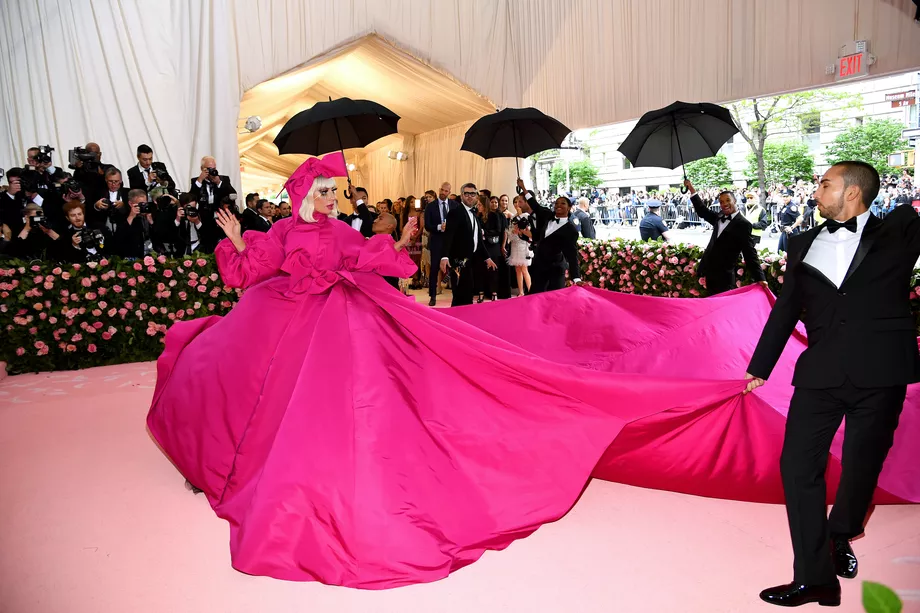
Paris in the 1920s (much like New York) is often seen as an era of gaudiness, irony, and a general sense of the avant-garde in regards to arts, culture, and society. Important aspects of modernism were developed such as Dadaism in art, camp in fashion, and a myriad of changes in music, including the incorporation […]
I think it is undeniable that Satie’s Socrate and some of Poulenc’s ballets—such as Les Biches and Aubade—are better understood through a queer reading. From my readings, I find that Moore’s analysis of camp in Poulenc’s early ballets makes a stronger argument than Dorf. I agree with Dorf in that a queer reading of Socrate […]
I’d like to start by saying I don’t think it can be completely chalked-up to indifference. I think Jordan addressed it best when he acknowledged there was both an aspect of revolt and intrigue, which I think is a fairly standard response to any new form of music that comes out – especially when the […]
Based on the articles of Matthew Jordan, André Levinson, Henry Louis Gates and Karen C.C. Dalton, I think it is hard to argue that the majority of parisians respected and loved African American artists as some of us may love some of our favorite artists today. Once I began reading about Negrophilia I came to […]
Categories
The French intrigue with the exotic
According to Jeffrey Jackson, the French called the 1920s “the crazy years.”1 As jazz music and dance came to France it brought ideas that made many French people uneasy, often because they felt their sophisticated way of life was being threatened. 2 Jazz music was linked to the economic developments in America, a mechanization and […]
Categories
On Othering and Music
It is always easiest to exoticize and revel in the newness of an art form that is “other.” While one might enjoy the art form, if thoughts of the artist are rooted in deeply problematic beliefs, it is difficult to treat admiration of the art form as love. On reflecting upon Andre Levinson on Dance […]
Negrophilia in Paris in the 1920’s did not reflect a deep admiration that the French public had for Africans and African-Americans, but rather reflected the long running practice of exoticisim and appropiation, long established in France. Specifically, writer’s use of Jazz at the time was highly problematic. When primitivism was a style popular in the […]
Negrophilia, which literally means “love of blacks”, was a major artistic and cultural movement in 1920s Paris. White Parisians became very fascinated with black culture, both native African and black American.1 The primary reason that this movement arose was the large influx of black soldiers into France during World War I. In the late 1800s, […]
Phila, the root of Negrophilia, comes from one of four the Greek words for love. Philia is often translated as “brotherly love” or friendship; it is the love of equals. Unfortunately, the term Negrophilia as it was employed by Parisians in the 1920’s, does not live up to its namesake. While Parisians certainly held a […]
Categories
“Primitivism” Across Centuries
Parisians were captivated by the performances of La Revue Nègre. In the presentation of the writings of critics given by Matthew Jordan, they are made to almost stumble over their words trying to describe this phenomenon, and everyone seemed to have an opinion. It drew crowds, and thus held a quality greater than that of […]
If asked, I believe that many 1920s Parisians would have said that they really did love, respect, and celebrate African American art and artists. These Parisians would likely cite how exciting it was to watch. They would likely have similar responses to the 1920s critic André Levinson, who said that “their extravagant technique would put […]
Categories
So You Like Jazz?
Ultimately early French jazz came not out of an appreciation and respect for diversity of culture, but from a place of profiteering, using a false, exoticized farce of ‘tribal’ cultures for the purpose of shocking audiences, and in turn profiting of this contrived vision of the other. Looking to the writings of French music critics […]
When I was six years old I took ballet. For the final recital, myself and ten other small, suburban white girls dressed in tiny black tutu’s danced to “What a Wonderful World” by Louis Armstrong. It’s a good memory that has stayed with me for my entire life. Six-year-old me did not see Louis Armstrong […]
Josephine Baker and Le Revue Nègre completely changed the music scene in 1920’s Paris. Jazz was seen as a direct extension of la musique nègre, and was therefore highly controversial. The people of Paris were simultaneously captivated by the dancing and amplified stereotypes of a new culture, and repulsed by them1. This new jazz phenomenon led […]
Categories
A Not-So-Genuine Love for Jazz
This past interim, I had the opportunity to spend the month of January in Washington D.C. with Professor Epstein while taking a course called “Democracy and the Arts in Washington DC”. Towards the beginning of the trip, we visited the National Museum for Women in the Arts. Touring around the museum we came across a […]
Negrophilia, as defined by Bernard Gendron, was an infatuation with American and “primitive,” or African culture (1). By using the word primitivism to describe music with African influence, one is already assuming a distinction between a developed versus undeveloped group of people. “Primitivism” makes reference to primates, dehumanizing African culture and implying it is less […]
As for many other individuals of my generation 20th Century Fox’ Anastasia (1997) is a fond memory dazzled with nostalgic glitter. It is, if nothing else, an interesting attempt on 20th Century Fox’ part to capture the Disney-formula, with historical negligence, princesses, songs and all. There comes a time in every young girl’s or boy’s […]
Reception towards the influx of black cultural products in 1920s France consisted of equal parts attraction and enjoyment but also revulsion and fear. Reading through French author’s impressions of La Revue Nègre, which they describe as “soft, splenetic, brutal, lustful, or sad,” “something animal,” and “frenetic and devilish,” it is clear that what 1920s Parisians […]
Categories
France, Jazz, and Negrophilia
When Josephine Baker and La Revue Nègre arrived in Paris in the fall of 1925, the public was captivated by her and the other performers’ visceral dancing. It put the soul into black jazz for the white Parisian audiences. Jazz was an enormously controversial music in France at the time. There was both an obsession […]
The concept of Negrophilia becomes quite convoluted when attempting to dissect it and separate it into its true parts. The question of if Parisian’s really did love African and African American artists at the time cannot truly be answered by a modern scholar, as I’m sure there were Parisians who really did appreciate the music […]
Categories
What Was Negrophilia Really About?
Negrophilia is one of the more complicated, and difficult topics we’ve talked about so far in class. One of the difficulties is that many, if not most Parisians really did believe that they were experiencing genuine representations of African American and African music and culture, and that their consumption of these materials was based in […]
Categories
Joséphine Baker vs. André Levinson
Sitting in Rolvaag Library at St. Olaf College in the year 2020, gazing down my nose at Parisian fascination with La Revue Nègre feels like an absurd task. My disconnect with the time and place in which Joséphine Baker began performing in France feels insurmountable. I wasn’t alive in 1920! I’ve only been to Paris […]
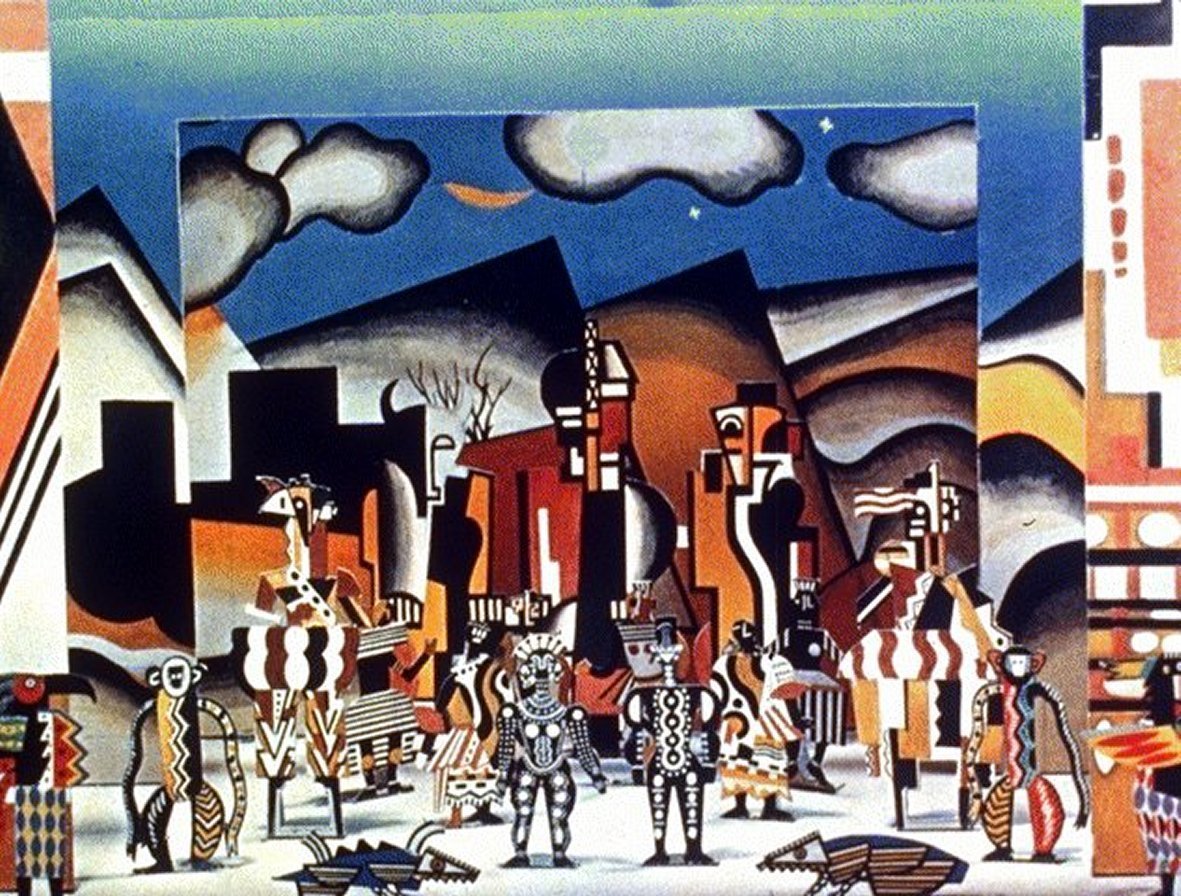
In discussing the Negrophilia in Paris in the 1920s, we need to take a step back and first define what was going on. Negrophilia is a pretty vague concept and many of the audiences and critics in Paris in the 1920s had very different views from one another on the emerging influence of jazz on […]
Categories
Prokofiev, Miaskovsky, and a Swamp
Sergei Prokofiev, a white male Russian composer, who fit the demographic for many composers of the time, made notable contributions to French music in the early 20th century. Although Prokofiev was a Russian composer, his music was received well through the establishment of Sergei Diaghilev’s Ballet Russes. An example of Prokofiev providing insight on how […]
Categories
Virgil Thomson Source Research
To address the matter of Virgil Thomson first, it appears that there’s no standard interpretation of the man, and most people were either very fond of him or had little-to-no reason to enjoy his presence. According to some sources, he was rooted in “vindictiveness, pettiness and personal insecurity with harrowing vividness” (Croan). Others, on the […]
Categories
Landowska: An Intimate Conversation
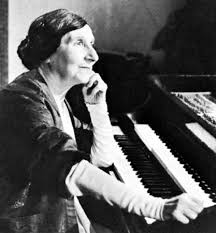
One of the most promising sources on Wanda Landowska is a collection of writings detailing her thoughts on both modern music and music of the past. Through quotes and correspondence, her life is revealed as Landowska shares snapshots, like reviews of the latest Stravinsky symphony and communications with Francis Poulenc. Landowska on Music, edited by former assistant […]
Categories
Louis Durey: The Eldest of Les Six
Louis Durey was the eldest composer of Les Six. Despite initially collaborating in the group’s first collaborative album, within a year Durey would remove himself from the group. Durey, like several others, did not buy into the premise that the ideals of the group described by Cocteau realistically matched the work he was creating. For […]
AUTHOR (Who is writing? Based on the writer’s education, credentials, and/or experience, how credible is the information or argument? Given the writer’s background, what are his/her potential biases or preferences?): Wayne D Shirley, a manuscript librarian in the Library of Congress music department DISCOURSE ( How does this article respond to scholarly problems or participate […]
Marcelle Meyer was a French Pianist who premiered pieces by composers such as Daruis Milhaud, Erik Satie, and Igor Stravinsky. She studied under the pianist Ricardo Viñes who also taught Francis Poulenc as a young boy. Meyer was also a favorite of the French group of composers, Les Six. As an at testament to her […]
Serge Koussevitzky was one of the most important conductors and patrons during the first half of the 20th century. Unfortunately, information on him (especially during his time living in Paris) is limited. Most of the writing I have been able to find on him only addresses him briefly, and really is focused on another figure […]
Categories
A Glimpse of Greece
A strong supporter of modern music, Paul Collaer, musicologist and musician, spent a considerable span of his professional life giving lecture-recitals on the works of his contemporaries. He created the Pro Arte concerts in Brussels to further promote the music he dedicated so much to, was a director of Belgian Radio, and was acquainted with […]
Igor Stravinsky, ca.1937. Photograph. https://www.loc.gov/item/2016872669/ I expected to find a wide variety of sources when researching Igor Stravinsky, due to the combination of his compositional success, his influence and residence within three western nations, and his consideration of himself as a neoclassical composer. There were many sources that analyzed Stravinsky’s music, which evolved from progressive […]
Categories
Picasso, a Powerful Influence
Picasso was always more interested in popular music rather than traditional classical music, an interest which led him to composers like Satie and de Falla, and ultimately led to him designing cubist sets and costumes, designs which in turn influenced the audiences perception of the music, and even the content of the musical works themselves. […]
There are a lot of sources out there about Francis Poulenc. This wasn’t a particularly profound discovery; after first hearing his Sonata for Flute and Piano a few years ago, I was fueled with the desire to discover more about his music and his subsequent popularity in the French musical scene of the 1920s.
Categories
The Forgotten Member of Les Six
Germaine Tailleferre was born Germaine Taillefesse on April 19th, 1892. She attended the Paris Conservatory where she met the other members of Les Six. Tailleferre was the only female member of the group. Coincidentally, Tailleferre is the least documented, and some might say appreciated, member of Les Six, despite her active participation in the French […]
In her article “Nadia Boulanger and the Salon of the Princesse de Polignac,”1 Jeanice Brooks argues that separating salon and concert hall culture as two seperate spheres in the development of music in 20th century France fails to critically interrogate the work of patrons such as Winaretta Singer a.k.a. La princesse de Polignac. Brooks is […]
One of the first thoughts that came to my mind when deciding on Coco Chanel for my paper topic was how she no doubt changed women’s’ fashion forever with her impact on social change and push for women’s’ independence. Chanel’s styles such as trousers and suits for women, popularizing skin tan, the color black, branded […]
Aaron Copland was one of many creatives who flocked to Paris in the 1920s, where he encountered several forces that shaped his career as a composer. While spending the summer of 1921 at the Fontainebleau school for American composition students outside of Paris, Copland met by chance his future mentor and lifelong friend Nadia Boulanger.1 […]
Categories
Step 1. “Francité”. Step 2. Profit?
As far as francité in music goes, it is both emotionally and economically driven, as well as highly subjective what gets included and excluded. My essay is about Arthur Honegger, a financially successful composer, at least by many accounts. One of my main sources is a book by Harry Halbreich creatively titled Arthur Honegger. Halbreich, […]
Georges Auric was a French composer born in 1899 and was part of Les Six, or the group six French artists that came out of Cocteau’s ideas of French music. While his compositions included ballets, solo and ensemble piano, voice, and orchestra, he was widely known as a film composer and music critic. In his writings […]
Georges Braque (1882-1963) and Pablo Piacasso (1881-1973) both act as two central figures in the Cubism art movement. During my initial research, I was unsure of how I was going to incorporate an artist such as Braque into the dynamic French musical movements of the early 20th century. It was upon discovering Nancy Perloff’s Art and […]
In my research on Nadia Boulanger I have been turning to Kimberly Francis time and time again for information on Boulanger and her relationship with the Stravinsky family. Francis is one of the most prominent scholars in this area of research, along with Caroline Potter. The most useful source for me so far has been […]
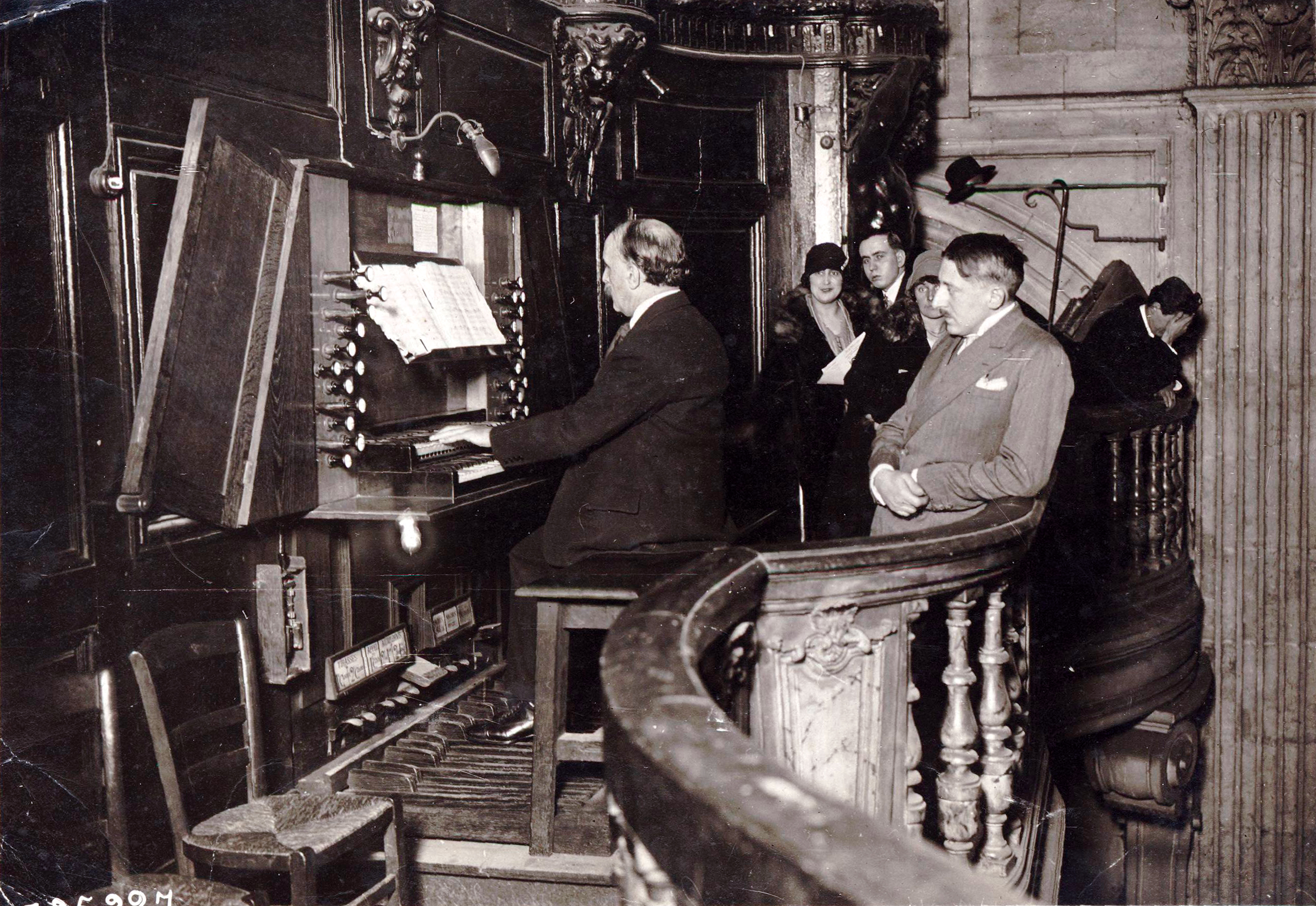
Louis Vierne (1870-1937) was a French organist, teacher, and composer, most well known for his six organ symphonies and his position as organist of Notre Dame de Paris from 1900 until his death in 1937. Vierne is very well known among organists, but his influence on the wider reach of French music is difficult to […]
When picking my topic for the first paper I was immediately attracted to Josephine Baker. I was familiar with her work as a civil rights activist for both France during World War II and America in the 1950s. While I was aware of her French performing career, I was entirely ignorant of her popularity and […]
1915 was not a great year for 51-year-old Elizabeth Sprague Coolidge. Her privileged upbringing did nothing to prepare her for the loss of her mother, father, and husband all within months of each other. Though losing her family was incredibly tragic, she ended up inheriting over $4,000,000. Elizabeth Coolidge grew up as an accomplished pianist, […]
Is it possible to have a musical nationalist identity? In 21st century United States of America, with streaming services exposing avid listeners to everything from Dolly Parton to Kendrick Lamar, I don’t believe it is possible. This place we call a nation is too diverse. We have too many subgroups and cultures within our “nation” […]
Categories
Who Is In? Who Is Out?
In order to have a nation, one must firstly decide who is and is not a part of it. Who is in? Who is out? In Imagined Communities, Anderson introduces the idea that a nation is “imagined as both inherently limited and sovereign.” It is up to the members of the nation to define their […]
Categories
Influenced by Everything
Composers and writers were obsessed with establishing national identities through music in the early 20th century, in France and many Western countries. The disdain Cocteau’s writing1 shows for German music and the “mudiness” of Russian influence in Debussy’s music is at once familiar and bizarre. Certainly many people experience national pride; one need look no […]
Categories
Roots
Before you read the text, please, sit down, relax, press the link and enjoy some stock images and some music. What does it remind you of? Any names come to mind? Any particular styles, Nationalities even? To me the concept of Latin vs. German roots as the foundation of an “innate frenchness” as echoed by […]
To me, the most relatable aspect of the material we’ve studied has been the idea that nationality is always at the core of the art anyone produces. Milhuad writes in his article “The Evolution of Modern Music in Paris and Vienna” that tradition “depends not only upon the taste, personal tendencies, or fancy of the […]
Nationalism is about taking pride in your culture. Its about a sense of belonging and being a part of something bigger, right? There’s a part of me that definitely wants to feel this sense of belonging and pride, but somehow, I don’t think I’ve ever truly felt the nationalistic urge. I can’t imagine defending America […]
I think it’s easier to start with the most relatable, which is the intense drive to identify/inspire a specific national identity after losing the Franco-Prussian war. I believe we’re seeing a similar trend in modern American politics, given that America has had a rocky history with its own war efforts (ranging from a clear loss […]
Categories
Nationalism: Then and Now
You can’t talk about the debates over national musical identity in 1920’s France without looking at the rise in French nationalism, as well as nationalism throughout Europe during this time period. In the present day we are seeing a similar trend in nationalistic urges globally, with nationalist demagogues, such as Modi in India, Duerte in […]
Categories
How do we define French Music?
The societal changes that drove music during the “Belle Epoque” were really the same changes that drove the reformation of everything else from technology to art. After establishing the Third Republic in France, an optimistic and proud mindset emerged, finally feeling some stability in France. Musicians and composers used that to their advantage, wanting to […]
Many of the composers and writers we’ve read have discussed the differences between national and individual identity in French music, as well as the way these identities overlap. I enjoyed Bauer’s examination of the Belgian born composer César Franck. After studying and performing his violin sonata I found it interesting to make new meanings of […]