Louis Durey was the eldest composer of Les Six. Despite initially collaborating in the group’s first collaborative album, within a year Durey would remove himself from the group. Durey, like several others, did not buy into the premise that the ideals of the group described by Cocteau realistically matched the work he was creating.
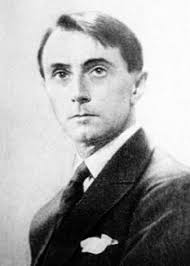
For her master thesis 1 in 1973, Barbara Ozol Labatt analyzed the effect of the first world war on French composers. In her thesis, she focuses on Satie, Debussy, Ravel, Cocteau, and members of Les Six. After first describing each composer’s interaction with WW I, she spends a lot of time comparing the aesthetics and philosophy of each composer and how it relates to the French ideals that were constructed after the war. She focuses on the dichotomy of the Saties and the Ravel’s, those who wanted a distinct new Frenchness to align with a specific French described way of music, versus those who thought the composer must composer in their own individual voice, which she argues was important to Durey, among others.
It does not seem that Barbara Ozol Labatt continued to write papers after her Master’s Thesis in 1973. Instead, it seems that  she became the president of the San Antonio Youth Symphony in the early 1950’s and has remained there for some time. That does not discredit her work, however, because it is filled with primary sources, including several of the one’s I had also found from research for the project. She cites many letters from the composers to each other, and even Milhaud’s personal notes (75). As well as a description of the Les Six by George Auric about the problematic nature of Les Six in the preface to Frederic Robert’s biography of Durey (72).
The main argument that Labatt is making in this thesis is that WW I had a large impact on all French composer’s and accelerated their change in aesthetics, especially when concerned with patriotism (101). She spends most of the thesis unpacking how it affected the different composer’s individually rather than chalking it up to one board change. That has been fairly helpful in understanding how Durey relates to his Les Six counterparts.
What I found most convincing and helpful about this article, is the sheer amount of primary and secondary sources she utilizes. It has a beefy five page bibliography that spans primary sources like letters and notebooks, to French music critics, and secondary sources from other French writer’s and well respected musicologists. I really appreciate the form of the thesis. It is in two main section: the war, and its effect of music, and she first speaks broadly to introduce it then focuses move specifically on the individual composer, first discussing the older generation so that one can see how those ideals both did and did not manifest in the later generation of Les Six.
Labatt, Barbara Ozol. 1973. The Influence of World War One on Contemporary French Composers. Kean University, ProQuest Dissertations Publishing, EP11231