In my quest to learn more about the life of Marcelle Meyer who was a highly renowned French pianist, I immediately was slapped with some sticky setbacks (and yes, that was purposeful alliteration).
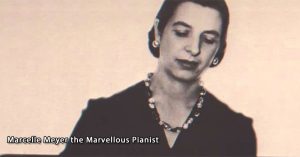
It, frankly, came with no shock to see that there are essentially no girthy articles or scholarships written exclusively about Miss Marcelle Meyer. Although, I thankfully stumbled upon a very useful source: The Musical Times. How magnifique! The Musical Times was founded in 1844 by J. Alfred Novello and still is published to this day1. It has withstood the test of time, to say the least. The editor of this journal at the time was an English musician, composer, conductor, and teacher- Harvey Grace. He had quite a fancy for organ music, which is something good to note when reading his reviews about a fellow keyboardist. This snippet found about Marcelle can allude to an “outsider’s” view of French musicians and how they performed.
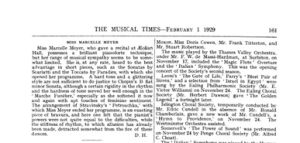
Marcelle was known as one of the greatest French pianists of that era, so it is no doubt that this review holds a lot of weight when it comes to how she represented French music and performing tradition. He talks about her “range of musical sympathy” being quite limited and her having a certain “rigidity” and “hardness” of the tone. But don’t worry, she saved herself when she “softened” it and gave it “apt touches of feminine sentiment.2” Oof. There is a lot to dig into there.
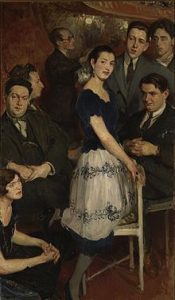
Despite this harsh critique and slight misogyny, it is clear to see that Grace is revealing and communicating information about the reception of French musicians without even knowing he was doing so. Marcelle Meyer was widely known for being chosen to play numerous pieces for the most famous composers of that time- she did not mess around. Not only was she a highly coveted pianist to perform these works, but she also made it big in the recording industry at the time.
In the comments made about her performance, it is clear to see that she is possibly following along with the movements that are taking place in France at the time: neoclassicism, known as being “abstract, absolute, architectural, pure, concise, direct, and objective.”3 Marcelle was performing in a similar vein: absolute, concise, direct, and objective. There was no “sentimental” or “illustrative” sense in her performance according to Grace.3 It would be hard for me to make a claim that she was indeed attempting to reveal the French movement of neoclassicism, but it is very “clear” and “direct” (ha) to see that Marcelle is demonstrating many of these néoclassicisme qualities. More to come on Marcelle…
1“The Musical Times.” Wikipedia, Wikimedia Foundation, (2022), https://en.wikipedia.org/wiki/The_Musical_Times.</p