The “Hard Core Cases”
Introduction
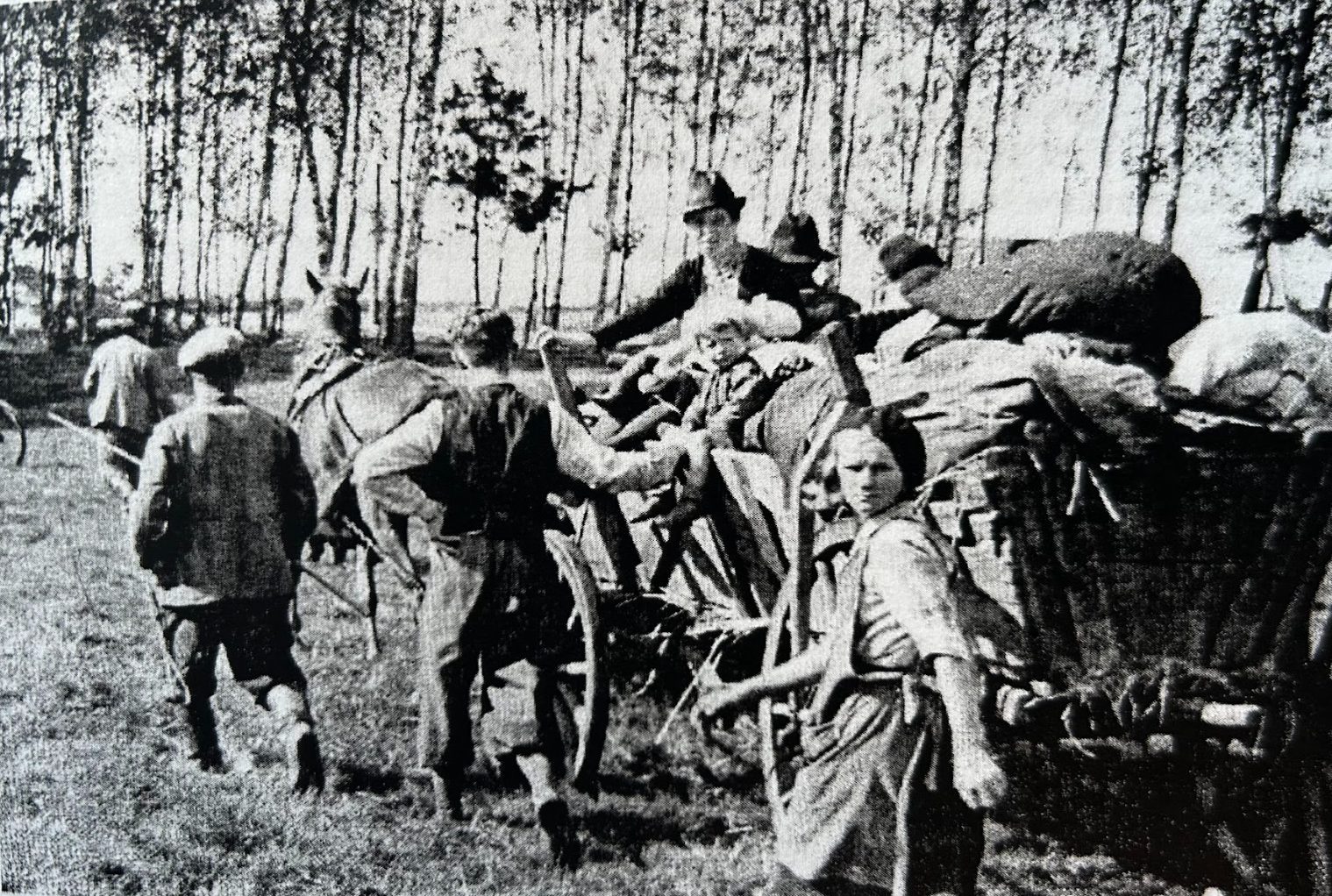
At the end of World War II, many people had been displaced. Many families from the Baltics left together, carrying all they could.1 They were fleeing further west and south, trying to avoid the Soviet army.2 The displaced people from the Baltics were unique compared to other displaced groups as many were able to leave together with their families, and many of them were educated.3 After they got to the Displaced Persons camps scattered around Germany and Austria, DPs began to hope for resettlement. Yet, there were hurdles in their way. The Lutheran World Federation sought to help these people in the process of resettlement. Immediately, they noticed the ‘Hard Core Cases’ that needed additional support.
The Ideal Worker
While humanitarian aid was at the forefront of LWF services, ultimately the system of resettlement and emigration that had to be coordinated with the governments of receiving countries was framed by economic considerations. Many of the countries taking displaced people (DPs) needed workers for specific sectors.4 The ideal candidate for resettlement was incredibly specific: single, young people, who were willing to do menial labor.5 The age bias can be seen in the resettlement statistics. 15% percent of men aged 20-29 were resettled, women 31%. In comparison, only 4% of men aged 40-49 were resettled, women 2%.6 This left many young people with an impossible choice: stay with their families in the DP camps, or leave them behind, possibly forever, in order to emigrate.7 Most countries required the DP to stay at the job initially provided for 1-2 years.8 Furthermore, the focus on young, healthy, single workers left out the elderly, the disabled, families, widows with children, and many other groups of people that made up the displaced population in Germany.
Families
When the Lutheran World Federation Service to Refugees landed on the ground in Allied Occupied Germany, they immediately noticed one aspect of the resettlement process they wanted to change: the emphasis on single individuals.9 In a report compiled by Howard Hong, LWF Pastor Bruno Ederma is quoted as stating, “it must be pointed out that the previous emigrations unjustly broke the natural bonds of family” (B. Ederma, 203). With this in mind, the LWF started to focus on assisting displaced families, and with them the “Hard Core Cases.”10
Widows
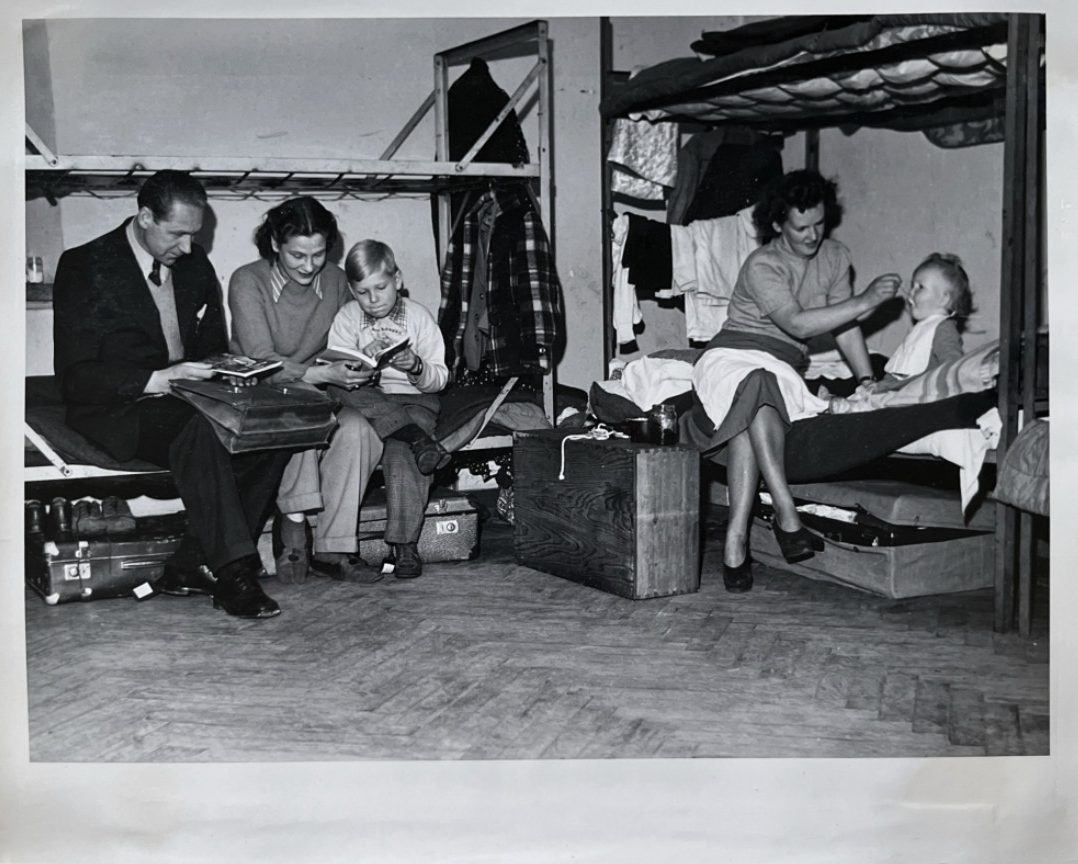
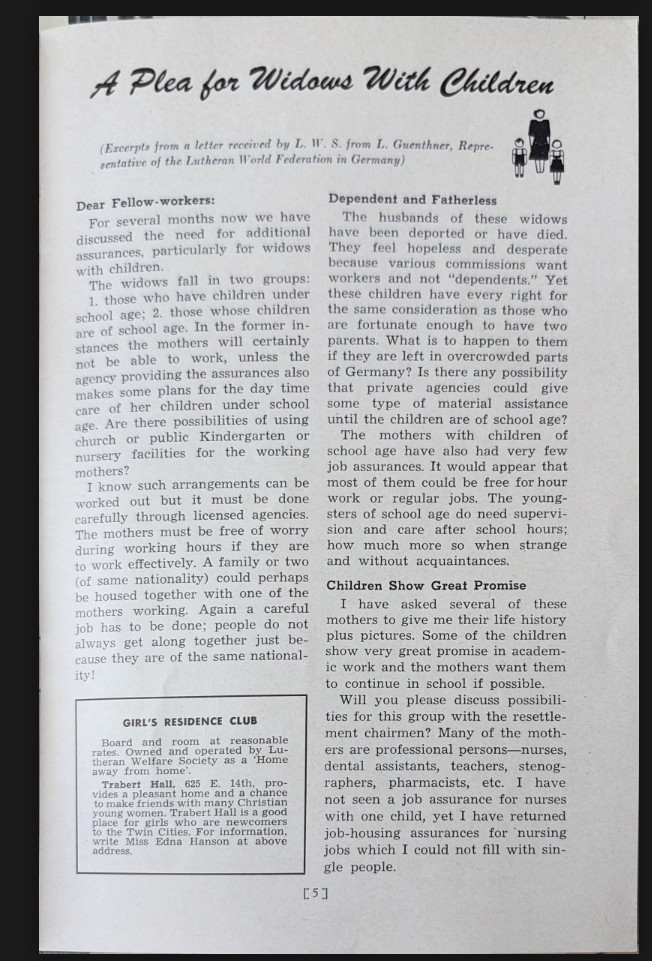
Families needed to place the parents in jobs as well as ensure that any children are able to be cared for. This was more easily done in a family with both a father and a mother: the father would gain a job, and the mother would either work during the children’s school hours or watch them while the father worked. But what about widows with children?11 How could they demonstrate they could work in order to qualify for emigration, if they needed to watch their children? A letter by Louise Guetherner, a representative of the LWF in Germany, asks these very questions in a 1949 article for Lutheran Welfare, titled “A Plea for Widows with Children.” In the published letter, Guethner proposed that the local churches create child care options to assist these families.12 Through the work done both in the DP camps in Germany and in resettlement in the US, the LWF was able to assist widows and their children in the emigration process and beyond, ensuring their continued success.
Elderly
Families with elderly family members also struggled to stay together through immigration. While the younger members would be considered good candidates, the elderly members faced a challenge finding suitable work.13 The story of Mrs. Tschumach, reported in a 1950 article Cordelia Cox of the National Lutheran Council in The Lutheran, shows the Lutheran resettlement initiative needed to overcome such challenges.14 Mrs. Tschumach gained an assurance for a job in orange picking, allowing her to provide for herself (55) as well as for her 80 year-old husband. Eventually, however, the farmer who provided the assurance sought more hardy help. Fortunately, by that time the Tschumachs were able to find more suitable employment now that they were in the United States.
The ability to do hard labor for a short time was not possessed by every elderly person in the DP camps. Many elderly individuals were in assisted living programs run by the IRO.15 The LWF noticed that there was no plan for these elderly individuals’ care once the IRO formally closed in 1952, thus, the LWF stepped in to continue the care given to the elderly who were left behind.16 This care sometimes went far beyond the post-war years, with the Berchtesgaden DP resident Senior Care Center providing services formally from 1951-1985.17 Beyond the formal care of aging displaced people, the care home in Berchtesgaden continues to provide elder care, but now serving the local community.18
Illness and Disability
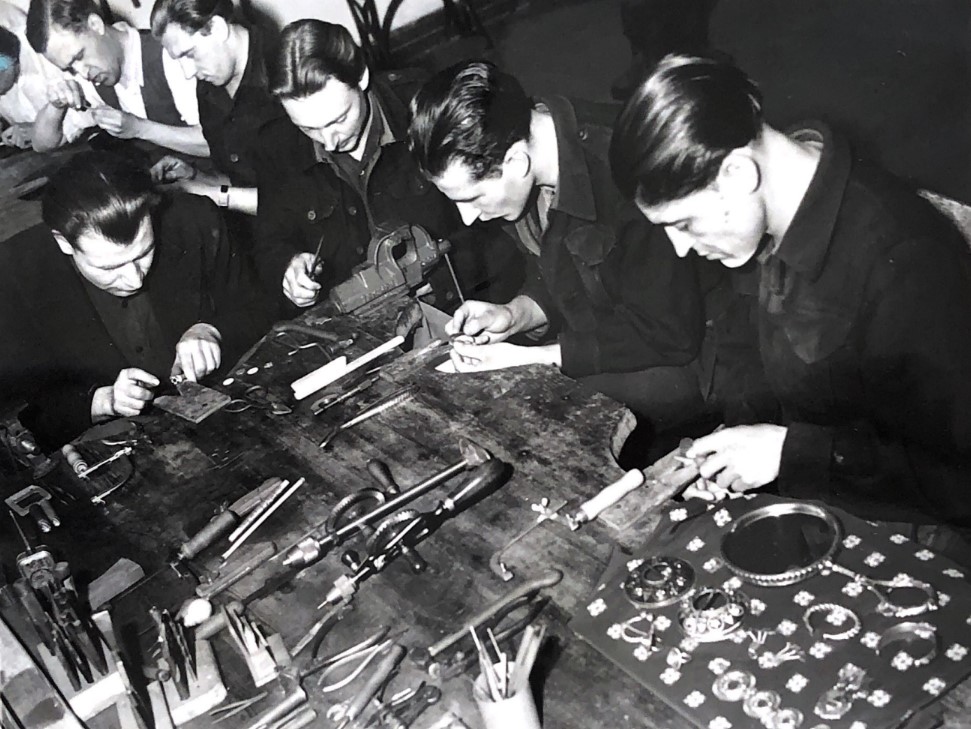
One ripple effect of World War II was the increased spread of tuberculosis. People who are malnourished, tired, and have lowered immune systems are especially vulnerable to this disease.19 The war caused many to become ill, and one of the primary focuses in the immediate aftermath was to prevent further spread of the disease. UNRRA and later the IRO provided medical assistance to the displaced persons camps. Resources such as medicine, vaccines, and more were brought to prevent epidemic.20 In addition to supplementing the medical supplies provided in the camps, the LWF set up workshops for individuals to develop employable skills.21 People disabled in the war, for instance, were able to learn a new trade or hone one they had begun earlier, so that they could become an employable worker, rather than being discounted and overlooked because of their disability.
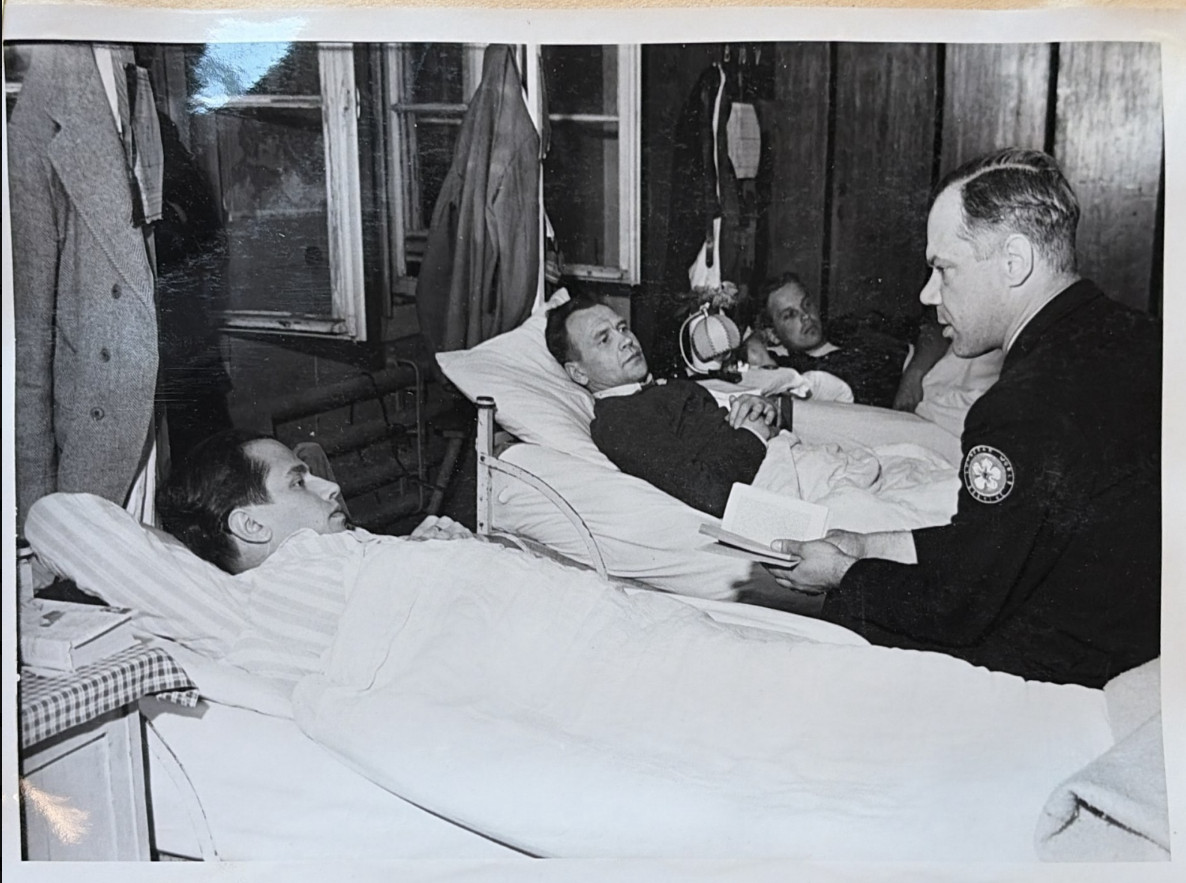
LWF Pastor Bruno Ederma explains the importance of this work, stating, “One can imagine how depressing a TB patient feels, if he is still able to walk in the surrounding garden, but has no trousers to wear. Also here we can do much good and pleasure in donating clothing” (Lutheran World Federation Service to Refugees in Germany 1947-1949, Report. Vol. 1, 204). Among the roughly 200,000 individuals that counted as “hard core cases” 13% were institutionalized.22 Many of the individuals in the hospitals and tuberculosis treatment centers had very little comfort, so the LWF implemented programs to provide them with chaplaincy services, as well as events to foster community and good cheer.23
The illness of one family member could hold the whole family back from resettlement. Other diseases such as sexually transmitted infections, smallpox, and whooping cough were screened for in the final stage of the immigration process.24 To reach that point, families would have secured a job assurance and were on their final checkpoint before the boat itself. If a family member were to be flagged for illness, the family would be delayed many months and their assurance would be at risk.25 The LWF assisted families struggling in this step of the process: going as far as to contact Mayo Clinic doctors for a second opinion.26 It is thanks to the stamina of the LWF workers that many families were able to confirm their health and make their way into America.
Intellectuals
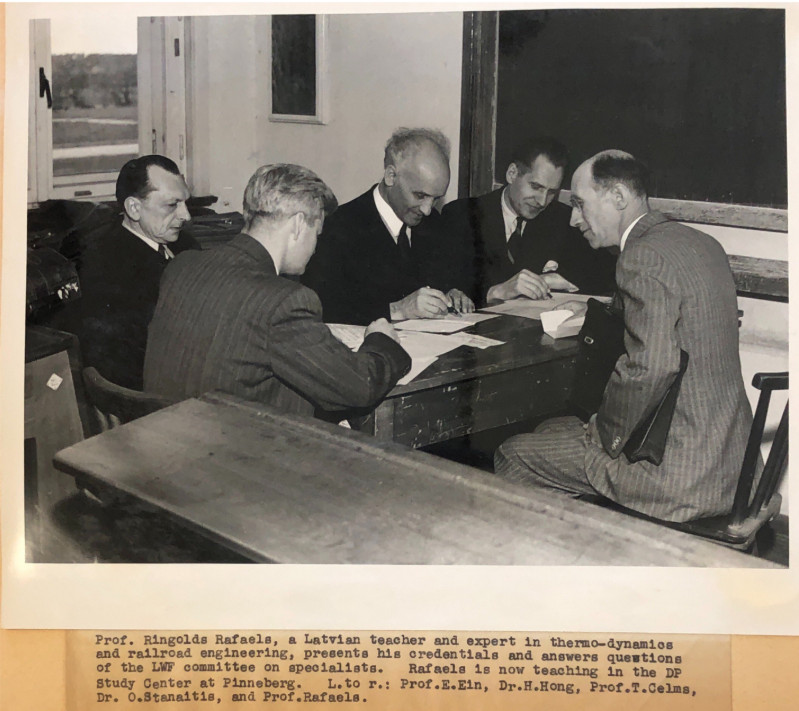
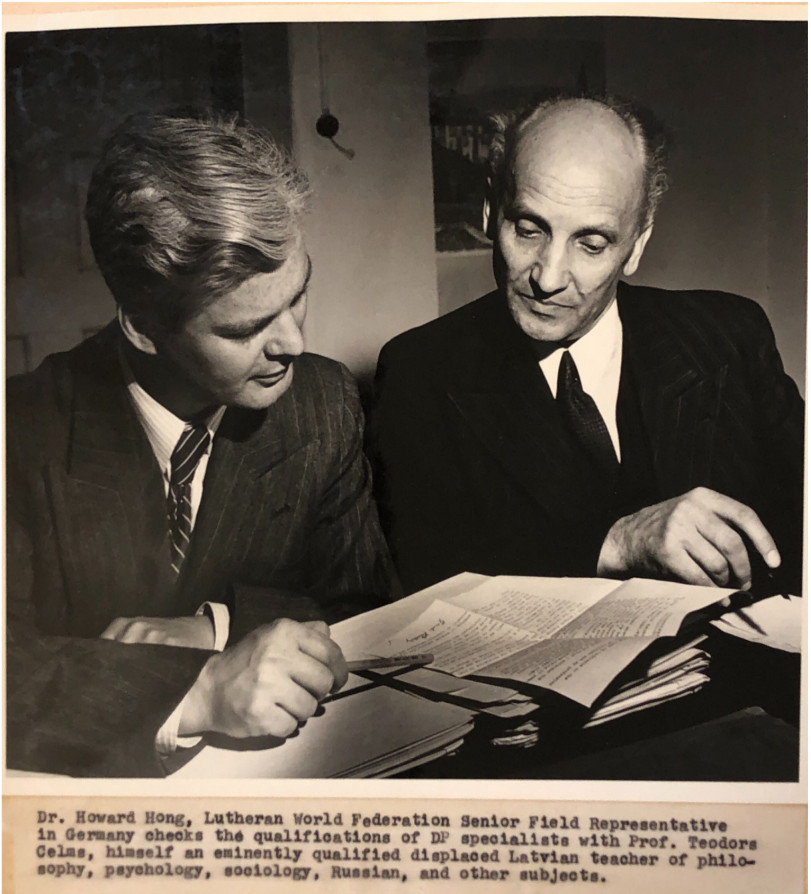
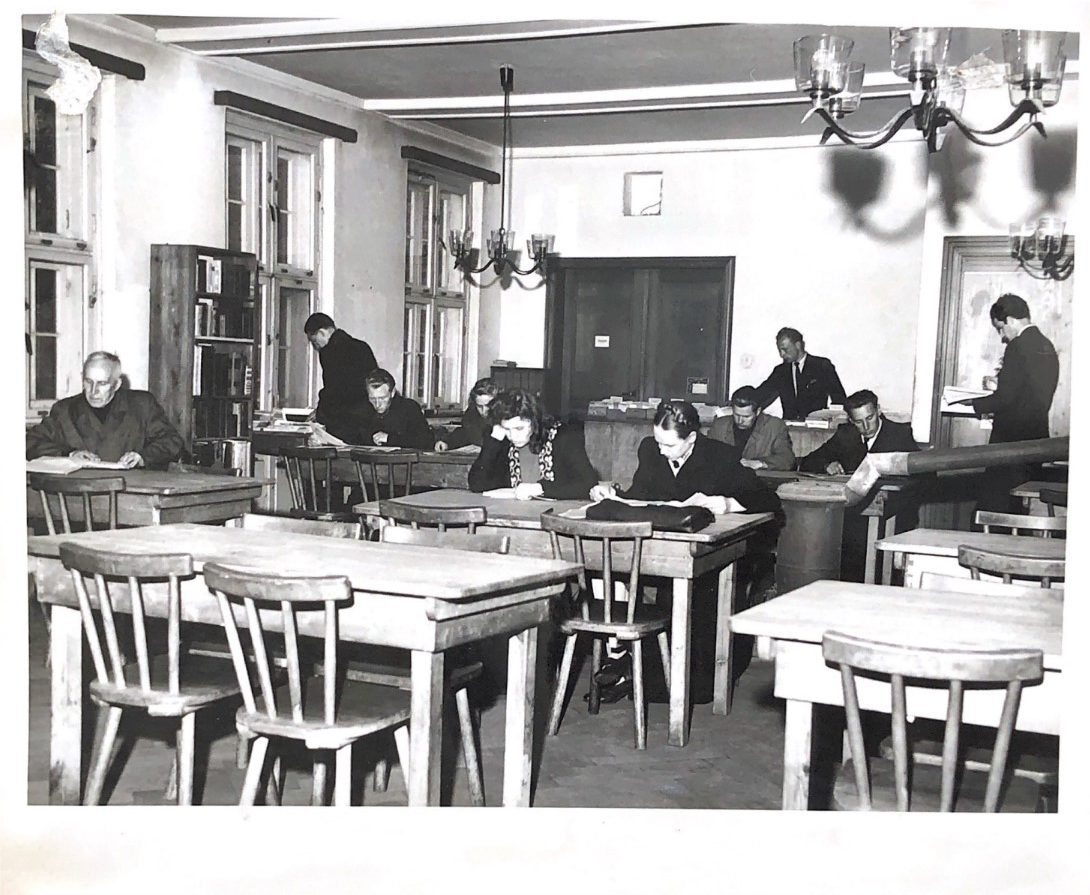
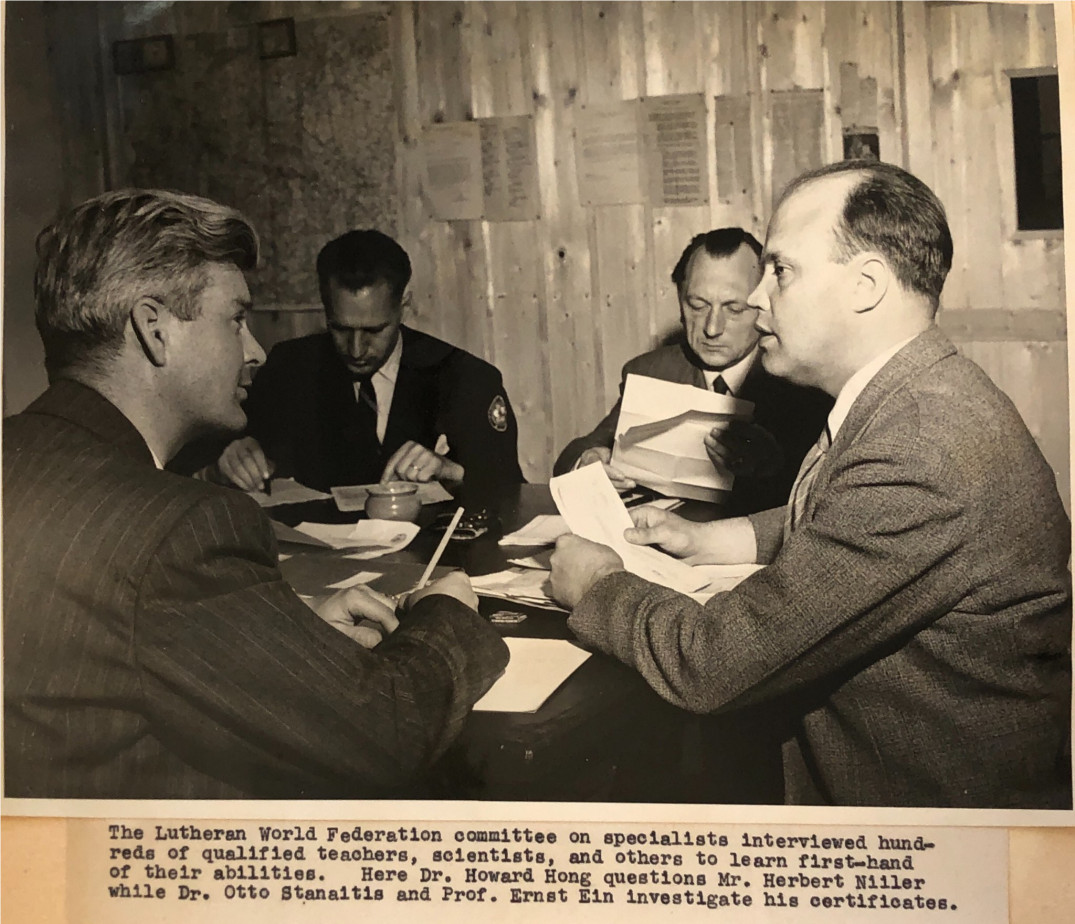
Intellectuals and the educated were considered bourgeois class enemies by the Soviet Union, and so many fled in fear of persecution.27 The Baltic DP camps had many intellectuals who were unable to find any job offers in their academic fields. Eventually, the various Baltic groups within the camps decided to establish their own university with support from the LWF: the Baltic University, located in Hamburg and then moved to nearby Pinneburg.28 The purpose of Baltic University was to allow students whose education was disrupted to continue, as well as offer young people vocational education beyond what the LWF Study Centers and Vocational Training Centers offered.29 Still, many countries found the highly educated to be suspicious and were concerned that they would take up positions in their professional fields, which many countries did feel they needed.30
In addition, many of the intellectuals did not have the skill sets needed for the jobs that were being offered. The LWF addressed this issue twofold: firstly by trying to find professorships for the scholars, and secondly by teaching them skills that could assure them emigration before continuing on to return to their previous professions.31 One example is the story of Dr. Herbert Rebassoo, who held a PhD in mathematics.32 While displaced, he worked as a math professor at Baltic University.33 However, as he was not able to secure an assurance for a job in his field, he emigrated with a secured job as a building maintenance worker.34 Once Dr. Rebasso made it to the United States, he was able to connect with the local Lutheran community and find a job teaching math at Luther College.35 St. Olaf College, Luther College, Luther Seminary, and several other Lutheran educational institutions in the US were able to hire DPs as professors. The appeal of resettlement in the United States was precisely this ability to find more preferable jobs if the one provided in the initial assurance was not sufficient. This option was not available in many other countries, where the expectation was that the DPs stay at the job originally offered for an extended amount of time.36
Concluding Thoughts
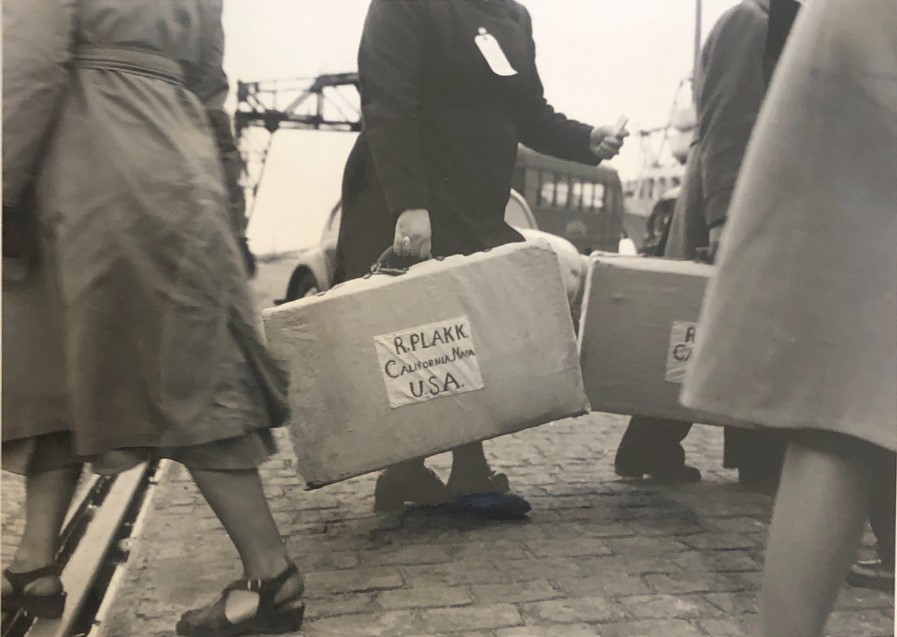
The DPs in Europe following World War II were communities of all types of people. The LWF offered assistance not just for general resettlement, but for the immigration of especially challenging “hard core” cases, the ones who life circumstances meant they could not do it alone. Through the LWF, families, intellectuals, widows with children, the disabled, and others facing substantial hinderances were able to gain a new start to life through resettlement. The effects of Lutherans helping Lutherans is clear through this story: regardless of circumstance, help was provided.
Sources
- Nasaw, The Last Million: Europe’s Displaced Persons from World War to Cold War, Penguin Press, 2020: 46.
- Nasaw, The Last Million: Europe’s Displaced Persons from World War to Cold War, 52, 152.
- J. Misiunas, R. Taagepera, and G. von Rauch. The Baltic States, Years of Dependence, 1940-1980. University of California Press, 1984: 40.
- Nasaw, The Last Million: Europe’s Displaced Persons from World War to Cold War, 337.
- Nasaw, The Last Million: Europe’s Displaced Persons from World War to Cold War, 337.
- Jacobmeyer,“The ‘Displaced Persons’ in West Germany, 1945-1951,” in The Uprooted: Forced Migration as an International Problem in the Post-War Era, Vol. 25. Lund Studies in International History. Chartwell-Bratt, 1990: 279-280.
- Nasaw, The Last Million: Europe’s Displaced Persons from World War to Cold War, 337, 451.
- G. Stoessinger, The Refugee and the World Community, University of Minnesota Press, 1956: 116.
- Lutheran World Federation Service to Refugees in Germany 1947-1949, Report. Vol. 1 & 2. Edited by Howard V. Hong, St. Olaf College, Northfield, MN, 1949: 203.
- Lutheran World Federation Service to Refugees in Germany 1947-1949, 203.
- Guenthner, “A Plea for Widows with Children,” Lutheran Welfare, July 1949, XXVII, No. 4: 5.
- Guenthner, “A Plea for Widows with Children,” 5.
- Stoessinger, The Refugee and the World Community, 140.
- C. Cox, “There are problems placing DPs,” The Lutheran, June 21, 1950: 20.
- Stoessinger, The Refugee and the World Community, 140. June 21, 1950 The Lutheran.
- Lutheran World Federation Service to Refugees in Germany 1947-1949, 193.
- Plūme, J. Plūme, V. Vīķe-Freiberga, H. V. Hong, and Lutheran World Federation Service to Refugees, Insula, Island of Hope: A Latvian Memoir, Revised and Enlarged edition, Morgan Hill, CA: Bookstand Publishing, 2013: 277.
- Plūme et al., Insula, Island of Hope: A Latvian Memoir, 277.
- Jacobmeyer,“The ‘Displaced Persons’ in West Germany, 1945-1951,” in The Uprooted: Forced Migration as an International Problem in the Post-War Era, 279.
- Stoessinger, The Refugee and the World Community, 105.
- Lutheran World Federation Service to Refugees in Germany 1947-1949, 204.
- Jacobmeyer,“The ‘Displaced Persons’ in West Germany, 1945-1951,” in The Uprooted: Forced Migration as an International Problem in the Post-War Era, 280.
- Lutheran World Federation Service to Refugees in Germany 1947-1949, 218.
- Nasaw, The Last Million: Europe’s Displaced Persons from World War to Cold War, 52, 451.
- Cox, “There are problems placing DPs,” 19.
- St. John’s Lutheran Church Archive, Box 1, Binder 2.
- Toews, and P. L. Vezina. “Enemies of the People,” American Economic Journal: Macroeconomics (NASHVILLE) 17, no. 1 (2025): 310–42.
- Pakštalis and B. Tranavičiūtė, “Forging Transnational Connections: The Role of the UNRA University and the Baltic University Shaping Potwar Educational Landscapes,” Historia y Memoria De La Educacion no. 22 (2025): 269.
- Pakštalis and Tranavičiūtė, “Forging Transnational Connections: The Role of the UNRA University and the Baltic University Shaping Potwar Educational Landscapes,” 270.
- Shephard, The Long Road Home: The Aftermath of the Second World War, Alfred Knopf, 2011: 345.
- Stoessinger, The Refugee and the World Community, 107.
- Anderson, “Pastor Calls; Iowa DP Janitor Gets Job as Luther College Mathematics Teacher,” Lutheran Herald, October 11, 1949: 965.
- Anderson, “Pastor Calls; Iowa DP Janitor Gets Job as Luther College Mathematics Teacher,” 965.
- Anderson, “Pastor Calls; Iowa DP Janitor Gets Job as Luther College Mathematics Teacher,” 965.
- Anderson, “Pastor Calls; Iowa DP Janitor Gets Job as Luther College Mathematics Teacher,” 965.
- Stoessinger, The Refugee and the World Community, 116.
Images
- (Heading) Man with LWF badge on shoulder speaking with three men in beds, Lutheran World Federation Photographic Section, used with permission of the Lutheran World Federation and Evangelical Lutheran Church in America.
- “How most rural residents fled their homes ahead of the battlefront”, from: Ventis Plume, John Plume, and Vaira Vīke-Freiberga, Insula, Island of Hope: A Latvian Memoir, Revised and enlarged edition. Bookstand Publishing, 2013.
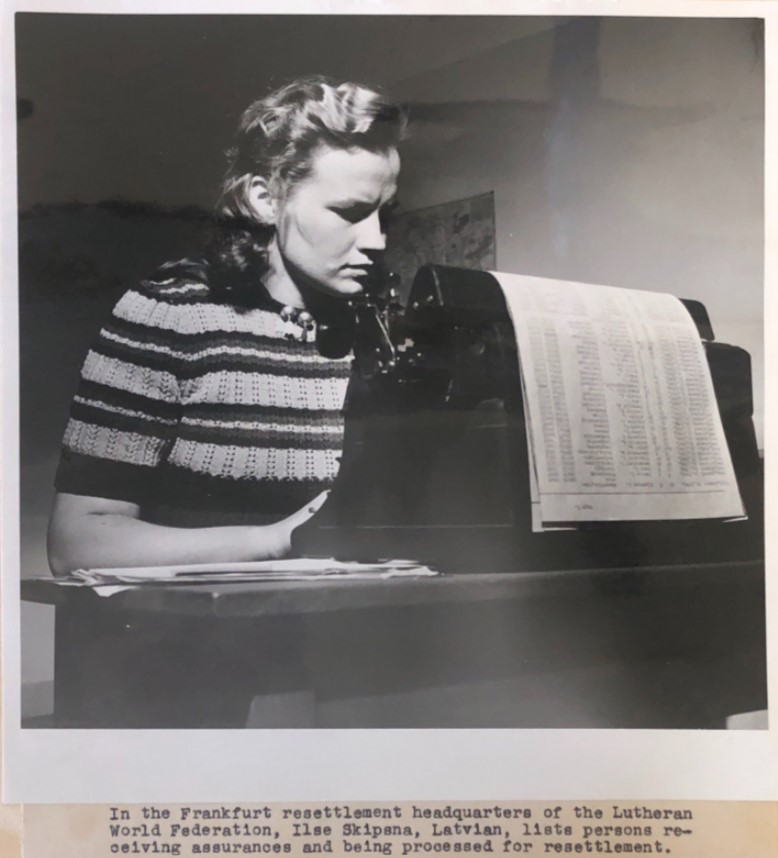
- Woman in front of typewriter, Lutheran World Federation Service Photographic Section, used with permission of the Lutheran World Federation and Evangelical Lutheran Church in America.
- One family of three sitting on a bed (left) and a mother feeding her child (right), Lutheran World Federation Photographic Section, used with permission of the Lutheran World Federation and Evangelical Lutheran Church in America.
- “A Plea for Widows with Children” by L. Guenthner, Lutheran Welfare, July 1949, XXVII, No. 4: 5. Used with permission of the Evangelical Lutheran Church and the National Lutheran Council.
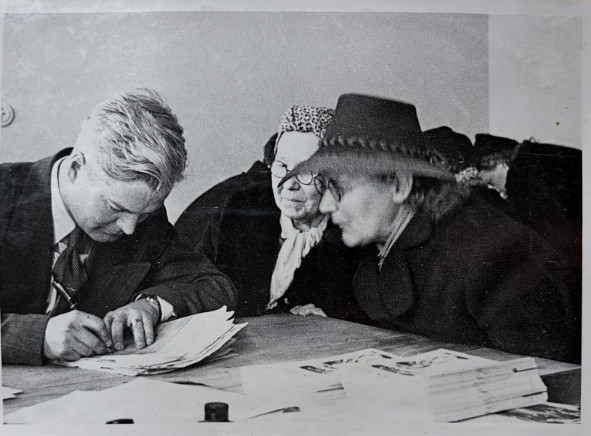
- Howard Hong writing with two older women watching, Lutheran World Federation Photographic Section, used with permission of the Lutheran World Federation and Evangelical Lutheran Church in America.
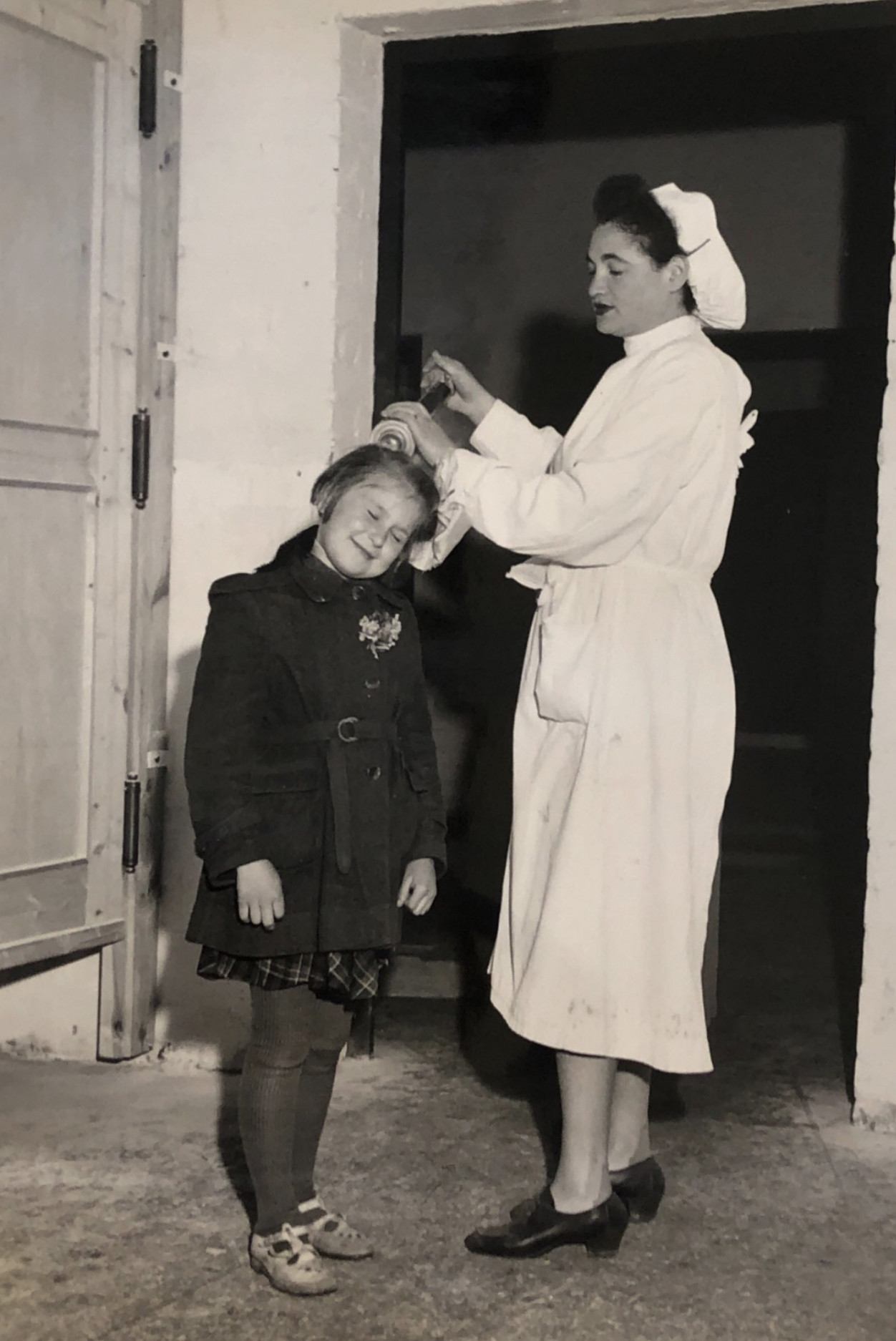
- Young girl receiving dusting from IRO nurse, Lutheran World Federation Photographic Section, used with permission of the Lutheran World Federation and Evangelical Lutheran Church in America.
- Man with LWF badge on shoulder speaking with three men in beds, Lutheran World Federation Photographic Section, used with permission of the Lutheran World Federation and Evangelical Lutheran Church in America.
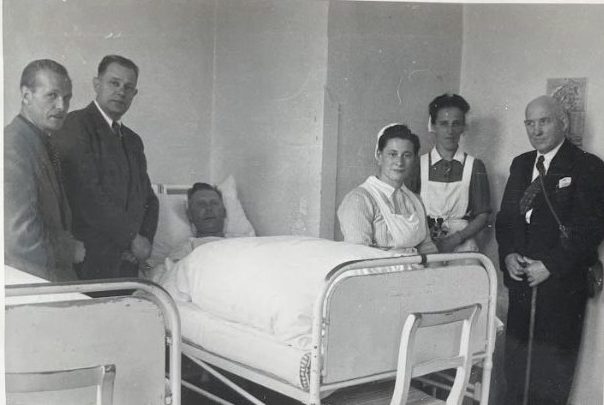
- Six people in a hospital room with one in bed, Lutheran World Federation Photographic Section, used with permission of the Lutheran World Federation and Evangelical Lutheran Church in America.
- Six men working at a table full of tools and jewelry, Lutheran World Federation Photographic Section, used with permission of the Lutheran World Federation and Evangelical Lutheran Church in America.
- Dr. Howard Hong sitting with Professor Teodors Celms, a Latvian displaced person, reviewing dossiers of displaced people for assurances, Lutheran World Federation Photographic Section, used with permission of the Lutheran World Federation and Evangelical Lutheran Church in America.
- People sitting and reading at desks in the Baltic University, Lutheran World Federation Photographic Section, used with permission of the Lutheran World Federation and Evangelical Lutheran Church in America.
- Dr. Hong interviewing a displaced persion with Dr. Stanaitis and Professor Ein assiting, Lutheran World Federation Photographic Section, used with permission of the Lutheran World Federation and Evangelical Lutheran Church in America.
- Displaced scholars: Professor Ringolds Rafaels, Professor Ernst Ein, Professor Teodors Celms, and Dr. Otonas Stanaitis talking with Dr. Howard Hong, Lutheran World Federation Photographic Section, used with permission of the Lutheran World Federation and Evangelical Lutheran Church in America.
- Displaced Plakk family heading to their new home in California, Lutheran World Federation Photographic Section, used with permission of the Lutheran World Federation and Evangelical Lutheran Church in America.