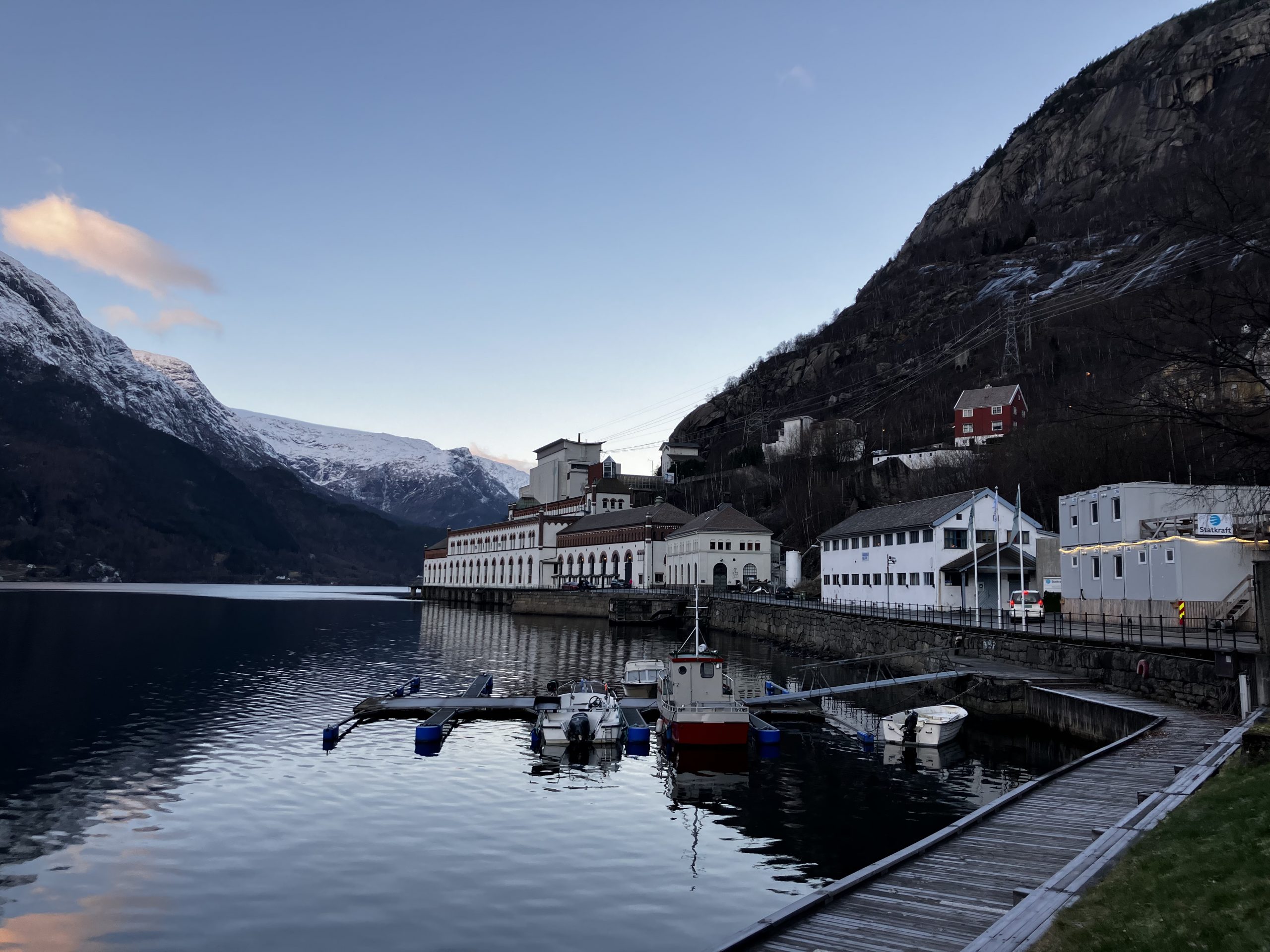
The ever-shorter days of November provided good conditions for making substantial writing progress, and I also managed to fit in a research trip into Tyssedal/Odda in the Hardanger region of Norway. A cold that moved through each family member for about a week at a time forced us to be flexible in our plans, but we ended the month with a really nice Thanksgiving celebration.
Cultural Events
A group of Fulbrighters did get together to see Láhppon/Lost, a ballet about the Kautokeino Rebellion, an uprising against religious and political authorities that took place in a Sámi community in 1852. The ballet made fascinating use of Sámi cultural symbols (lassos, sedge grass, forms inspired by silver brooches), translated into contemporary forms that evoked a strong sense of the tension, chaos, and grief that surrounded these historical events. The use of joik, digital composition, and the production of sound on stage using bodies and props (like the lassos) made the performance literally resonate in the bodies of the audience members. It was a memorable performance, and I was glad to be able to experience it in a group.
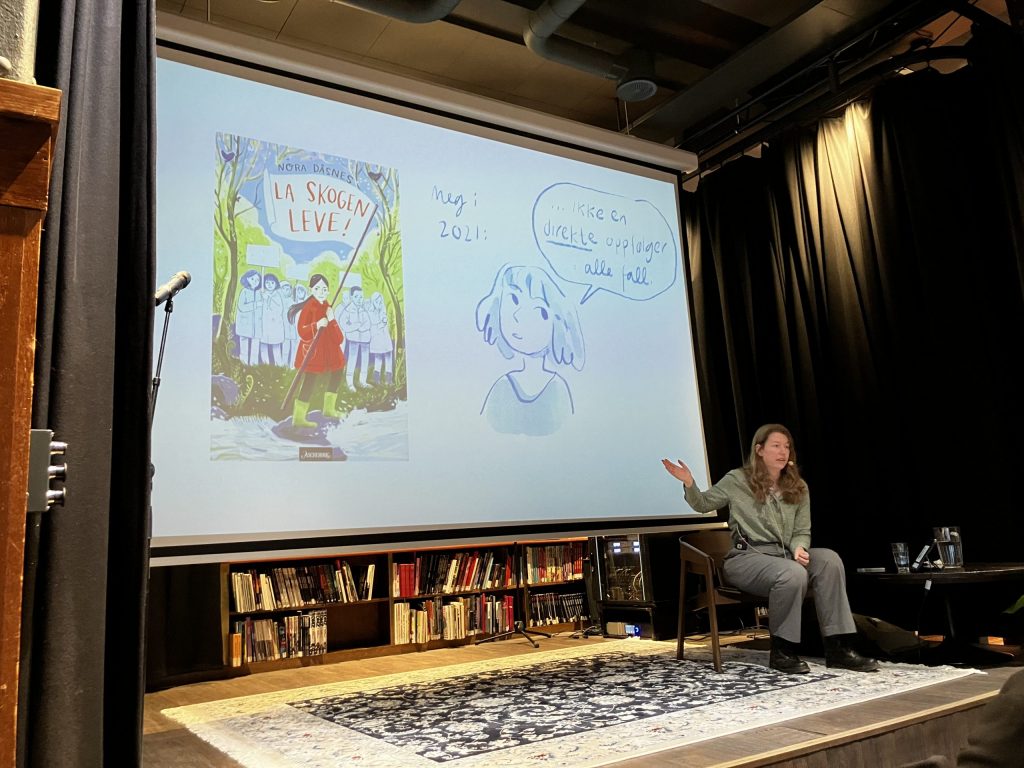
We were also able to catch a talk by comic book author and illustrator Nora Dåsnes during a full-day event for families devoted to comic books. This took place at the Deichman library in Grünerløkka, which has recently been renovated. The library has an entire room devoted just to comics and graphic novels, a total dream. Dåsnes has written several books for an older elementary/middle school audience, and I was really impressed by her ability to communicate clearly but honestly with children about experiences like depression, crushes, and early romantic relationships. She even demonstrated how she draws different emotions on a big screen while taking suggestions from the kids in the audience.
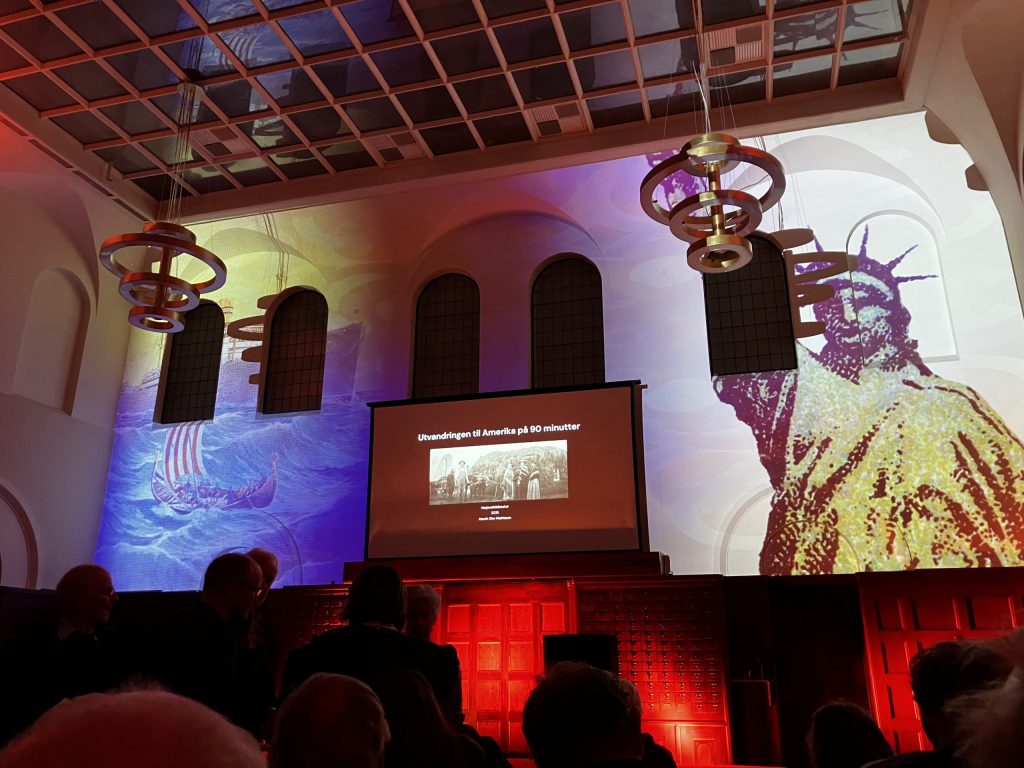
A friend and I attended Utvandringen til Amerika på 90 minutter (Emigration to American in 90 minutes), a talk by historian Henrik Olav Mathiesen. This was a fun experience because I had just written a grant to bring Mathiesen to St. Olaf in October for a lecture. 2025 marked two hundred years of organized emigration from Norway to the United States, and there have been many events in conjunction with this anniversary in both countries. Mathiesen provided not only facts about this historic migration but also contextualized this movement within American imperialism and colonialism, and showed how the advantages Norwegians received helped to advance these projects. I appreciated his willingness to present the less comfortable aspects of Norwegian emigration, rather than idealizing immigrants, while at the same time acknowledging the perseverance and courage necessary to make a life in a new country.
Family & Friends
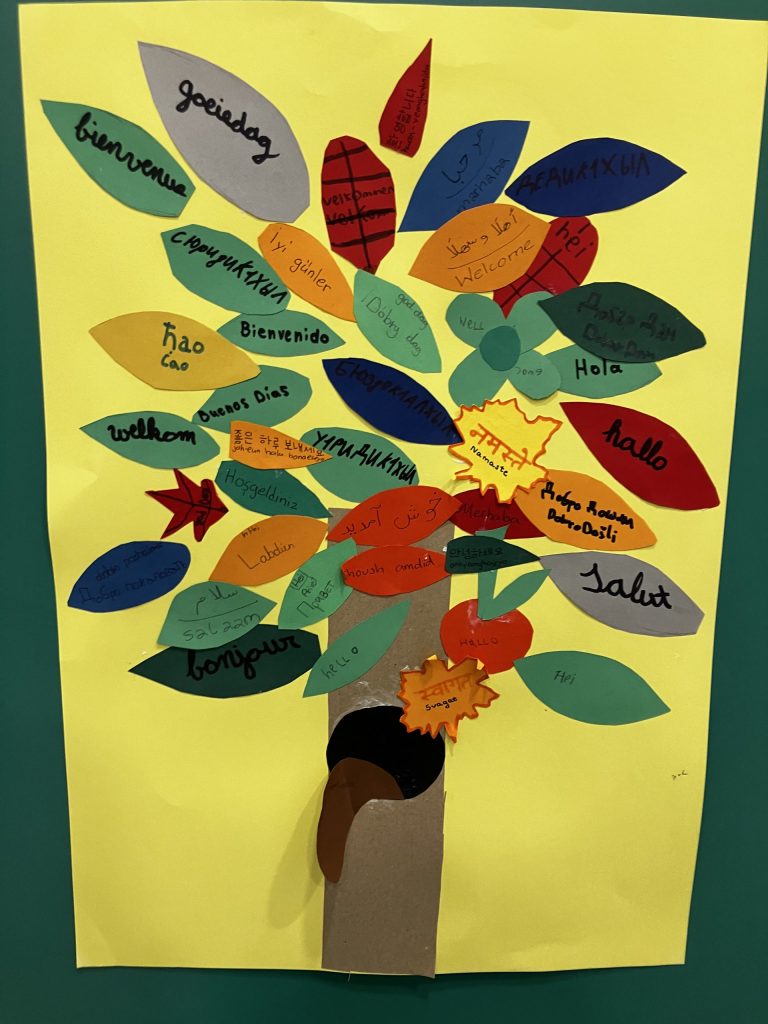
Annabel’s school hosted what we would call an open house for families in mid-November. This was a chance to see the classroom, meet other parents, and get some information from the staff. Since Annabel’s school is designed for kids who have newly arrived to Norway, the staff integrates learning about their different cultural and linguistic backgrounds into the curriculum. The students also receive many more hours of Norwegian language instruction per week than they would at a typical public school. Annabel also performed in a dance recital with a local dance studio, which was a fun milestone.
To close the month, we hosted Thanksgiving dinner for several Norwegian friends (four adults and a very cute baby). I’ve enjoyed sharing the aspects of this holiday that focus on generosity and gratitude with Norwegians each time I’ve lived here. I hosted my first Thanksgiving here with a friend back when I was a masters student. We crowded a fairly large group of students into a tiny kitchen and served the full traditional meal, including lefse that I made from my grandmother’s recipe. Ten years ago, Ryan and I were proud that we managed to throw the whole meal together after our then one-year-old had gone to bed. Apparently, one of the Norwegian guests enjoyed this so much that he explicitly requested to be invited to Thanksgiving this year back in September. Of course, we were glad to oblige him.
Research progress
I circulated a chapter of my book project to members of the Eco-emotions Research Group here at the University of Oslo, where I am a guest researcher. I mostly chose this format because incremental deadlines are so helpful, and because I haven’t had many opportunities to receive substantial feedback on written portions of the project (although I’ve given several conference talks). It felt great to get a full draft completed, which as is always the case with drafts, revealed some key areas for improvement.
Research trip to Voss, Tyssedal, and Odda
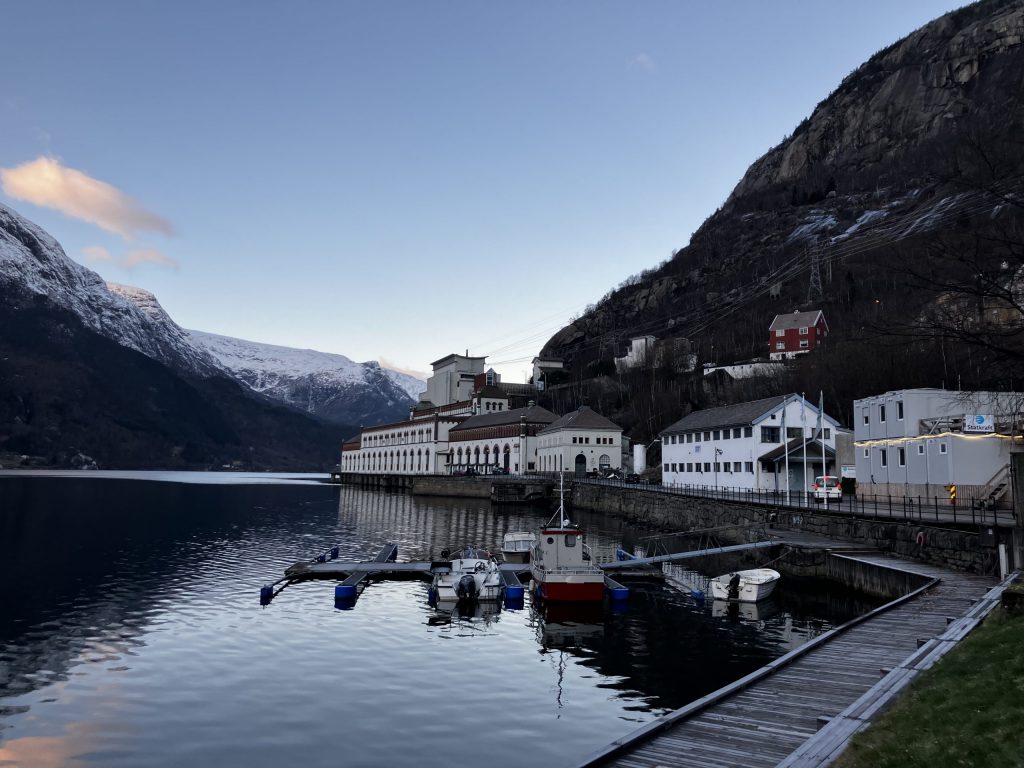
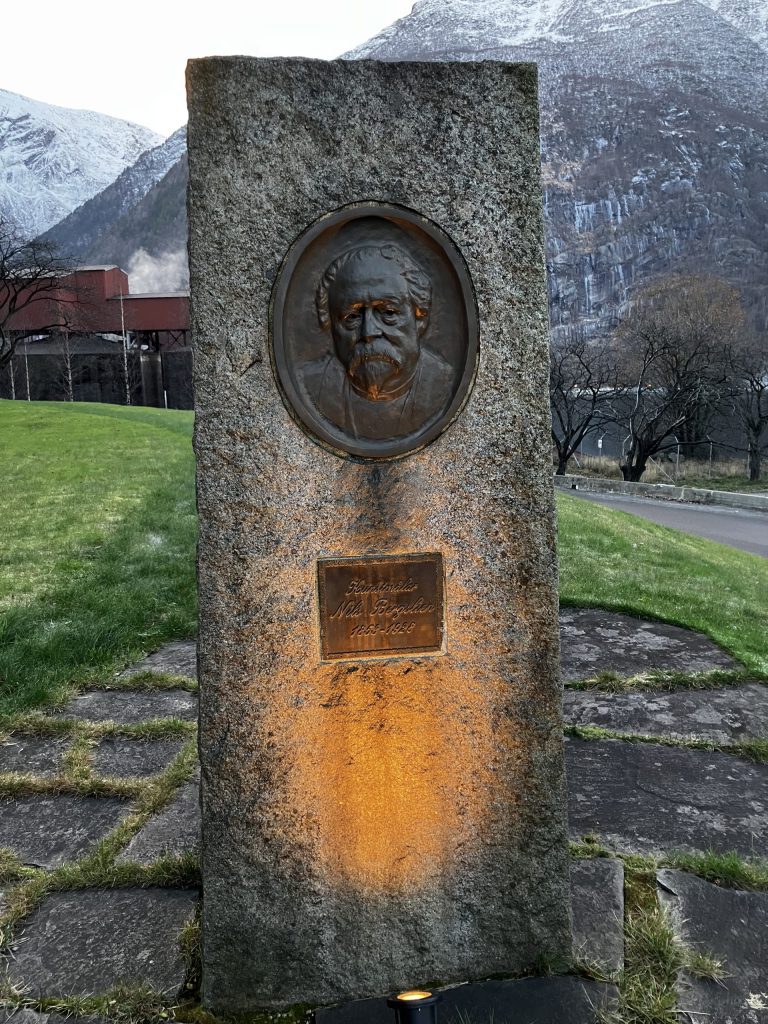
My main research trip this month was to the Hardanger region, where some important early hydropower development took place. I had been to the Energy Museum in Tyssedal previously, but only as a museum visitor when this project was in its early phases. This time, I came prepared with a lot of questions and with a better sense of the materials I needed to collect for analysis later. The Energy Museum is housed within the Tysso power plant, which was the first high pressure hydropower plant in Norway and went into operation in 1908. Like Vemork, the architecture is meant to impress, and it seems strikingly out of place in its location, deep within a narrow fjord. I stayed at the only hotel in the small village of Tyssedal because of its impressive art collection, including a key piece related to hydropower that I am writing about in the book. The artist, Nils Bergslien, traveled around the region, trading his skills as a decorative painter for room and board at various tourist hotels. Apparently the Tyssedal Hotel was one of his favorites. There is a stone monument to him on the hotel grounds, and one of the museum staff said he is rumored to haunt the third floor. Bergslien had two uncles who were also artists, and their family is from Voss, so I found some of the artwork related to them during my visit there as well.
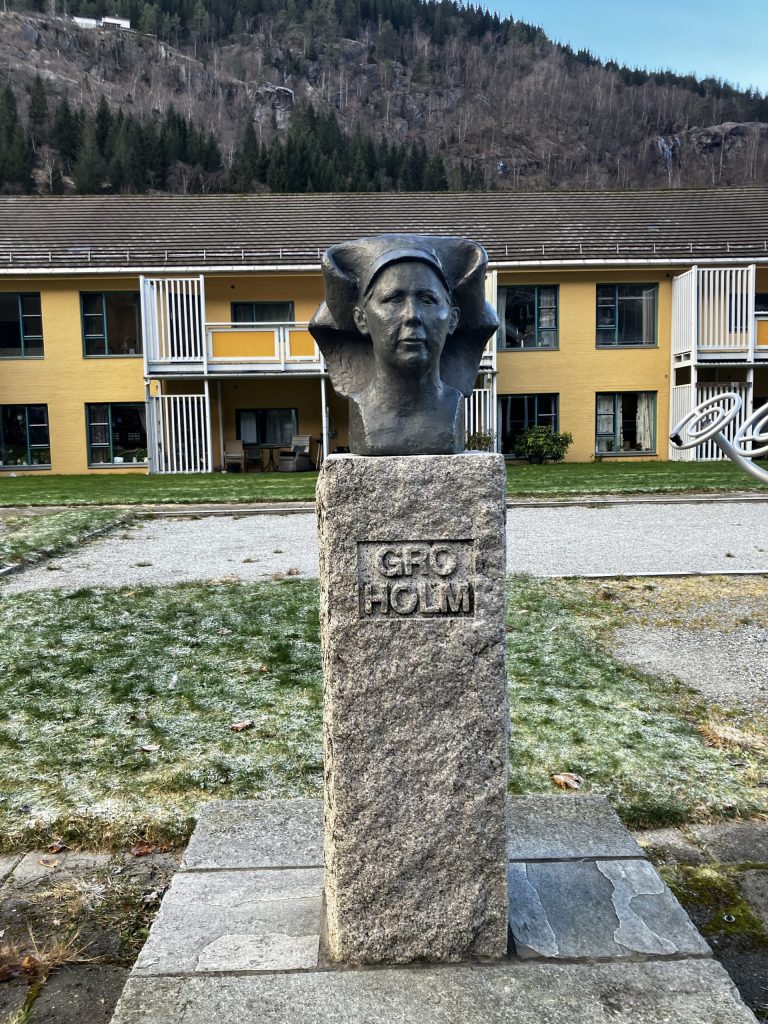
My visit to Odda was focused on the history of tourism in the area, a trade that was significantly disrupted by the arrival of factories fueled by hydropower. The industrial infrastructure clashed with German and British tourists’ desire for pristine nature and quaint, pastoral communities, and the factories emitted unsightly pollution as well. Through a connection at the university, I was able to talk to a local hotel owner who is extremely knowledgable about the area and its history and provided leads to other sources as well. In Odda, I was looking also for traces of the author Gro Holm, whose novel I write about in the same chapter. She was a fascinating figure with a keen understanding of how the social and economic changes brought about by industrialization impacted people differently depending on their occupation, gender, and even age. There is a bust of her next to the town’s youth club. The same museum staff member who told me about the ghost said Holm is sometimes called the most kissed woman in Odda because so many kids have given into the impulse to give her a smooch on their way to and from the club.
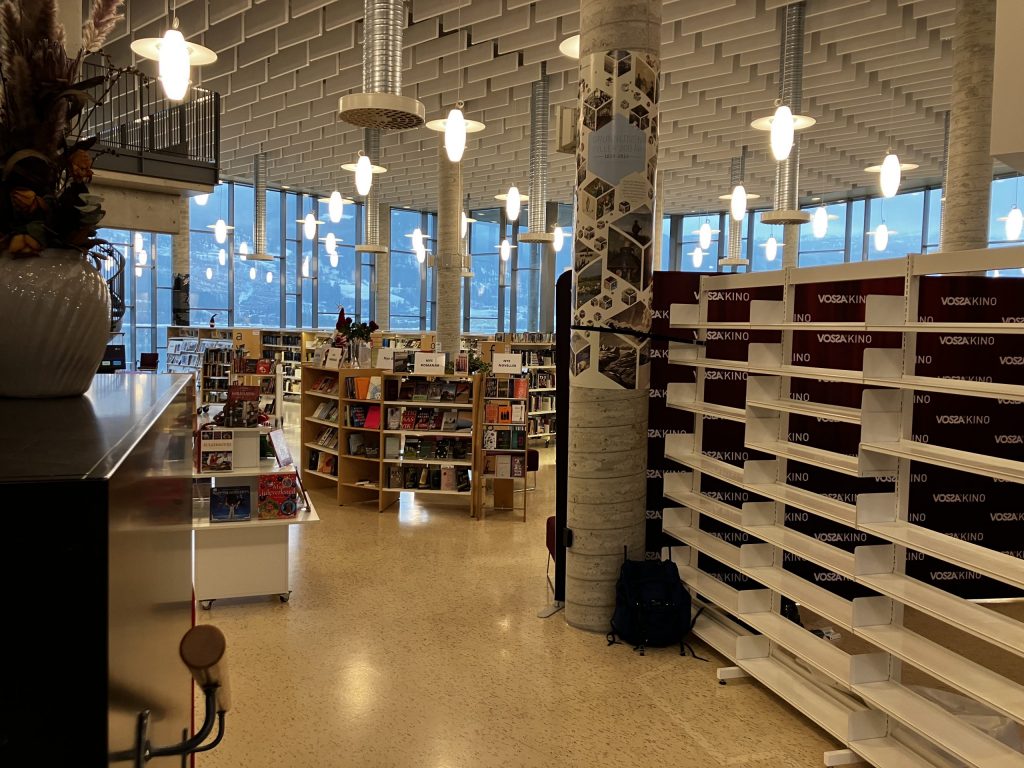
An unanticipated delight of these trips has been visiting so many local libraries. The National Library in Oslo has a similar function the Library of Congress, making it possible to locate almost any resource I need there, and they have also digitized an incredible amount of material. However, the local libraries I’ve visited have often had excellent sections devoted to local history and local authors, and they are beautiful spaces where you can take shelter from the darkness and bad weather. In the future, I will leave more time for the local library when I visit locations relevant for my research.