Louis Durey (1888-1979) was the eldest member of Les Six, and the quickest to abandon the collaborative activities of the group.
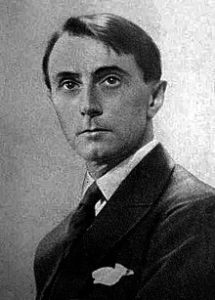
I began my research using a variety of publicly available dictionaries and encyclopedias (including Wikipedia, Oxford Music, and Grove Music Online) which all lead me to the same source – Louis Durey: l’aîné des Six, written by Frédéric Robert. While I have found little information about the author himself, I do know that he had direct communication with at least Durey and fellow Les Six member Georges Auric, and the book was written during Durey’s lifetime, some 11 years before his death around his eightieth birthday. However, the book is only available in French, and is the only source focused on Durey cited in every database I had viewed previously. Sadly, despite the impact of Durey’s music on French music in general, very little English language scholarship exists regarding this impact. This view seems to be held by others seeking to research Durey and his music.
However, despite not being able to access this specific book, I have been able to find a translation of a lecture given by the author, translated by Robert Shapiro and Olivia Mattis in Shapiro’s book Les Six. The lecture goes over Durey’s life, compositional output, and his political involvement and ideaology (for example, Durey was a proponent of music for the every-man, devoting a large portion of his output and years to producing music for amateur and mass chorus). His music, however, does not fit the idea of the everyday as expressed by Satie. F. Robert also believes Durey to be a more suburban French composer, as opposed to the German style of Honneger or the Parisian style of Poulenc, remaining very much faithful to the musical stylings of Claude Debussy. The speech also contains an excerpt from a letter Robert received from Durey regarding the influence Schoenberg had on his harmonic language.
Compare Durey and Poulenc’s settings of Apollianaire’s Le estiaire, both written for voice and orchestra in 1919, with Poulenc’s actually being dedicated to Durey.
The only other source I can find mention of is a dissertation written by Dr. Jocelyn Dueck, a leading scholar of Durey (specifically his songs and melodie) and current piano professor at Carnegie Mellon. I have reached out to her and hope to receive a copy of her dissertation, as she has access to original manuscripts of Durey’s unpublished songs, as well as contact with Durey’s daughter, Arlette Durey. I believe that will be as close as I can get to a primary source regarding Durey’s personal life.