Spanish 399: Seminar in Spanish Studies: Digital Caribbean: Memory, Culture, and Public Humanitie
What does it mean to study the Caribbean in the digital age? Who decides which stories are preserved in an archive and which are left out? How can a digital map, an oral history, a podcast, or a collection of images tell different stories about the Caribbean and its diasporas? What responsibilities do we have when we transform other people’s experiences and memories into public research?
This seminar critically explores these and other questions at the intersection of Caribbean Studies, digital humanities, memory, AI, and public scholarship. Students will examine how digital projects can document and interpret Caribbean histories, cultures, migrations, identities, and diasporic experiences while considering questions of colonialism, race, language, representation, access, authorship, and ethics.
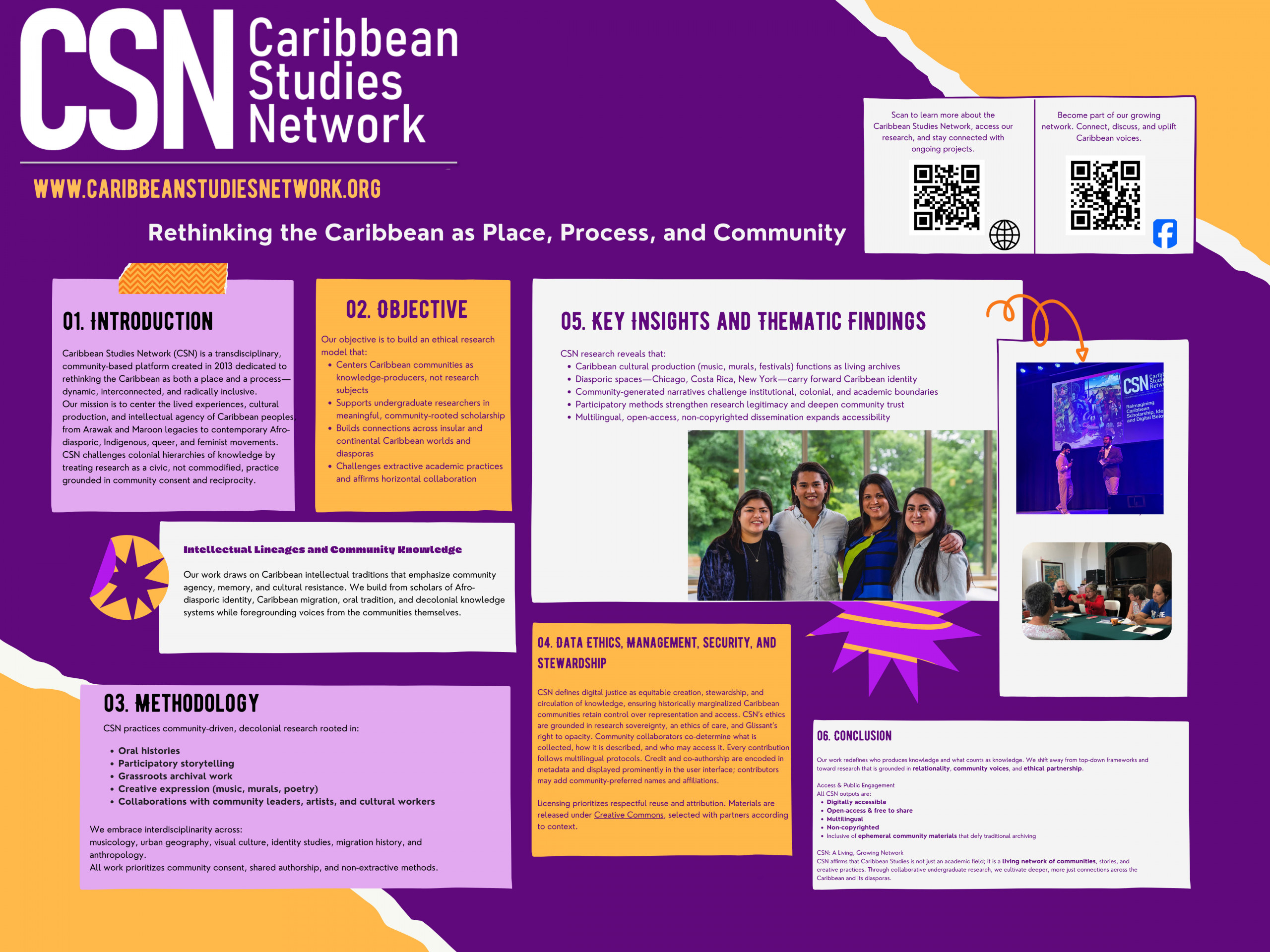
The course is connected to the Caribbean Studies Lab and includes an Academic Civic Engagement (ACE) component through which students will engage with community partners, researchers, artists, archives, or other collaborators connected to the Caribbean and its diasporas.
Students will learn basic approaches to digital and community-engaged research; no previous experience with digital humanities, programming, or web design is required. Working individually or in small groups, students will develop a small, manageable digital public humanities project in conversation with a community or project partner.
Possible projects include a short digital exhibit, annotated map, oral history, podcast, digital story, or curated collection of archival materials. Projects will develop through simple stages—identifying a question, researching, collaborating, creating a prototype, receiving feedback, revising, and sharing the final work—with an emphasis on critical inquiry, ethical collaboration, Spanish-language communication, and public scholarship rather than technological sophistication.