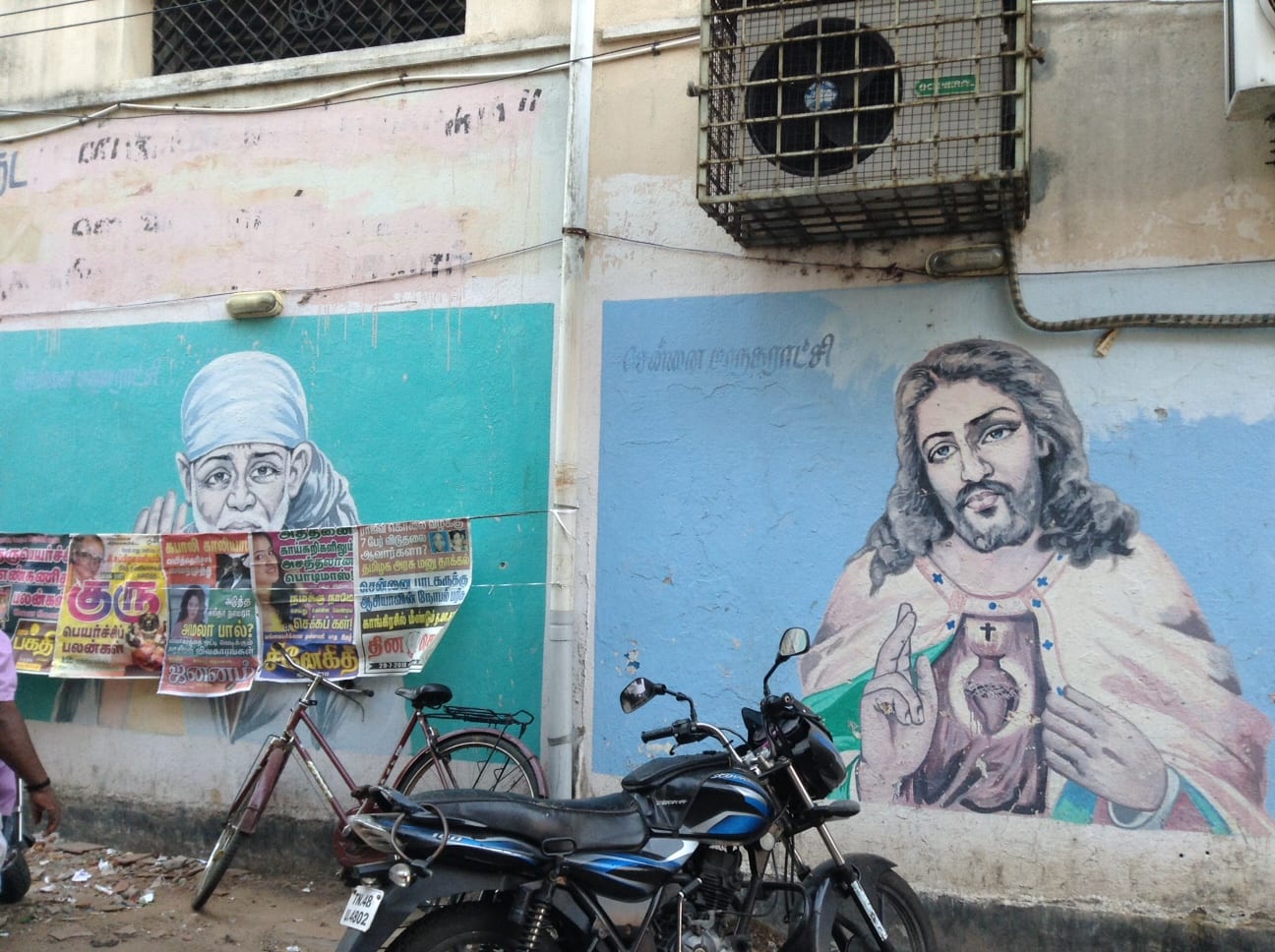
Sri Ramana Ashram, Tiruvannamalai
21 January 2019
Liz Conkey
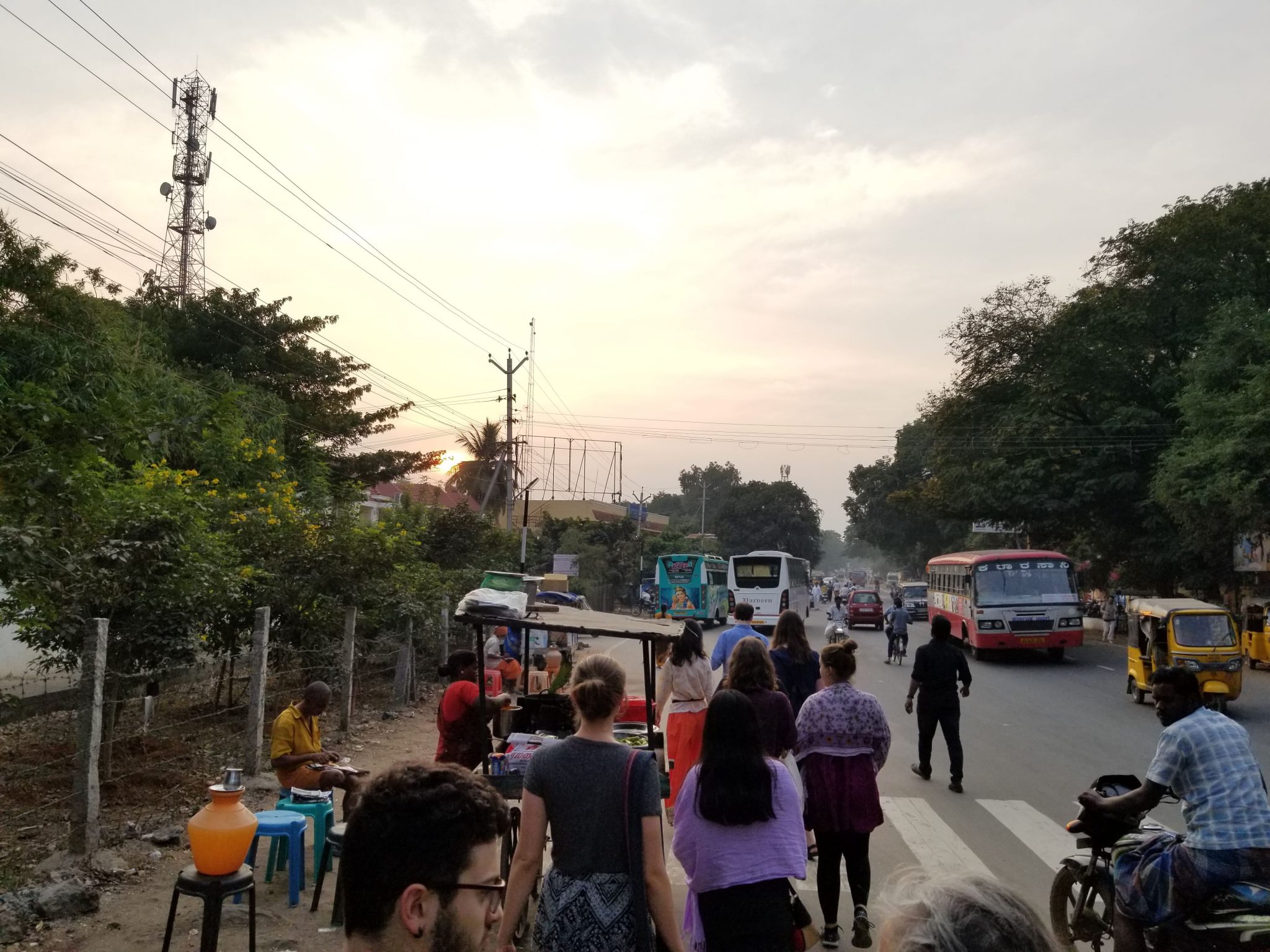
Walking to the Ashram at near-twilight through the streets of Tiruvannamalai
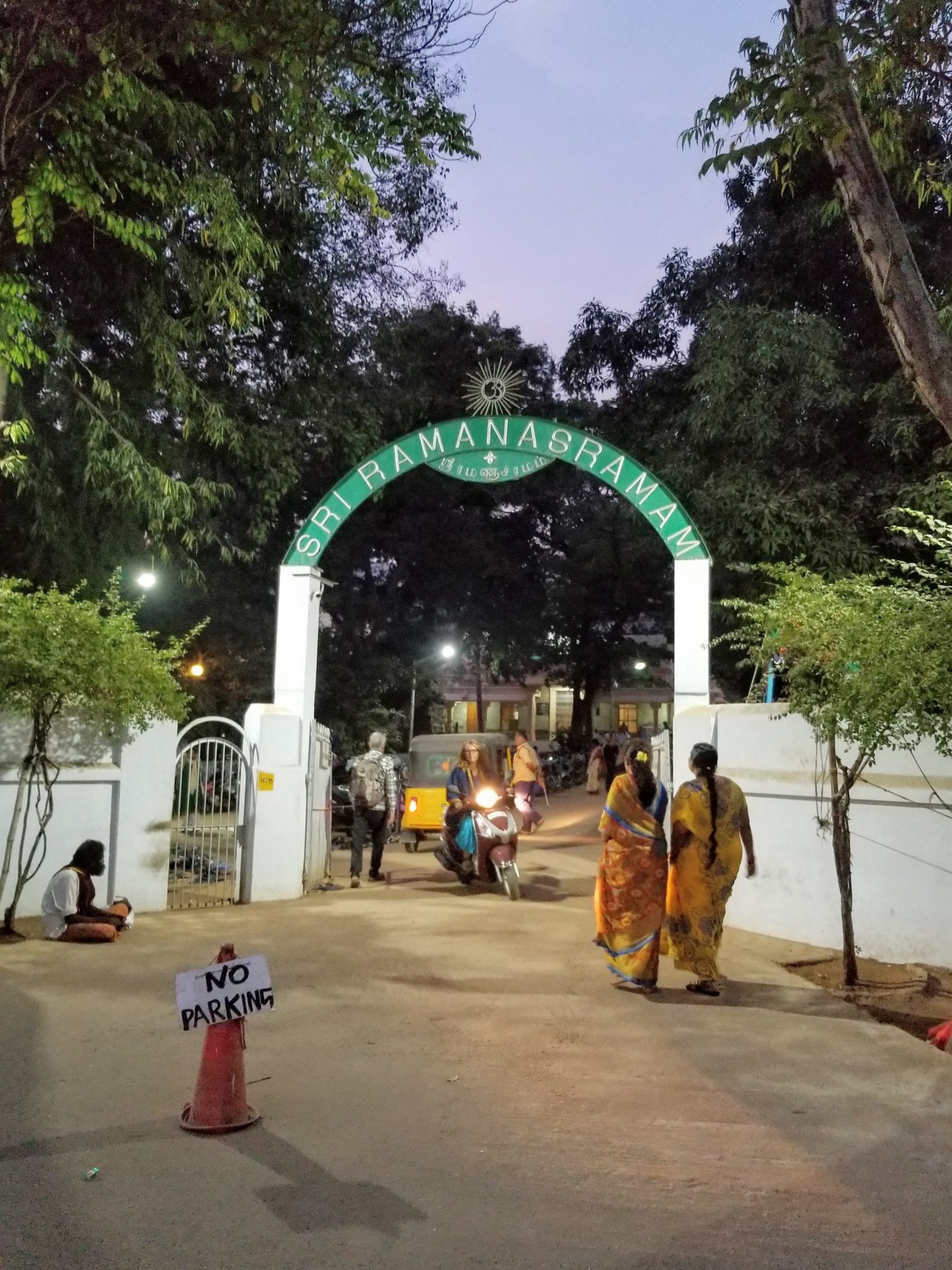
Exiting the Ashram I turned to capture a photo of the entrance
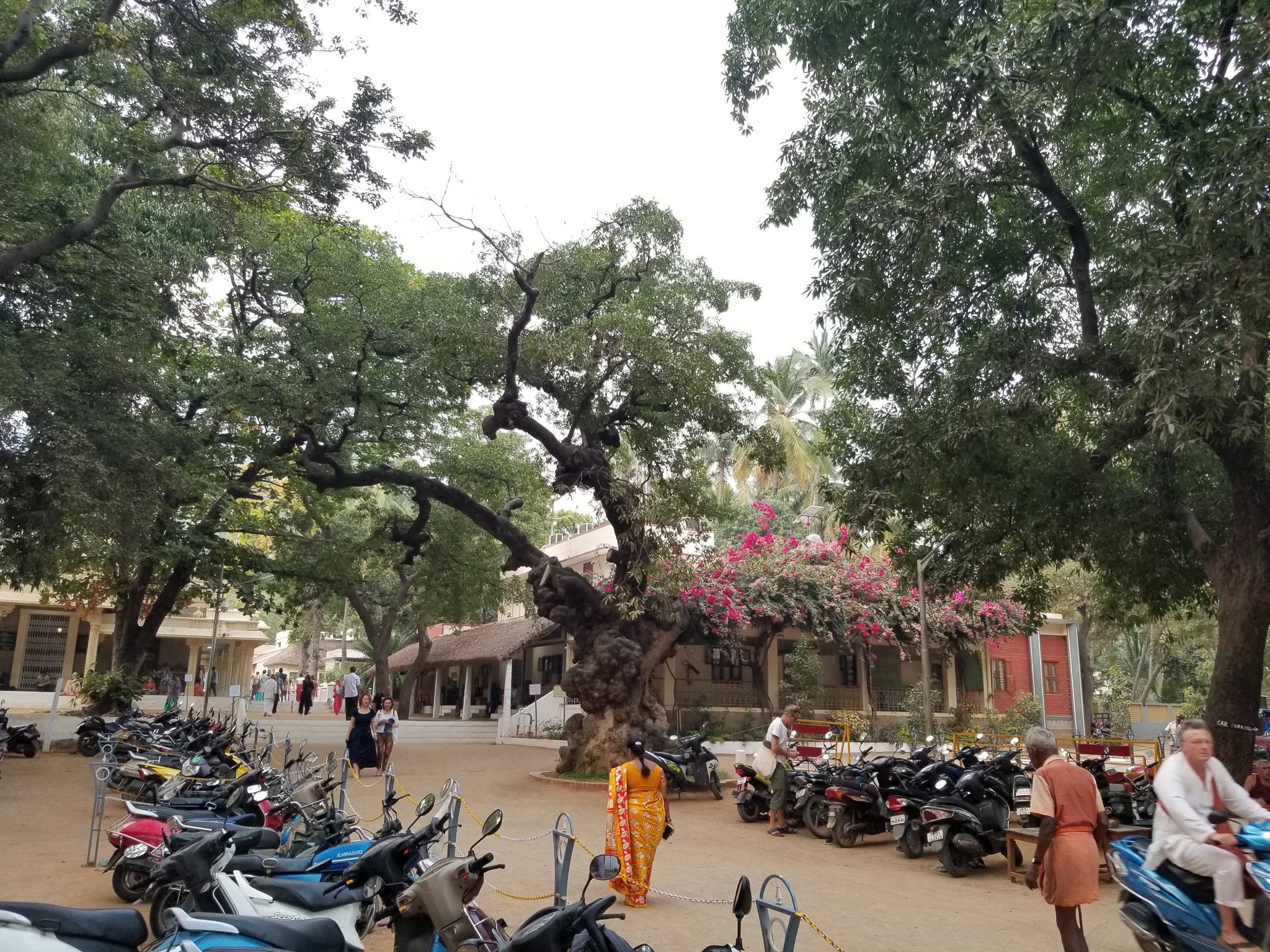
Photography limited inside the Ashram, I snapped photos outside
Walking barefoot on cold dusty stone floors within the Ashram, we encounter hordes of individuals sat silently in meditation, encircling statues of deities, laying on the tile in prayer–the many expressions of Hindu tradition we’ve become accustomed to. But, unlike the rest of India we’d explored, most of the faces here are light-skinned like ours.
Ashram in Tiruvannamalai, An Analysis
A woman chanting loudly in unison with the priests performing ritualistic mantras and nitya carried a baby squirming and crying in her arms. It seemed that this place, walls reverberating with the intensely loud crowd of people pressed should to shoulder and clanging bells, was a less-than-ideal place for a young child. But more shocking than the child was the obvious fact that she was not Indian, but a light-skinned woman from the West. A quick scan around revealed that the entire Ashram enclosed more Westerners than Indians.This makes sense because the Sri Raman Ashram is a popular tourist location for seekers from all over the globe to come and experience spirituality. Our host at Quo Vadis informed us that the site welcomes people, religious and not, to open their minds and souls in the environment–the Ashram’s website, too, boasts visitors “do not need to adopt any belief system, or worship anyone…to experience this transmission of bliss and clarity.” The Ashram houses the remains and teachings of Ramana Maharshi, a 20th century Indian sage who experienced an ego death and spiritual awakening at a very young age. His message focuses on encouraging people to look inward at the self to realize that real happiness comes from within, not from the material and continually changing world. We experienced an interesting dichotomy at the Ashram: after weeks of being in India as strange Americans continuously approached for selfies, it still felt odd even when surrounded by people that looked like us at the Ashram; it felt as though the authenticity and sacredness of the site was compromised because of our and the rest of the Westerners’ presence.