Tag: Fall 2025

  • Queer Russian Literature Undergraduate Conference

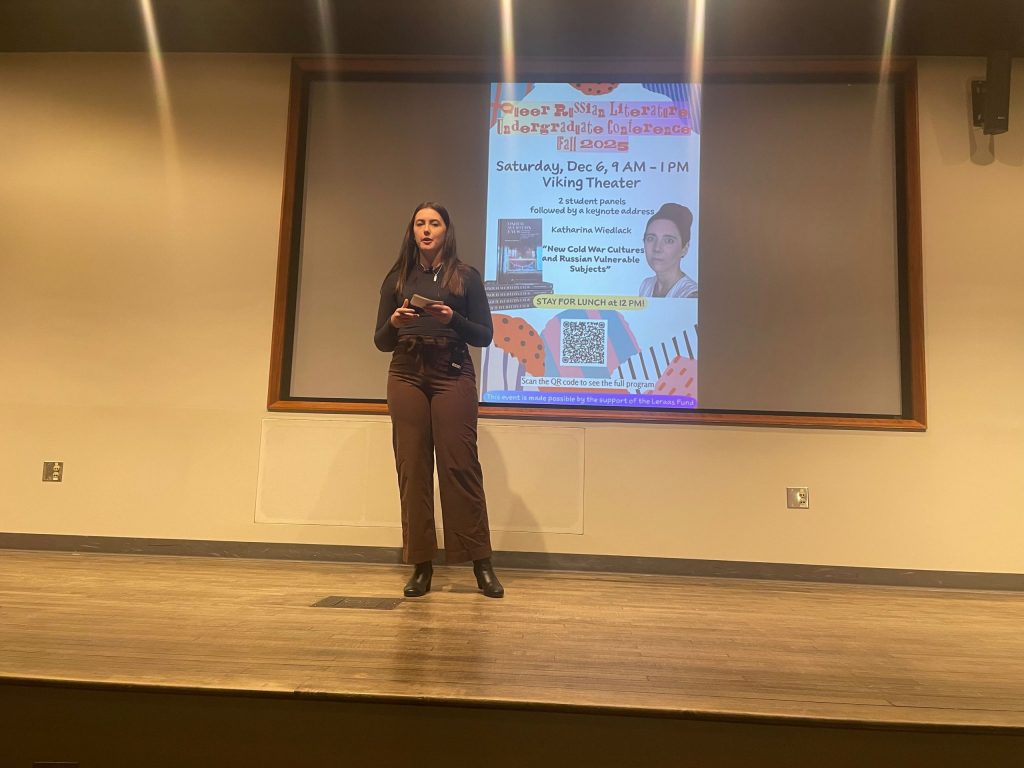
    On Saturday, December 6th, the Russian Language and Area Studies department hosted the first Queer Russian Literature Undergraduate Conference at St. Olaf.
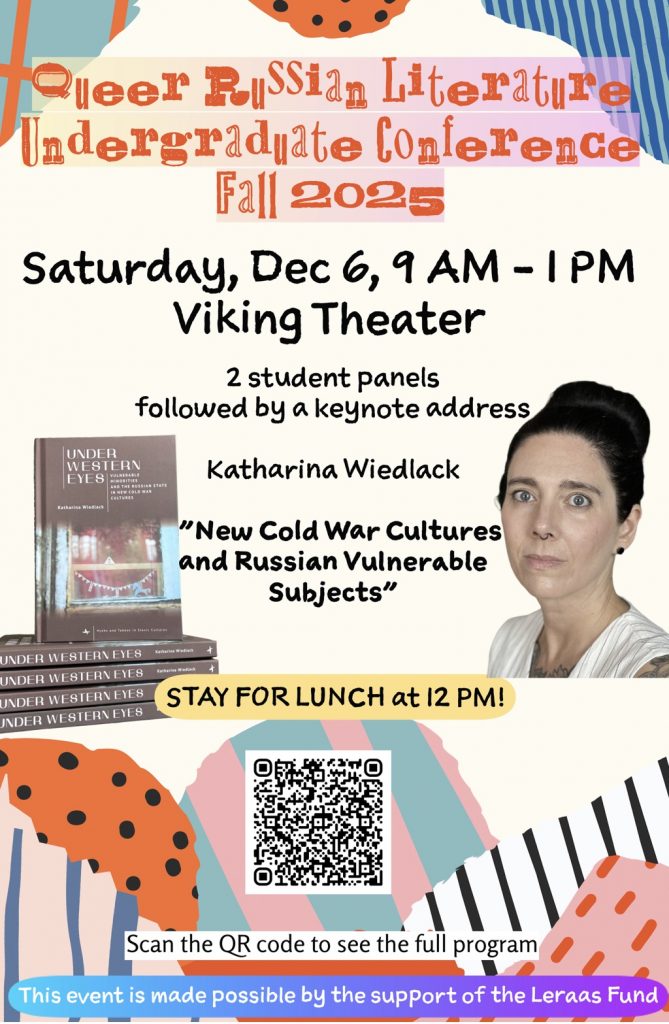
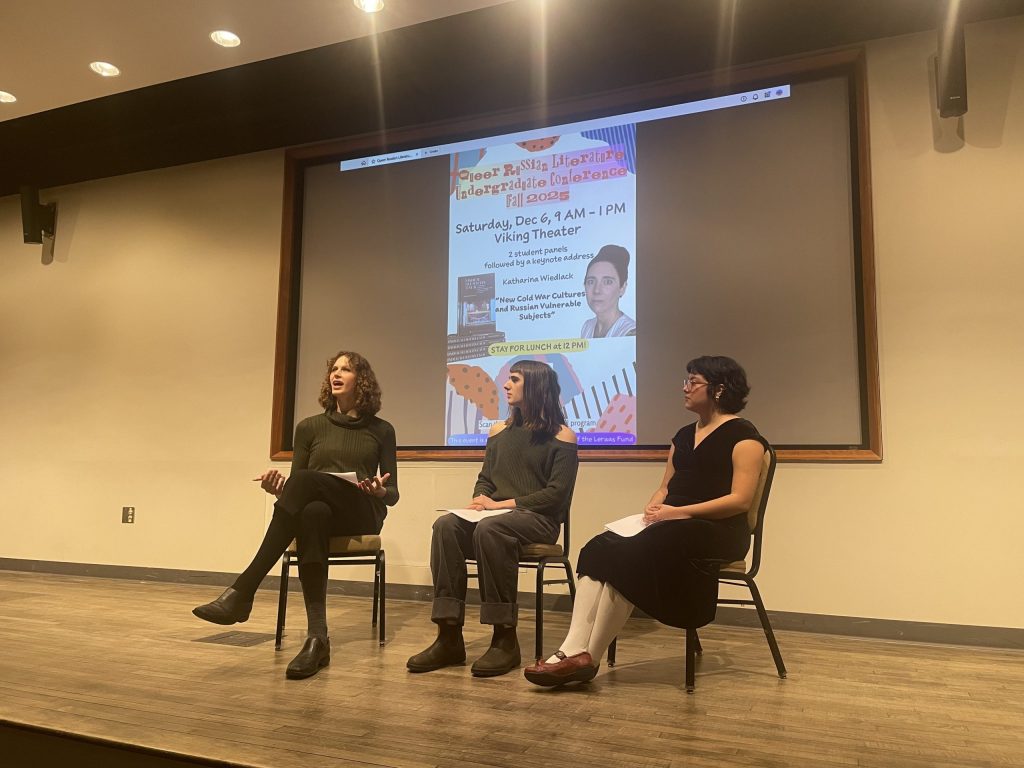
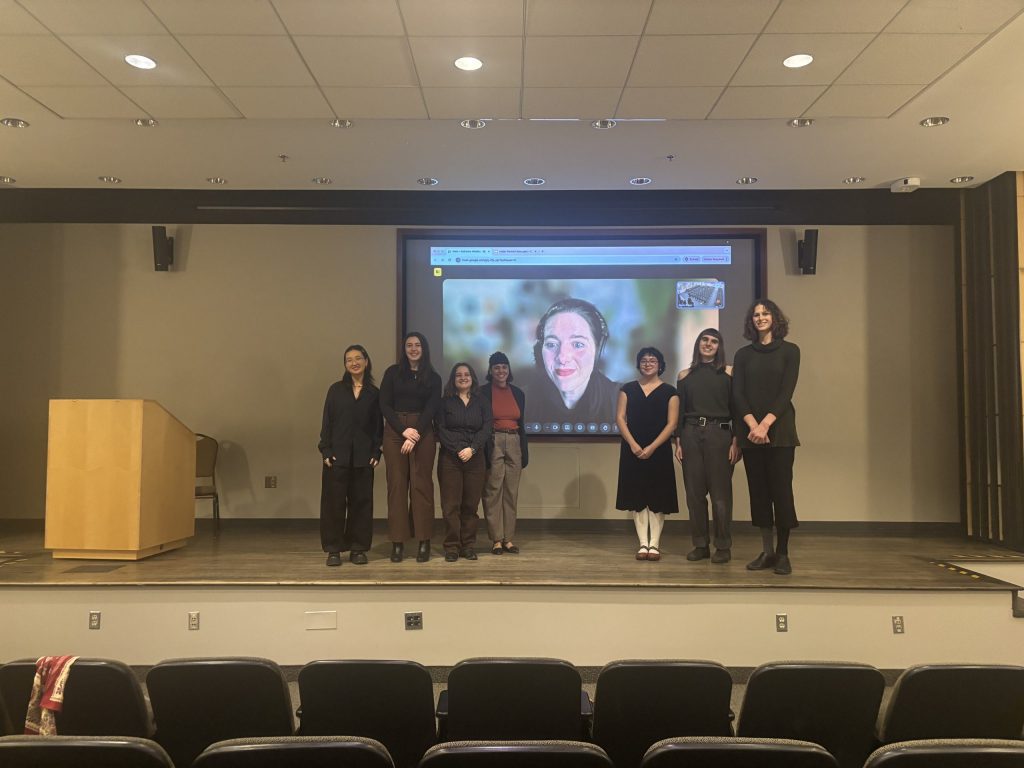
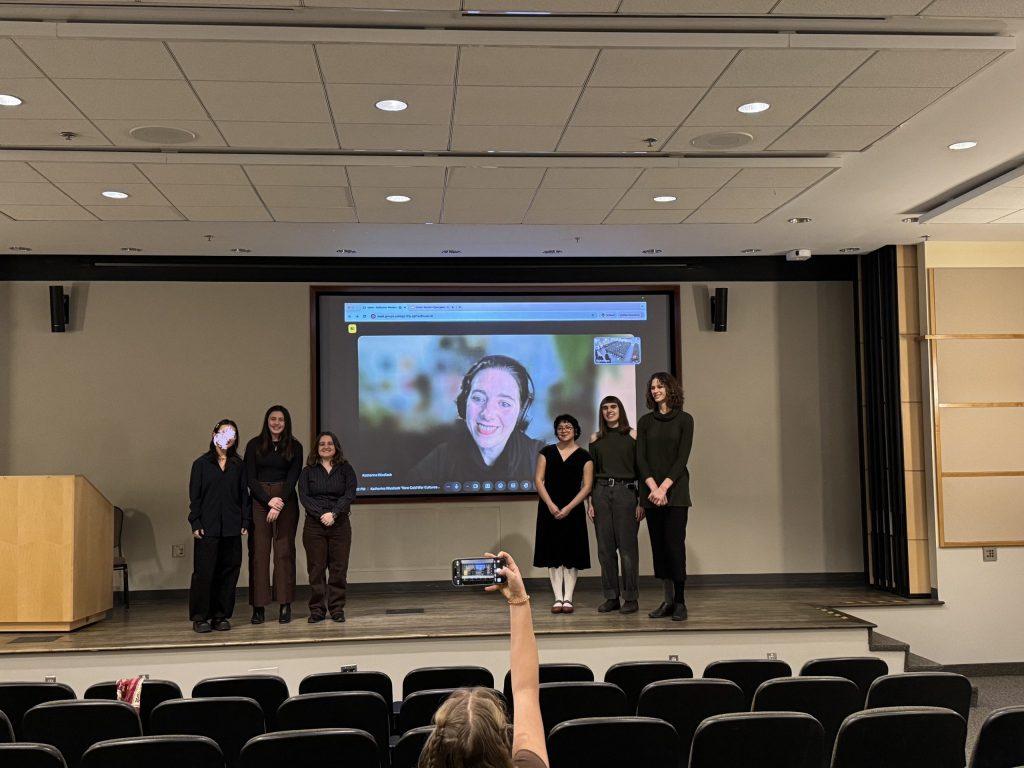
    The event consisted of two student panels followed by a keynote from Katharina Wiedlack (University of Vienna).

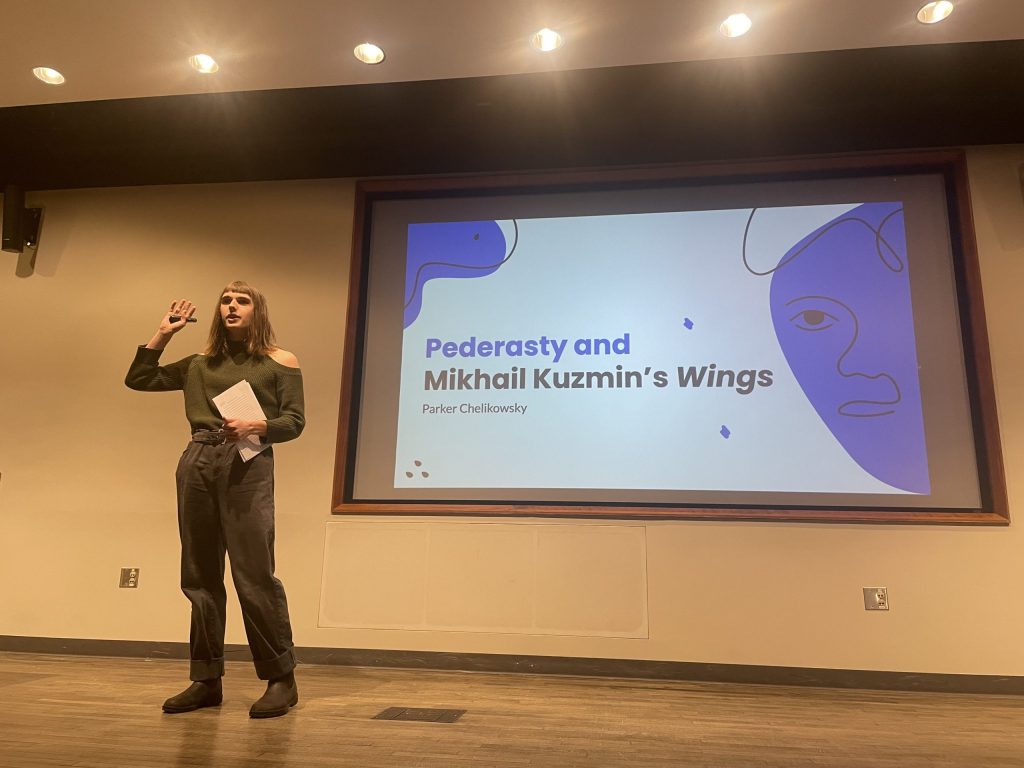
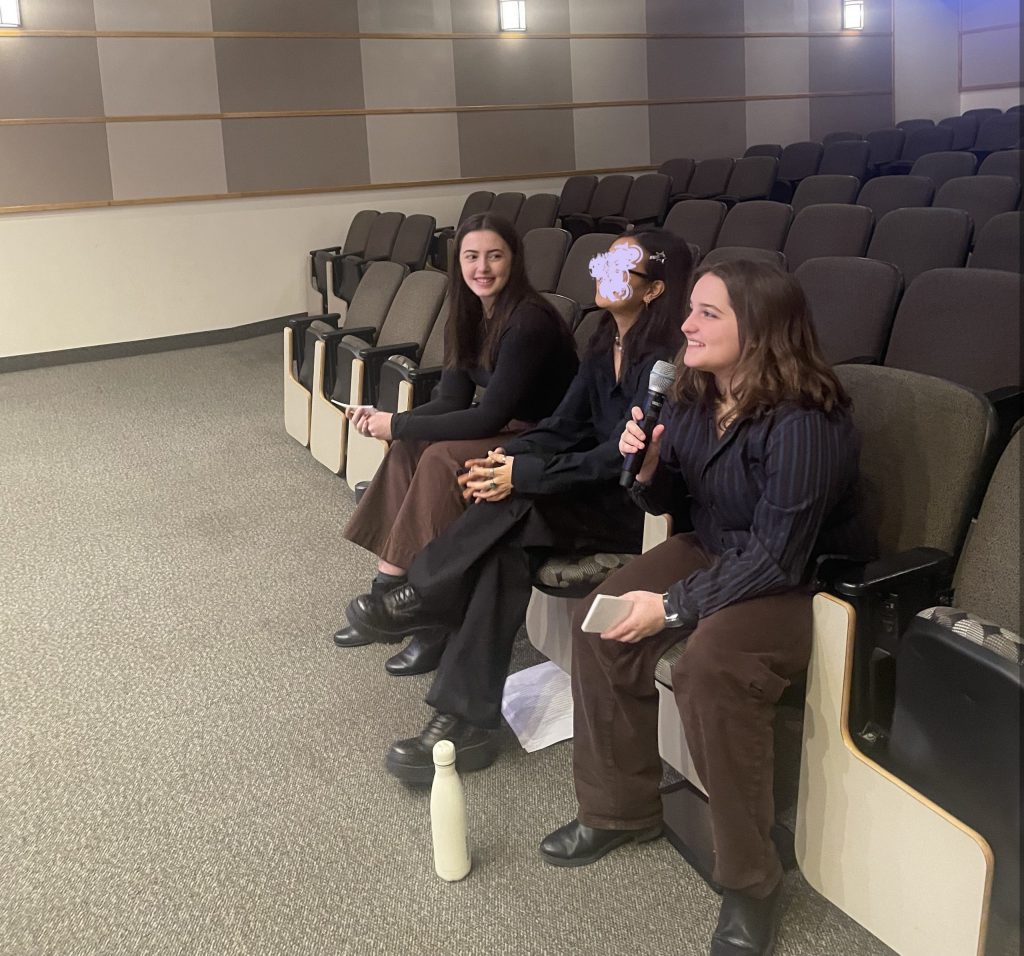
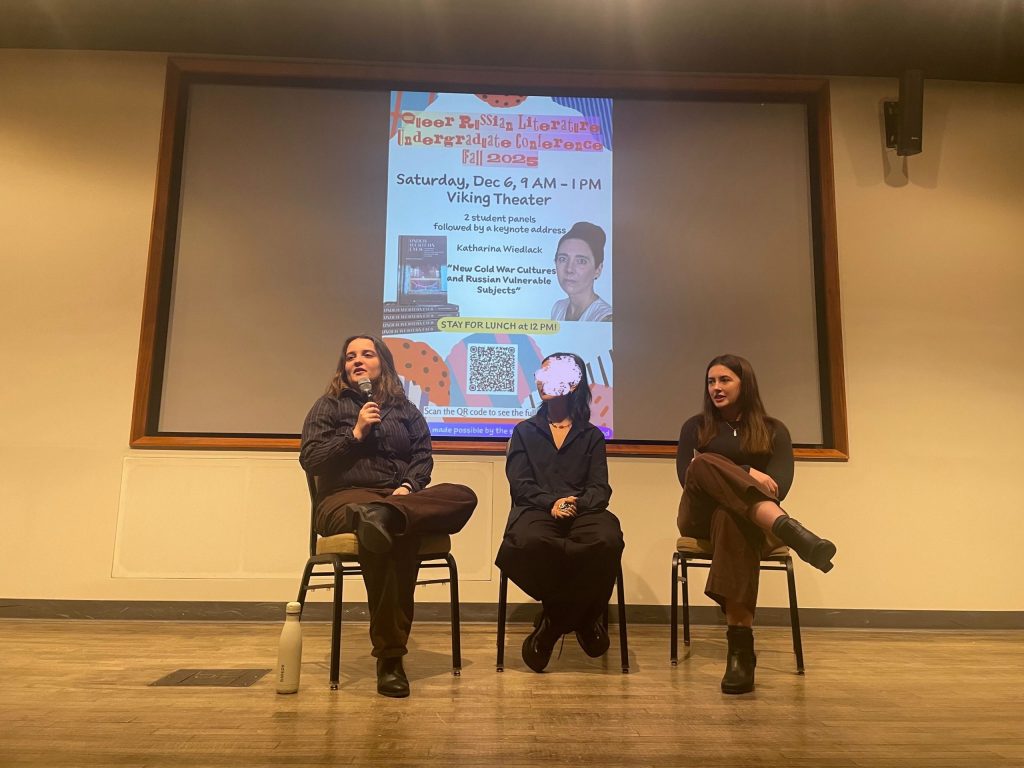
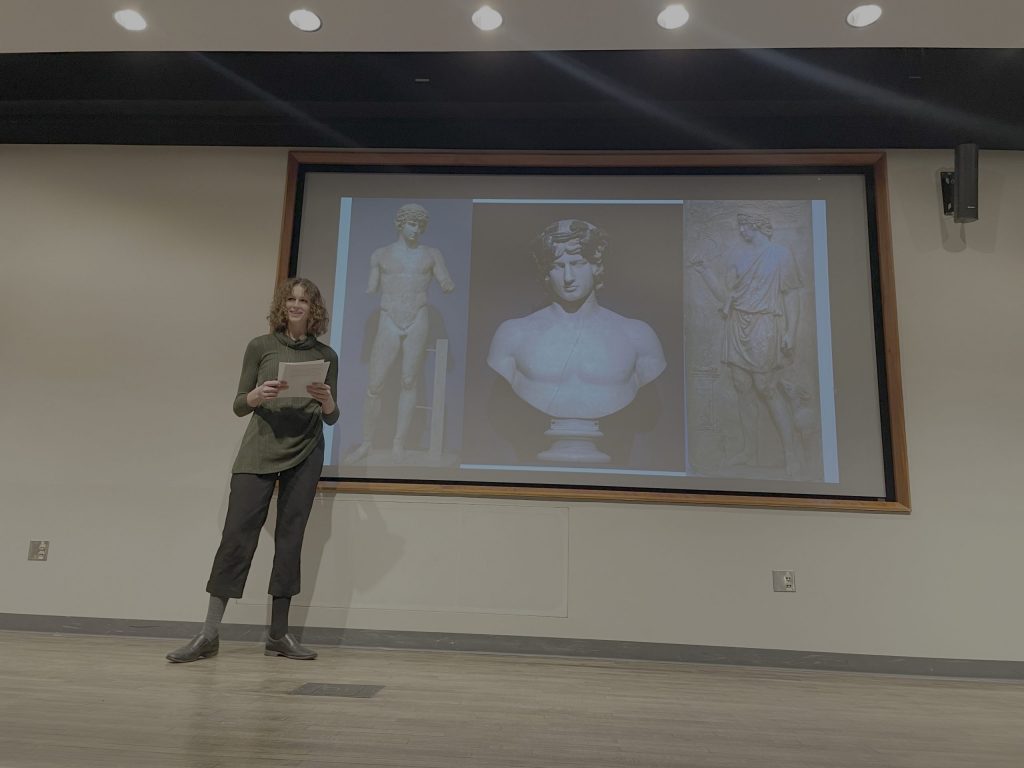
    Six amazing students from Prof. Dossi’s Queer Russian Literature (RUSSN 330) delivered presentations on a variety of queer Russophone authors, some of whom you might not know, but many more that you will want to discover! After the panels, Katharina Wiedlack delivered her keynote address, titled “New Cold War Cultures and Russian Vulnerable Subjects.” The presentations and keynote were followed by a small reception catered by Tasteful Delights.

    Panel 1
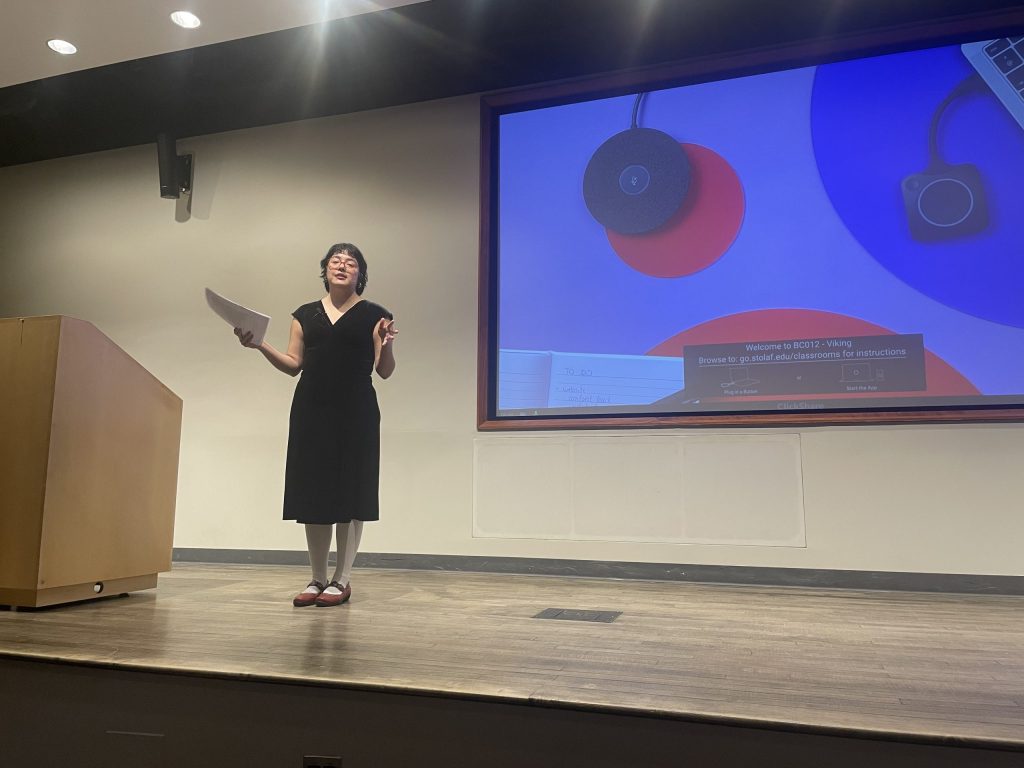
    Panel 2
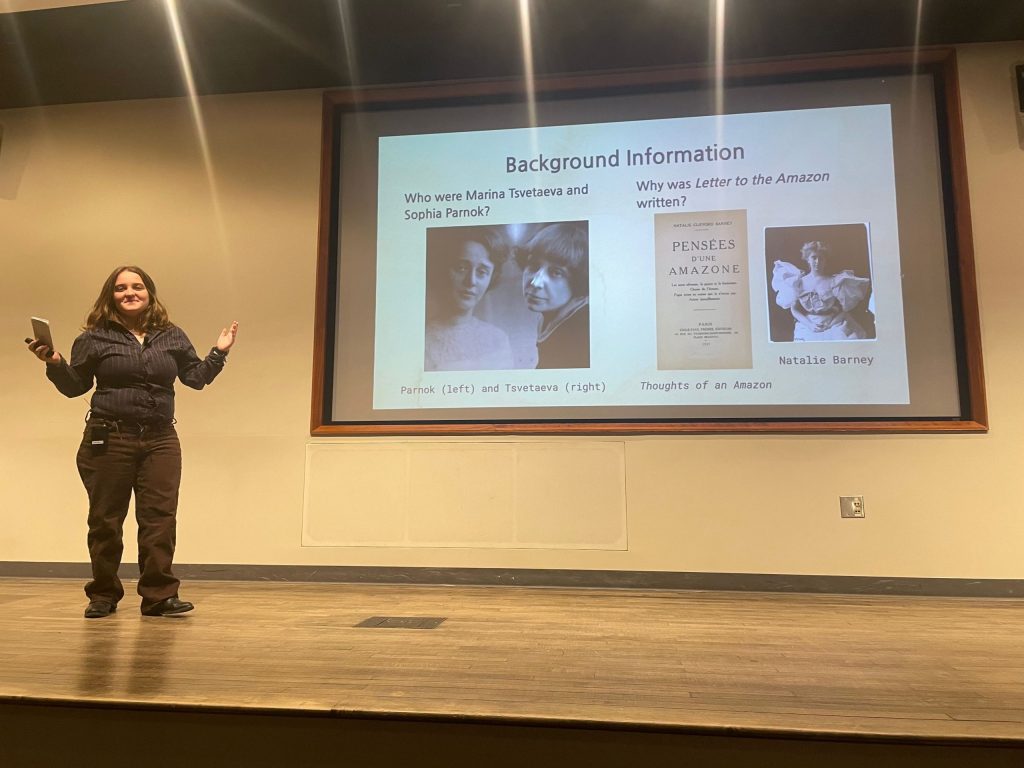
    Yaz T. delivered a talk entitled “Цветы и Шпаги: Dichotomy of Gender in Marina Tsvetaeva’s work.” We won’t post a picture of Yaz to protect their anonymity.

    Keynote
  • Oles visit St. Mary’s Orthodox Cathedral and TMORA

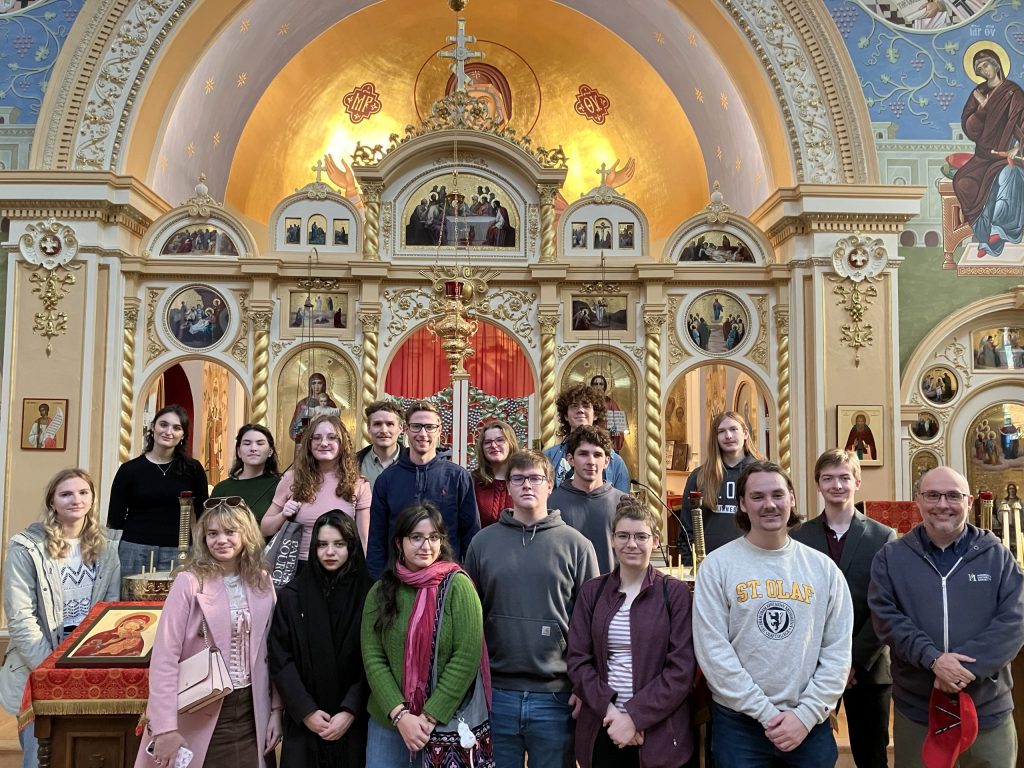
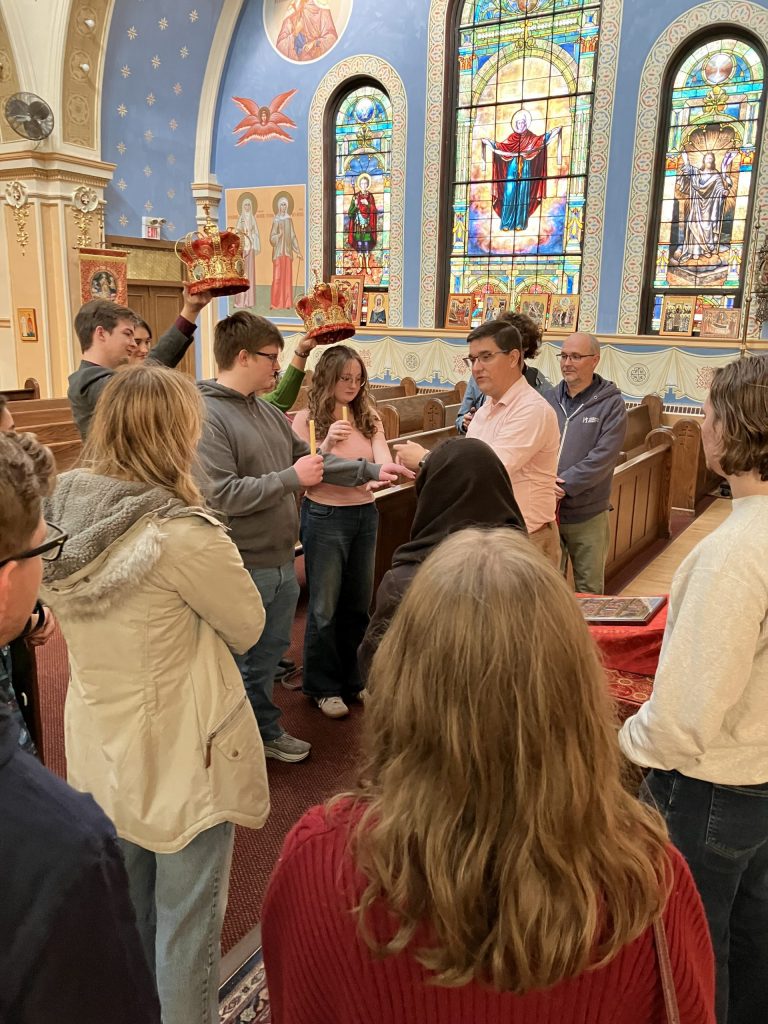
    Students and faculty assemble in front of the iconostasis. St. Mary’s Orthodox Cathedral, Minneapolis, MN.

    On Saturday, November 18, students from Prof. Morse’s course The Cultures of Medieval Rus’ (RUSSN 180) and Prof. Lippmann’s The Making of Modern Russia (HIST 120) visited St. Mary’s Orthodox Cathedral and the Museum of Russian Art (TMORA).

    At St. Mary’s, students were able to put their knowledge of Orthodox Christian ritual, ritual space, and sacred art to the test. They “read” and discussed the iconostasis, frescoes, icons, and architecture of St. Mary’s with a generous and knowledgeable member of the lay community.

    After visiting St. Mary’s, the group stopped for lunch at Kramarczuk’s Deli and then traveled to the storage of the Museum of Russian Art to view examples of folk art and a special performance by the folk performance group Nitka. The performance was followed by a visit to TMORA to view the current exhibitions “The World of the Russian Folk Tale” and “Nadezhda Glazunova: Festive Art.” We extend a special thanks to TMORA curator Dr. Maria Zavialova and Nitka!


  • Queer Russian Literature

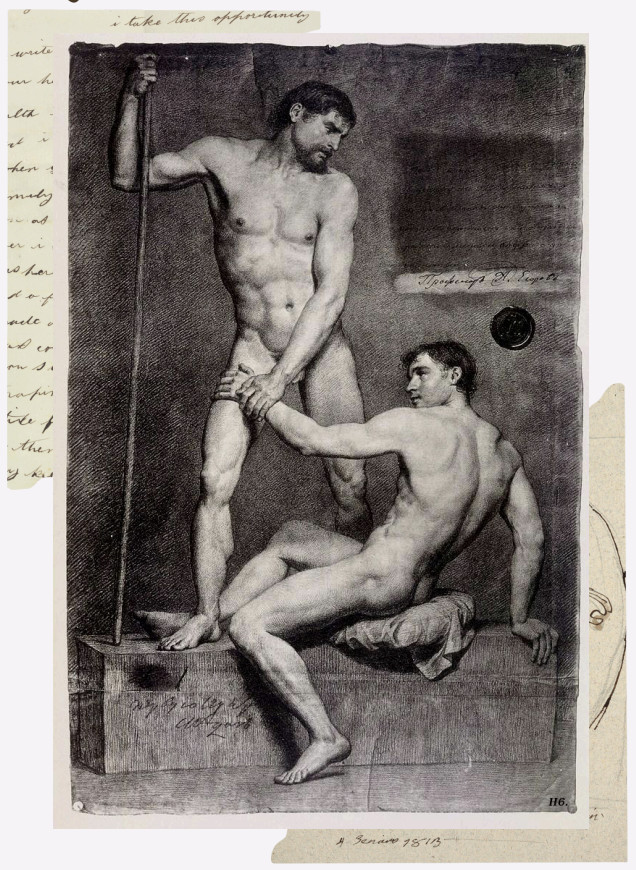
    The fate of the queer community in the Russian Empire, in the USSR and in modern day Russia has been characterized by constant twists and turns between decriminalization and “re-criminalization” (1917, 1934, 1994) with the final blow being the 2013 “propaganda law” (expanded in 2022) forbidding the “promotion of nontraditional sexual relations to minors” – that is, restricting and potentially criminalizing any open discussion of queer topics. Homophobic Russian rhetoric emphasizes the supposedly recent and foreign nature of LGBTQ identity and ideas and embraces the popular view that homosexuality is essentially un-Russian. On the other hand, Western discourse often orientalizes Russia as ‘traditional’,‘premodern’ or ‘underdeveloped’ and positions it as the West’s ‘Other’ in its homophobia. This course, which considers queer Russian literature from modernist to contemporary authors, pushes back against both of these restrictive points of view.

  • The Cultures of Medieval Rus’

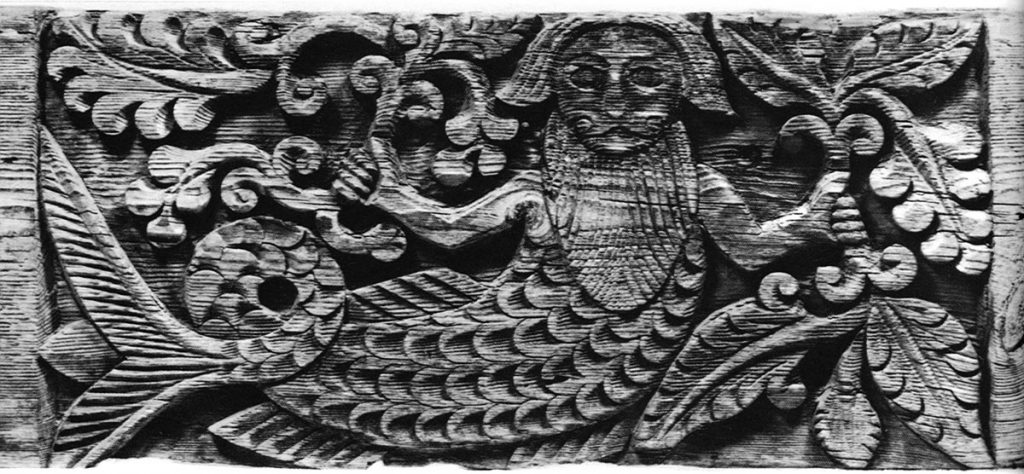
    Water spirit. Front board detail. Peasant house, 1863.

    More than a millennium ago, the princes of Medieval Rus’, the lands of the East Slavs, accepted the Orthodox Christian faith. In so doing, they brought their lands (today parts of the Baltic States, Belarus, Poland, Russia, and Ukraine) into the Orthodox Christian world. Their pagan belief system, with its emphasis on the cycles and movements of the natural world, gave way to a form of Christianity rooted in powerful sacred images, ritual, and text. In this course, we will examine the evolution of the cultures of medieval Rus’ from the Viking Age, through the reign of Ivan IV “The Terrible,” and the Time of Troubles, and finally to the rise of the Romanovs and the founding of the Russian Empire in 1721. We will examine changing conceptions of time and discourses of light and darkness in works of folklore, literature, and history, as well as architecture, sacred art, and ritual, to understand the evolving forms of life and worldview in medieval Rus’. A field trip to the Museum of Russian Art (Minneapolis, Minnesota) is planned.

    Coming Fall 2025.