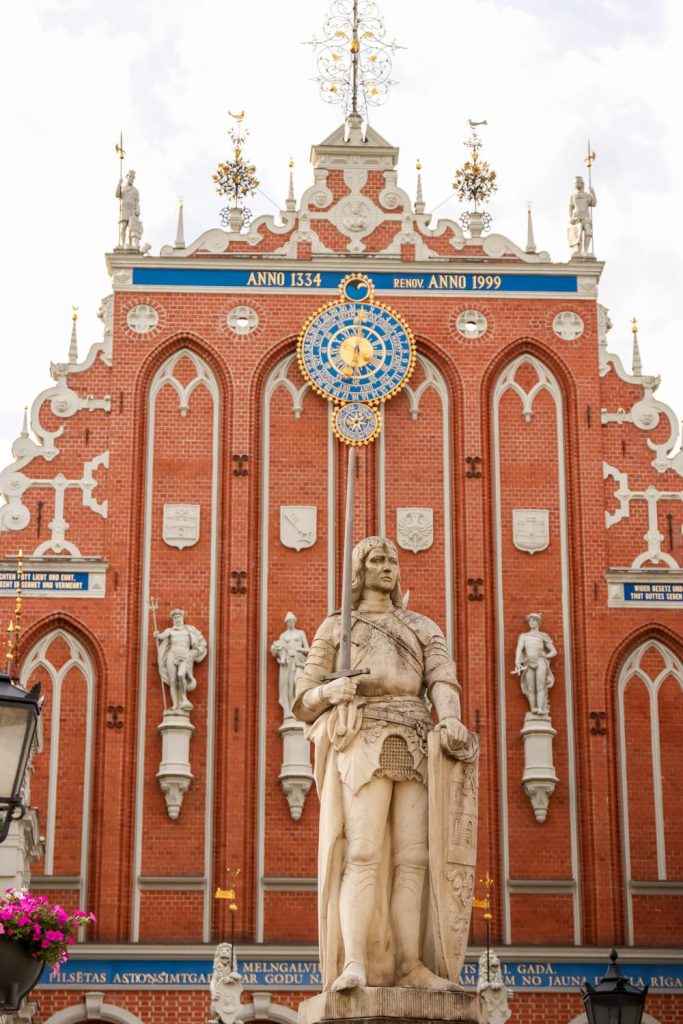
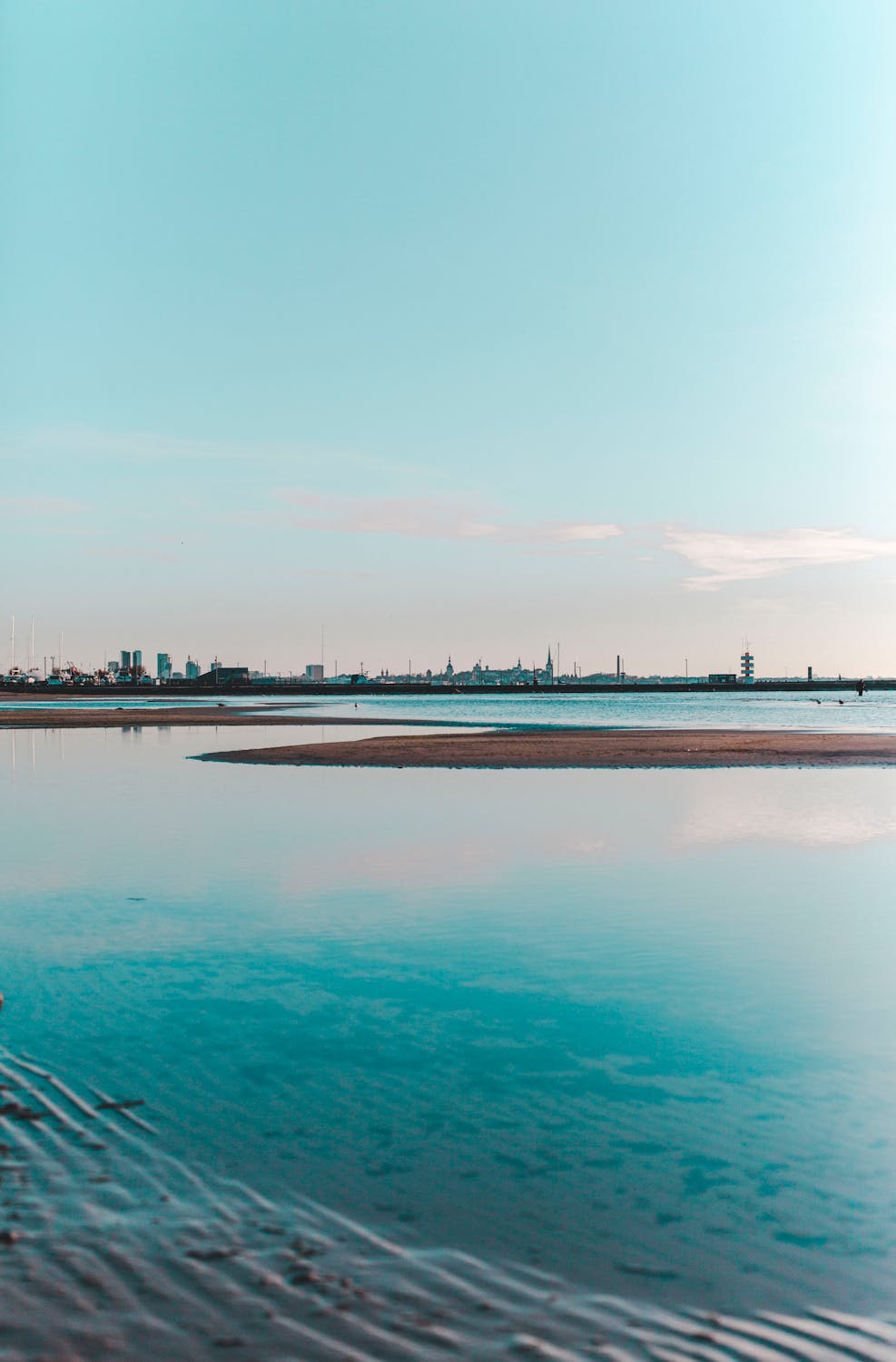
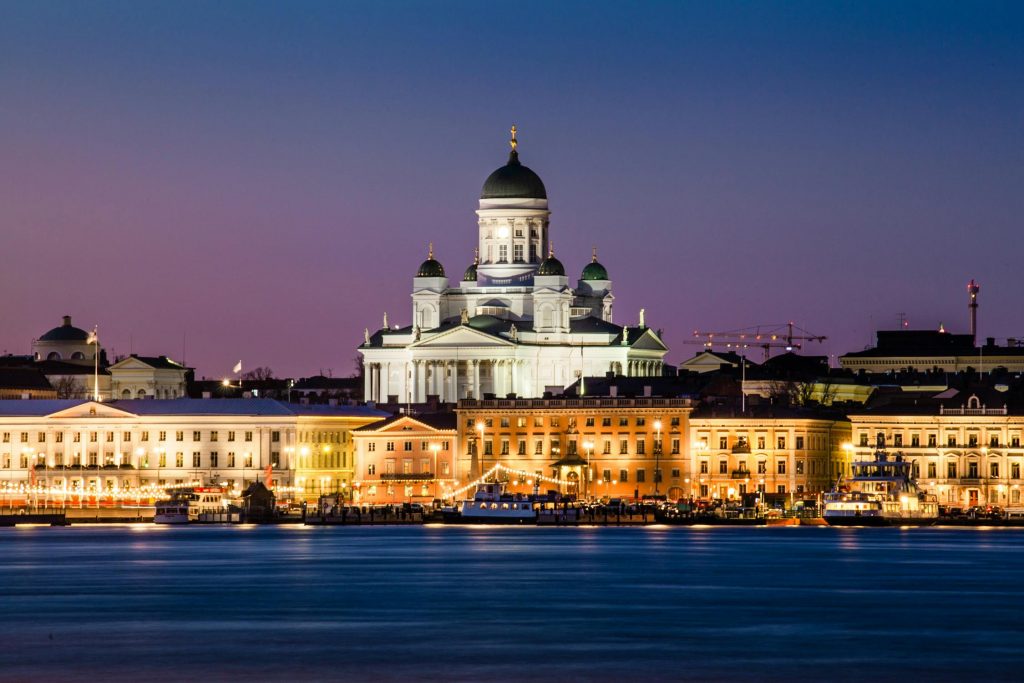
This summer, Profs. Dossi and Morse will travel to Latvia, Estonia, and Finland to conduct site visits for an exciting new Russian Studies J-term program, and conduct research at the Helsinki Slavonic Library at the University of Helsinki.
At the Slavonic Library, Prof. Dossi will examine the extensive collection of nineteenth-century Russian medical journals kept in their archives. Prof. Morse will examine documents from the personal libraries of courtiers at the Petrine Court.
The site visit portion of the trip is funded through the Smith Center for Global Engagement and the research portion through the Professional Development fund at St. Olaf.
House of the Brotherhood of the Blackheads, RigaTallinn, ShorelineHelsinki Cathedral
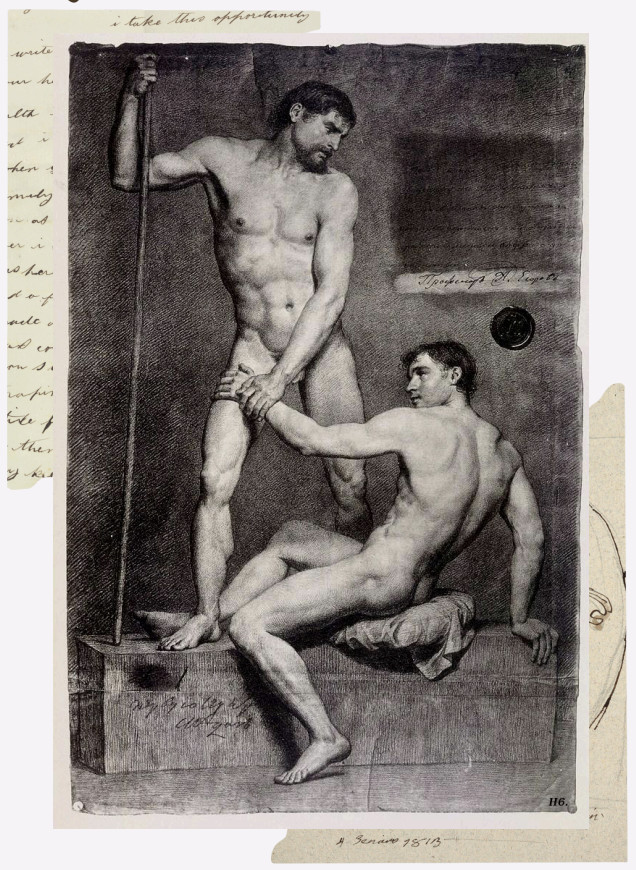
The fate of the queer community in the Russian Empire, in the USSR and in modern day Russia has been characterized by constant twists and turns between decriminalization and “re-criminalization” (1917, 1934, 1994) with the final blow being the 2013 “propaganda law” (expanded in 2022) forbidding the “promotion of nontraditional sexual relations to minors” – that is, restricting and potentially criminalizing any open discussion of queer topics. Homophobic Russian rhetoric emphasizes the supposedly recent and foreign nature of LGBTQ identity and ideas and embraces the popular view that homosexuality is essentially un-Russian. On the other hand, Western discourse often orientalizes Russia as ‘traditional’,‘premodern’ or ‘underdeveloped’ and positions it as the West’s ‘Other’ in its homophobia. This course, which considers queer Russian literature from modernist to contemporary authors, pushes back against both of these restrictive points of view.
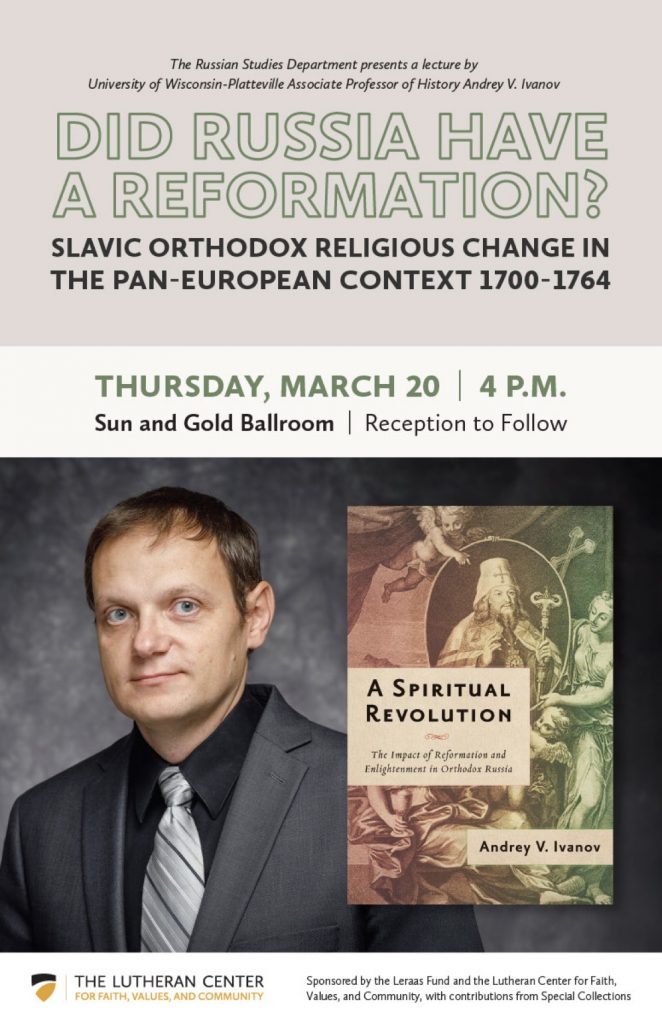
In mid-March, the Russian Studies Department invited Dr. Andrey V. Ivanov to St. Olaf to give a public lecture on his recent book, A Spiritual Revolution: The Impact of Reformation and Enlightenment in Orthodox Russia, 1700–1825. Dr. Ivanov’s lecture was followed by a reception and exhibition of 17-18th c. Protestant theological works drawn from Rolvaag Special Collections and curated by Jillian Sparks.
During fall semester 2024, students in third-year Russian (RUSSN 301: Conversation and Composition) translated excerpts from Oksana Vasyakina’s novel, Wound (2021).
Although the focus of our classroom workshops was language and translation, we also discussed some of the major themes in the novel, which follows the journey of a lesbian poet across Russia and through memory as she travels to inter her mother’s ashes in her Siberian hometown. In the process, the narrator meditates on themes of queerness, death, and love. She also gains a new understanding of her relationship with her mother, her sexuality, her identity as an artist, and her country.
Lyubov Mikhailovna said mama’s breathing had been bad, heavy. She found out about it from the priest. This kind of breathing is common among people close to death. The light was good, there was no wind. The light was golden, just like in August.
Lyubov Mikhailovna’s arm rested on the back of the couch, swollen and grayish. Strange, I thought, looking at this arm, as if without the priest’s sanctioning, it’s impossible to understand that a person is dying, even if they are obviously dying.
Lyubov Mikhailovna had a calm face. She believed in God and her cancer stopped. She probably thinks her cancer stopped because she believes in God. On her face is an air of superiority. It’s as if, on her knees, she has the cup of life, which she won from my mother.
Andrey said that tomorrow at ten in the morning Mikhail Sergeevich would call me. Andrey had already given him the gas money so he could take me to collect the ashes. I would have managed myself, but here, helping out was important. Helping out and concern. The light was really good, it was warm. And the noodle soup turned out well. Everything turned out well like I promised. It’s the thought that counts.
The husband of mom’s old neighbor, already leaving the funeral, said that Andrey shouldn’t be sad. He said that he should call him if he wants to go fishing. Andrey said that he would call. But I know that he won’t call, here again, helping out and concern.
Lyubov Mikhailovna told me I should accept her condolences. I did. She gave Mama holy water for a month: three tablespoons with prayer in the morning and three tablespoons with prayer in the evening. She told me that after the visit from the priest, mama perked up and was back on her feet. Lyubov Mikhailovna said Mama laughed and made a soup.
Mama said that the priest put some doodad on her head and asked her to repent while he read the prayer himself. She didn’t dare admit to Lyubov Mikhailovna that Orthodox Christianity doesn’t help much when you’re sick. Especially when you don’t believe in God.
As a child, I was told it is good for it to rain when a person is buried. On the one hand, rain when you’re setting out is a good omen — and on the other hand, it’s nature crying. Nature participates, and it sympathizes. When my father was buried, it was raining lightly. But there is no rain in February. Instead of rain, there is good light. In that light, everything is rosy and whole, like an apple.
Everyone just sat on the sofa where Mama had lain dying. And then everyone left all at once. Andrey and I cleared the table, and washed the dishes. Andrey said that one shouldn’t throw anything away from the funeral table and should only eat with spoons. He said that he would wash everything. He turned on the T.V. in the kitchen and began to wash the dishes. I brought him the empty plates. It was a long way to evening.
Andrey asked if the crematorium works at night. I answered that I didn’t know. I knew that our turn was at 4:30 which meant her body was already burned. Andrey said that it was revolting — burning living people. I said nothing, but just thought that she wasn’t alive, she was dead. I sat down on the sofa and watched T.V., then after a little while laid down and fell asleep with a feeling of bitter relief. That night, I dreamed of darkness.
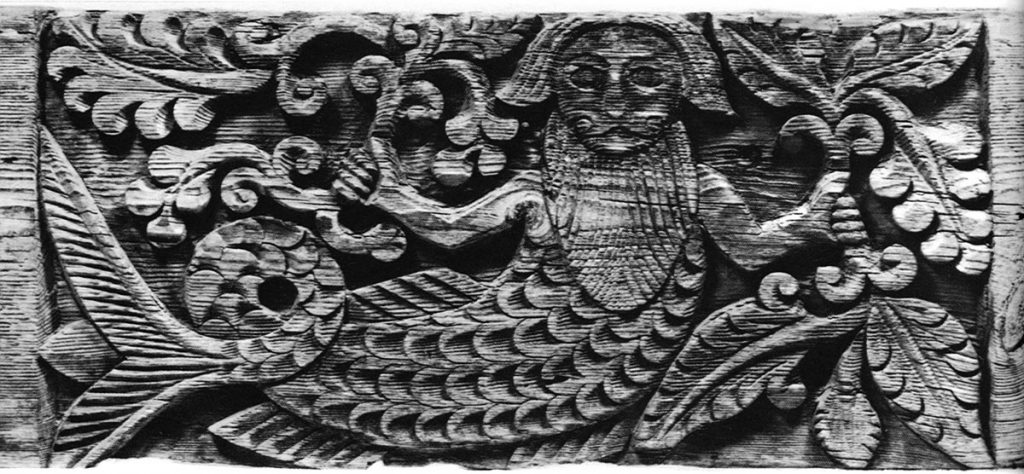
Water spirit. Front board detail. Peasant house, 1863.
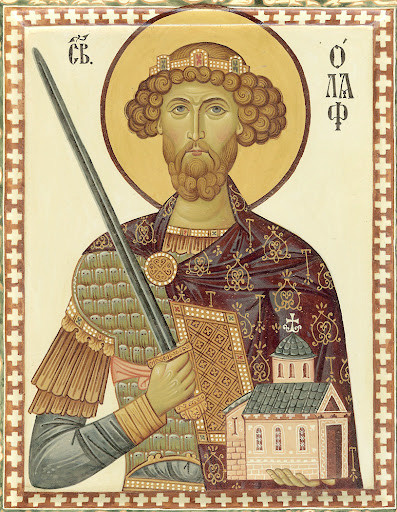
More than a millennium ago, the princes of Medieval Rus’, the lands of the East Slavs, accepted the Orthodox Christian faith. In so doing, they brought their lands (today parts of the Baltic States, Belarus, Poland, Russia, and Ukraine) into the Orthodox Christian world. Their pagan belief system, with its emphasis on the cycles and movements of the natural world, gave way to a form of Christianity rooted in powerful sacred images, ritual, and text. In this course, we will examine the evolution of the cultures of medieval Rus’ from the Viking Age, through the reign of Ivan IV “The Terrible,” and the Time of Troubles, and finally to the rise of the Romanovs and the founding of the Russian Empire in 1721. We will examine changing conceptions of time and discourses of light and darkness in works of folklore, literature, and history, as well as architecture, sacred art, and ritual, to understand the evolving forms of life and worldview in medieval Rus’. A field trip to the Museum of Russian Art (Minneapolis, Minnesota) is planned.
When we read a text that is distant from us, whether in time, space, cultural or social context, how do we overcome that distance? As writers, whether our aim is to create a text that pleases or persuades, how do we work towards closing the distance between ourselves and our readers? These are the general questions that we will wrestle with this semester. We will approach them head-on through readings from a world that will be so distant for many of us that we might not know anything about it at all — medieval Eastern Europe. In so doing, we will find out how filthy vikings really were, how much bread a squirrel skin could buy in the tenth century, and finally what was an aurochs? In the end, we will gain a better understanding of how to approach texts produced by cultures and peoples that are profoundly distant from us and become better readers and writers in the process.
In this course we will examine the rich intellectual history of the Russian Empire from its founding in 1721 to around 1850. In those years, few questions were more urgent to Russian thinkers than the place of Russia in the world. As the Russian Empire rose to prominence in the eighteenth century, the question only became more urgent — had Peter I’s Westernizing reforms put Russians on the right course or led them astray by alienating them from their cultural and spiritual heritage? We will explore this controversy through readings drawn from the debate between two opposing intellectual camps; the traditionalist Slavophiles and their reform-minded rivals, the Westernizers. In so doing, we will interrogate the dynamic relationship between religious thought and the state; art and power; and the individual and the nation in Imperial Russia.