Categories
Uncategorized

The End As We Know It

Well, we’ve made it to the end of Music 345: Paris in the 1920s and I can confidently say I know more about the subject than I did going in. From the very first day I attended, the conversation began with an idea of nationalism: us vs. them, or in this case, France versus Germany. […]

Categories
Uncategorized

Blog Post 5

Write about any aspect of your current research that you find exciting, troubling, challenging, and/or illuminating. I think the most challenging part of the research is that I still don’t entirely understand the third paper and will not make an attempt to do so until at least the end of this weekend because I’m extraordinarily […]

Categories
Uncategorized

Lies That Tell The Truth

In his writings, Dorf suggests that one root of identifying an experience as “sapphonic” can be found in the idea of women opening doors that had long been closed by men. He cites that “reading Greek was a transgressive act for women.”1He continues to suggest that the Princesse de Polignac and her circle reading Plato […]

Categories
Uncategorized

On Othering and Music

It is always easiest to exoticize and revel in the newness of an art form that is “other.” While one might enjoy the art form, if thoughts of the artist are rooted in deeply problematic beliefs, it is difficult to treat admiration of the art form as love. On reflecting upon Andre Levinson on Dance […]

Categories
Uncategorized

Landowska: An Intimate Conversation

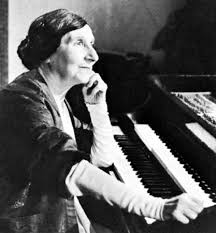
One of the most promising sources on Wanda Landowska is a collection of writings detailing her thoughts on both modern music and music of the past. Through quotes and correspondence, her life is revealed as Landowska shares snapshots, like reviews of the latest Stravinsky symphony and communications with Francis Poulenc. Landowska on Music, edited by former assistant […]

Categories
Uncategorized

Who Is In? Who Is Out?

In order to have a nation, one must firstly decide who is and is not a part of it. Who is in? Who is out? In Imagined Communities, Anderson introduces the idea that a nation is “imagined as both inherently limited and sovereign.” It is up to the members of the nation to define their […]