Throughout this course I’ve continued to gain new insights into the idea of modernism in Paris in the 1920s. The readings for our very first day of class discussed Taruskin’s assessment of the idea of lifestyle modernism in Paris, a movement away from romanticism towards something more deliberately shallow.1 The new generation of composers and artists in 1920s Paris wanted to disown their predecessors for a modernist lifestyle.2 This lifestyle popularized many different musical and artistic movements that were influential to the subjects of my papers.

One example of a modernist musical aesthetic was neoclassicism. Stravinsky used severe juxtaposition of patterns in his music, creating a sound that could come across as geometrical and cold to the romantic ear, but this sound was refreshing and captivating to modernist Parisians.3 Debussy understood that ‘conciseness of expression and form’ were essential to building a French sound, and continued to fight against romanticism by employing unique harmonies into his music. 4 Anti-romanticism became the modern ideal for composers in Paris, and they used neoclassicism as well as other techniques to convince the public their music triumphed over romanticism.

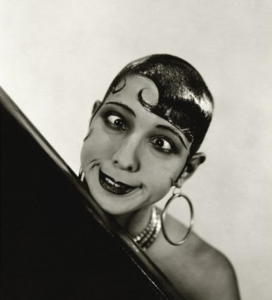
Fasciation with other cultures became a part of modernist Paris in the 1920s, with growing movements of exoticism and negrophilia. Many successful composers around this era intentionally used foreign material to appeal to the Parisians who were fascinated with the unknown. Debussy heard gamelan at the Exposición Universal in 1900, and these harmonies became the foundations for the movement of impressionism.5 Ravel made other cultures the subject of his compositions, such as using Hungarian gypsy music as a vehicle for virtuosity in his violin piece Tzigane.6 Venues such as Casino de Paris, Moulin Rouge, and Théâtre des Champs-Élysées fed the mania of Negrophilia in Paris. This is best illustrated by the debut of Josephine Baker at Théâtre des Champs-Élysées and the public’s continued fascination with her, as if her perceived savagery would become something familiar, something French. 7 Perhaps the French saw this as progressive movement, because it was welcoming other cultures into Paris. However, it demonstrates a more shallow infatuation aligned with Taruksin’s assessment of lifestyle modernism, because composers and artists were taking what they want from people and cultures that have been othered, rather than considering them viable or able to speak for themselves.

The modernist movement manifested in 1920s Paris in many different ways. Modernism was informed by the development of impressionism, negrophilia, exoticism, anti-romanticism, neoclassicism, and a need for composers to find a voice that was distinctively French. Debussy and other French composers, such as members of Les Six, tried to define what French music was. It seems that French music can’t be strictly defined when each composer uses and is influenced by different elements of Parisian modernism. Perhaps this is what made this short time in Paris so influential to the development of French music and art.
4 Claude Debussy, Three Articles for Music Journals in Morgan, Source Readings in Music History, volume 7, The Twentieth Century, ed. Oliver Strunk, New York: Norton, 1998 (161-166).
5 Randles, Kathleen, and Eileen Davis. “Exoticism in the Melodie: The Evolution of Exotic Techniques as Used in Songs by David, Bizet, Saint-Saens, Debussy, Roussel, Delage, Milhaud, and Messiaen”. ProQuest Dissertations Publishing (1992), 61. http://search.proquest.com/docview/304045365/.