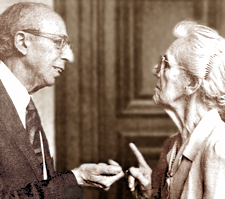
Throughout this course, one of the themes that kept arising was nationalism. The lasting national trauma from World War I was often clear in the sources we read, and clearly fed into many of the deep anxieties regarding French identities that were often in the background. One of the places this was clearest was in my research about Nadia Boulanger, who simultaneously held the view that every artist was essentially an individual, and a strong idea that artists should represent their nationality. In one particularly telling source, Annegret Fauser describes how Boulanger’s lessons, and the stereotypes of Americans in general, pushed Aaron Copland to develop his iconic “American” sound. It’s clear throughout her work that although she believed in artistic individualism, she also believed in essential national characteristics. She was not alone in this by any means. We read often about how composers of the era attempted to write music that they felt encapsulated the music of many different countries and cultures, and argued fervently that French music was essentially different from the German music they felt was too dominant. A century out and across an ocean, many of these same ideas and anxieties still feel present. One of the things I’ve connected most with about Paris in the 1920s is living in a time when it feels like the question “what is my country about and what does it mean to be a part of this place?” seems to be everywhere, and everyone seems to have a different answer.
Diaghilev’s Ballet Russes was also invested in a sort of nationalism. This was not a pro-Russian nationalism so much as a pro-French nationalism, often achieved by portraying Russia as exotic, backwards, and frightening. Ballets like The Rite of Spring show a sensationally barbaric view of Russia that served to prop up French nationalism and pride. The scandalous nature of these ballets reinforced existing ideas of Russia as a pagan, “uncivilized” place, and in turn served to soothe French anxieties about their space in the world. The Ballet Russes thrived on this model, and became very popular and influential.
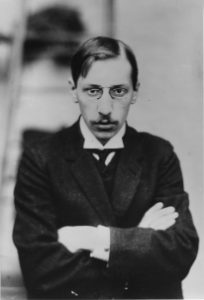
One of the other accidental through-lines in my research was that all three of my papers had some relationship to Igor Stravinsky. This was not an intentional choice, but rather that for my first two papers, many of the most compelling sources for my arguments were related to Stravinsky’s relationship to the people and institutions I researched, and for my last, our discussion of neoclassicism simply sparked an interest for me. I don’t know that I would have picked this focus had I done so intentionally because I would worry that it would narrow my view of the time period. Ultimately though, I think this focus actually helped me explore more about Music in Paris in the 1920s, because I was able to understand many of the trends and perspectives present at the time through the lens of one person. I felt that I could see the through-line of this decade much more clearly because of this focus, and I was able to explore a diverse range of topics and perspectives while staying grounded in a particular lens. Coming into this course, I knew really nothing about Music in Paris in the 1920s. After this semester, I feel able to speak confidently about both the musical content of the period, and the social and cultural trends and situations that influenced that musical content. I have also found an unexpected comfort in the later half of this semester as it occurs to me what exactly it means that all of the things we have researched happened in the wake of another major pandemic. In a time when things feel uncertain and lonely, there is a kind of hope in recognizing that people in the past have emerged from pandemics to make art, argue about its meanings, and live lives in public again. I look forward to the day we can emerge from our houses to make and witness art once again.