The danger with arguments like the ones Dorf and Moore make is the potential to reduce composers’ output to one facet of their personalities. When the composers in question are musicologically significant, it is all the more tempting to hold up parts of their character which are often criteria for marginalization as a way to say that these traits need not be marginalized. If a cultural figure of some stature is queer, why should that culture shun queerness? This is a healthy way to point out the flaws in society, but it would be too easy to say that because a composer is gay, his work is necessarily gay–or more extremely, that his work is always essentially gay. While such a hypothetical composer could exist, it would be intellectually dishonest to pigeonhole him into that role if it was not his intent.
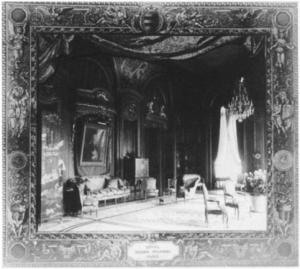
Dorf offers an alternative reading of Socrate rather than a definitive one, and I think this is a wise choice because of this crucial question of intent. In her thorough efforts to distance her reputation from that of Barney, thereby protecting herself from the ire of her peers and the harsh anti-homosexual attitudes of 1920s Paris,1 Polignac’s instruction to Satie also distances Socrate from her lesbian identity. These efforts indicate that she wanted the work to appear anything but homosexual, in order to preserve face. Even if patron and composer were aware of one another’s “precarious sexual position,”2 if the piece was designed to be asexual, then asexual it is. While the contributors would not have become asexual for the purposes of creating the piece, musicologists ought not discount their intent. That being said, the actual, private performance in Polignac’s salon could very well have been Sapphonic–but since everything the contributors said about the piece was asexual, the extant public version must be, too. Venues matter.

1. Samuel Dorf, “‘Étrange, n’est-ce pas?’ The Princesse Edmond de Polignac, Erik Satie’s Socrate, and a Lesbian Aesthetic of Music?” FLS: Queer Sexualities in French and Francophone Literature and Film 34 (2007), 96.
2. Ibid., 98.
3. Christopher Moore, “Camp in Francis Poulenc’s Early Ballets,” Musical Quarterly 95 (Summer-Fall 2012), 307-308.