Parisians were captivated by the performances of La Revue Nègre. In the presentation of the writings of critics given by Matthew Jordan, they are made to almost stumble over their words trying to describe this phenomenon, and everyone seemed to have an opinion. It drew crowds, and thus held a quality greater than that of other earlier instances of négrophilie in France.1 Many were, in some way, excited by the life in the act, some going so far as to say it is natural for people and France has encouraged repression of these emotions.
“These blacks, who are grotesque caricatures, have rhythm not only in their legs, but in their skin, which shudders from their heels to the roots of their hair. They sing with a very sure sense of harmony, making us think that they remember their native forest . . .” — Bizet2
“. . . shaken by a kind of rhythmic convulsion and twisted by the most comical contortions.” “sure and delicate taste.” — Patin3
“. . . dissonances at which one undulates and which you flex as if someone pulled one of your nose hairs.” — Léon-Martin4

I find it unlikely that music critics like Berlioz and Patin were entranced by the music of Josephine Baker’s act with any appreciable consideration for her race. The very fact that they approach the music with a dual mentality of primitivism and modernity in mind is suspect. These two extremes suggest a direction–development toward the modern. If critics truly valued the contributions of Baker and jazz more generally as entertaining (regardless of whether it was a worthy thing to involve France in), it seems they ought to use less loaded terminology.
Primitivism had been seen in French discourse before. Stravinsky’s Sacre du Printemps features musical textures far more brutal than any involved in a piece Baker would have performed. Still, Bizet bemoans the rhythmic feeling and “sorrow” present in jazz as distinctly not French. This sort of rejection is similar to the rejection of Debussy by Cocteau for being too Russian,5 in that it is an othering likely made to create a French identity by expressing what it is not. Perhaps, then, just as Russian music is respected as an art form of its own, so too is jazz respected? This is more plausible, as there were contemporary arguments over whether Baker’s is even authentic jazz; authenticity often connotes value. Still, a synthesis of the views expressed by critics suggests otherwise, especially when considering how many who initially enjoyed the act resorted to stereotypes to define it later.
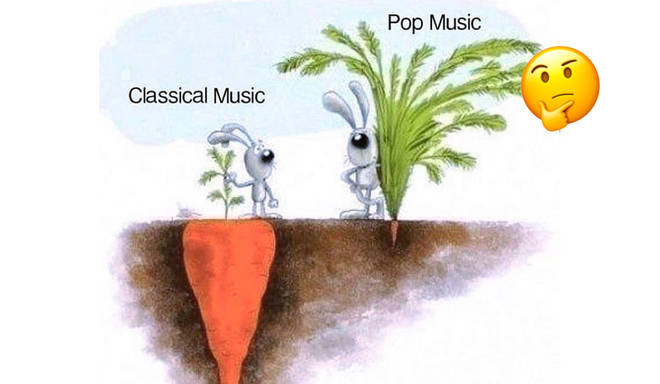
Berating the sensibilities of past critics requires that we do better. As students steeped in Western Classical music, it is important not to dismiss the music of other cultures, including cultures here in the United States. The music played in clubs may provoke a reaction in some not unlike the reactions of these 1920s critics–that it is primitive, inspiring baser instincts, and is not worthy of “our” art–but such a response would only be to repeat the errors of the past.
1 Matthew Jordan. Le Jazz: Jazz and French Cultural Identity (Urbana-Champagne: University of Illinois Press, 2010), 108-109.
2 Ibid., 105.
3 Ibid., 106.
4 Ibid., 108.
5 Cocteau, Jean. 1926. The Cock and the Harlequin, 2nd ed. 14-21.