Sitting in Rolvaag Library at St. Olaf College in the year 2020, gazing down my nose at Parisian fascination with La Revue Nègre feels like an absurd task. My disconnect with the time and place in which Joséphine Baker began performing in France feels insurmountable. I wasn’t alive in 1920! I’ve only been to Paris once and all I saw was the train station! However, this is the tricky nature of questioning societies that we are not part of, it opens our own experiences and biases up to critique. In other words, it is not enough to say that something is racist if we don’t understand the ways in which that racism was created, and the ways in which it functioned. It is not enough to say something was racist if we also don’t acknowledge our own racism.
The French critical conversation and concern over Joséphine Baker’s performances at La Revue Nègre in Paris was consumed by attraction. Critic André Levinson’s famous quote that Joséphine Baker was “the black venus that haunted Beaudilare”1 is the description given by someone who had no real interest in getting to know Baker as a person. Desire is akin to repulsion, a sense that there is something that cannot be touched, controlled, tamed.
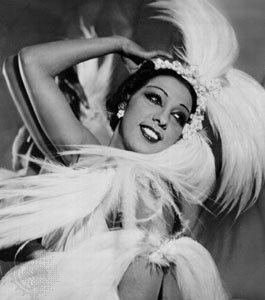
Where I find Levinson’s critique of Baker most interesting is in his awareness that La Revue Nègre was staged, but also his firm belief in the essential nature of black performers2 in relation to rhythm, writing “the really devil-ridden today are those European idlers who passively give themselves up to an enjoyment without setting up any barriers to its atavistic, demoralizing appeal.” And claiming that Baker’s dancing was “an innate gift, not a conscious art.”
SO which is it, André? Designed or innate?
I think the answer is that its whatever categorization best served Levinson’s definition of the “French” identity. That Levinson, a Russian who fled to France3, even felt the need to speak against the obsessed French audiences at La Revue Nègre implies that they existed in full force, invested in the idea that what they were watching was a true representation of some sort of African identity. I have no doubt that they loved watching Joséphine Baker perform. I don’t know if they loved Joséphine Baker.
1André Levinson, “The Negro Dance: Under European Eyes,” in André Levinson on Dance: Writings from Paris in the Twenties, ed. Joan Acocella and Lynn Garafola (Hanover: Wesleyan University Press, 1991), 69-75.
2Matthew Jordan, Le Jazz: Jazz and French Cultural Identity (Urbana-Champagne: University of Illinois Press, 2010), 102-111.