Germaine Tailleferre was born Germaine Taillefesse on April 19th, 1892. She attended the Paris Conservatory where she met the other members of Les Six. Tailleferre was the only female member of the group. Coincidentally, Tailleferre is the least documented, and some might say appreciated, member of Les Six, despite her active participation in the French musical scene during her lifetime.

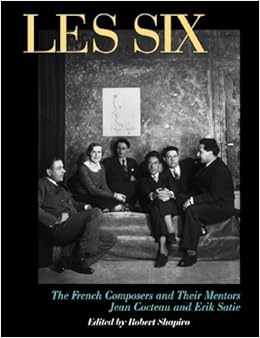
To find biographical information about Tailleferre, I find myself turning time and time again to Robert Shapiro’s Les Six: The French Composers and their Mentors Jean Cocteau and Erik Satie. 1 Robert Shapiro is a scholar very dedicated to Les Six, having published an entire book on Germaine Tailleferre, 2 as well as written many articles for various publications. Shapiro’s thirty-three page biography of Tailleferre’s life includes insights on her childhood, her years with Les Six, and her later years apart from the group, including her marriage and death. This is significant because most of the literature I have interacted with only mentions Tailleferre in relation to Les Six. Shapiro also sees a need for a clear biographical account of Tailleferre’s life, describing her memoirs as, “sketchy as frequently inaccurate” (252). Why he feels this way or the justification he has for these feelings are unclear, but Shapiro does a good job of telling Tailleferre’s story. He clearly has fond opinions of her music as well, explaining, “Her unique approach runs like a thread throughout her work. Her music is permeated with a distinctive, often luminous vision, as its inherent ideas are merely clothed in carefully chosen stylistic guises” (260). Now that doesn’t sound like a hater to me.
Perhaps the most interesting part of Shapiro’s chapter on sexual prejudice and how it manifested between Tailleferre and other members of Les Six. For example, Shapiro gives a quote on Tailleferre’s music from Poulenc, stating, “How sweet and gifted she was! She still is, but I somewhat regret that, through an excess of modesty, she was never able to exploit all the possibilities in herself as could, for example, someone like Marie Laurencin, who knew how to extract the most from her feminine genius” (262). Shapiro goes on to explain that, while pieces like Concertino pour harpe et orchestre would “satisfy Poulenc’s requirements for ‘feminine genius,'” (263), male composers of the time clearly had not been exposed to Tailleferre’s ambitious and substantial works, such as Concerto pour deux pianos, choeur et orchestra.