In my reading of the articles by Christopher Moore1 and Samuel Dorf2, I read one argument that was well thought out and tied together sources with ease, and I read one argument that was confusing, and didn’t seem to wholly follow one train of thought.
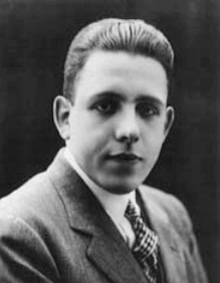
Let’s begin with the former, Christopher Moore’s article on Francis Poulenc and how his sexuality found its way into his composition. From the first paragraph, which has a great hook, the argument and line of thought is seamless and clear. He starts with background on Poulenc’s sexuality, specifically answering the question of why his sexuality was not studied by musicologists for some time after Poulenc’s death. This strengthens his argument, which is based on the fact that Poulenc’s sexuality found its way into his music in a non-obvious manner. The inconspicuousness of Poulenc’s homosexuality in his music, therefore, is a reason for the subject being brushed under the rug for so long.
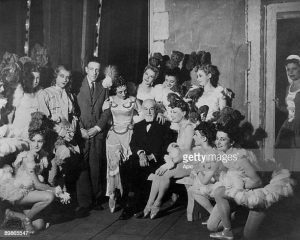
The parts of his arguments that I found most compelling is the section on connecting his sexuality to Les Biches3. The way Moore has it set up is seamless. He first talks a bit about Poulenc in his social life. “The composer [Poulenc] was not always so exhibitionistic, but his party antics did typically revolve around sexual play and ambiguity, including ostentatious displays of cross-dressing.”
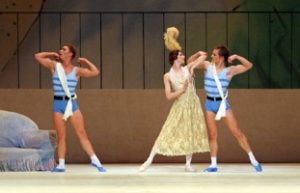
After explaining Poulenc’s party life, bursting at the seems with examples of his homosexuality in play, he goes on to speak about the ballet Les Biches. “Parties and cross-dressing emerge as a major theme in Poulenc’s ballet Les Biches“. This paragraph then goes on to speak of Poulenc’s work on the choreography of Les Biches, in which he spent “72 rehearsals and close to 250 hours of work” on along with Bronislava Nijinska, the official choreographer of the show. He mentions that what came out of their work is “an overture and a succession of eight tableaux depicting various scenes of coquetry and seduction.” Moore does a great job in explaining how Poulenc’s sexuality is undeniable through Les Biches. How could musicologists have ignored this for so long?
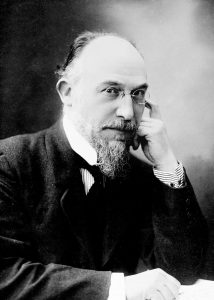
Looking at Samuel Dorf’s text, however, does not provide me with a compelling argument, at least not one that fits together. Dorf spends the beginning of the text talking about how Socrate4
by Erik Satie “appeals to a particular proto-feminist and lesbian aesthetic”.
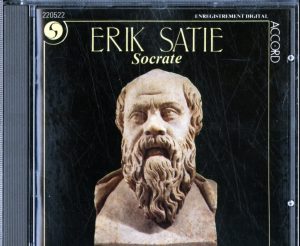
That seems like a compelling argument, until he starts to bring in pieces of evidence that just don’t fit together in the feminist/lesbian lens that he’s created. Specifically, these are the excerpts he takes directly from Erik Satie. “These short ex- cerpts from Satie’s writings introduced a brand new set of adjectives with which to describe the work: white, pure, antique, gentle, free, clear, classical, simple, modern, cubist, precise, and new. He posits these descriptions against words like: troublesome, Russian, Persian, and Asian” While this quote was the selling point of a whole section of his text, it doesn’t feel to me like the adjectives help his argument. The piece may be modernistic and free, but this is not equivalent to a “proto-feminist and lesbian aesthetic”.
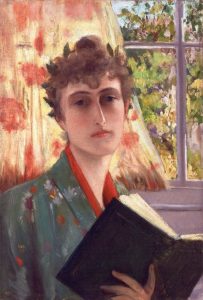
The problem I have with much of the article is that while Dorf seems to be arguing that both Socrate and Princesse de Polignac propel Sapphonic and lesbian idealisms, I am only convinced by the latter half of the argument. I think he goes a little too far in his analysis of Socrate through a proto-feminist and lesbian lens.