The argument that Moore made about Poulenc is much more convincing than Dorf’s argument on the Princesse de Polignac. While gender and sexulity both played an important role in patronage and composition, Moore’s stance on how it impacted Poulenc’s life was much more thorough.
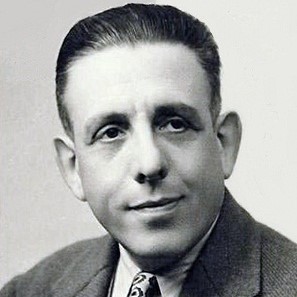
Poulenc’s sexuality was an “open secret” of sorts. He confided in his close friends and created works in the camp aesthetic to prevent harmful circumstances or the threat of being outed. Moore also states that Poulenc’s compositions often defied any specific categorization which, Moore argues, unintentionally draws attention to what Poulenc is trying to hide. This argument to prove that Poulenc’s sexuality is apparent in his compositions is very convincing and makes it seem inescapable.
Moore’s interpretation of Poulenc’s sexuality and how it intersects with his music also stays relatively objective throughout. One aspect that keeps it objective is his score analysis. It provides us with primary evidence behind Moore’s argument and allows the reader to be guided through the music and the explanation behind Poulenc’s decisions simultaneously.
With all of this being said about Moore, I have to say that Dorf’s argument regarding the Princesse de Polignac isn’t one to reprimand, it’s just not as thorough.
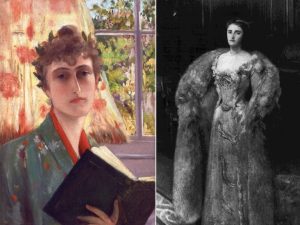
What was most convincing in Moore’s article (the score analysis) is absent from Dorf’s. However, Dorf does dive deeply into the piece Socrate which allows for a deeper understanding of one song versus a shallower understanding of multiple. Dorf also uses anecdotal and historical evidence to suggest the Princesse’s sexuality played a large role in her patronage. Things such as the Greek language being inherently sapphic and the fact that the piece was written for four sopranos. But my main gripe with this argument is that it only focuses on one piece. This could lead the reader to believe that this piece’s correlation to the Princesse’s sexuality is merely circumstantial and doesn’t carry over to her other commissions.
Both authors make compelling claims, but Moore’s thoroughness in examining multiple facets of Poulenc’s life and music makes his argument about Poulenc’s queerness much more justified and persuasive.
Sources referenced
Moore, Christopher. “Camp in Francis Poulenc’s Early Ballets.” The Musical Quarterly, vol. 95, no. 2/3, 2012, pp. 299–342, http://www.jstor.org/stable/41811629. Accessed 14 Apr. 2022.
Dorf, Samuel. Queer Sexualities in French and Francophone Literature and Film, BRILL, 2007. ProQuest Ebook Central, https://ebookcentral.proquest.com/lib/stolaf-ebooks/detail.action?docID=556497.