Negrophilia, according to avant-garde artists in Paris 1920s, was loosely defined as some vague type of love/fetishization of black culture and art. I would argue that this so-called “love” that was felt was not anything close to the definition that some of our 21st-century souls would define it. I mean, let’s be completely honest, this argument cannot be made unless we define love itself. For me, the French négrophilie strays away from what I would define as “love”, outgoing concern, respect, and sensitivity for others. I would argue that it even went beyond a harmless, fetish epoch. An obsession. An infatuation. A fascination.
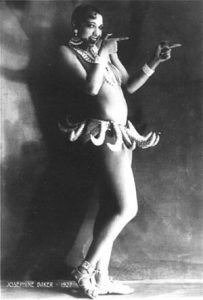
There was little consent in the sheer appropriation of the black culture at that time. It must be acknowledged that the avant-garde modernists were experts in “exploiting the instruments of self-promotion”, whether that was scandal, controversies, or publicity stunts1. Sure, some of this art was being not only acknowledged but also displayed at the Expositions Universelles 1878, 1889, and 1900, but one must ask about the specific motivations behind these displays. Was it merely just that? A display of pure fondness, love, and respect for these cultures? Or was it simply masking and glorifying the French colonial empire? I would argue the latter. Intentions have been communicated as possibly purer than they seem on the surface, like stating that eventually these cultures were viewed in a light that went beyond “burgeoning ethnographic sciences.” However, even if the conclusion is that they “finally” started to view it as art and not as food for research, the feeling, and motives that drove that train seemed to be encapsulated in a type of fetishization and watered-down picture of these cultures.
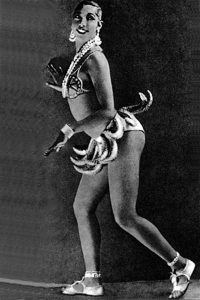
The “negroness” of music did not exist on its own, and it was often diminished of its full value by the comparisons made alongside it. Their motivations for comparing these different styles of music seem to complicate the argument. It’s important to note that these muddy motivations were also partnered with the fact that many French Avant-Garde modernists received their initial experiences with “jazz” from white interpreters, so please keep this euro-centricity in mind. This speaks miles. So not only do the motives come into question, but the sources and authentic perspectives come into question. Even when the “Negro” music is compared to the music of Bach, is this any better?2 This comparison between “Negro” and Bach music seems unfair and, perhaps, condescending. Is this comparison trying to tell us that “Negro” music is “just as good”? Or, more likely, reducing its full value by throwing it in with the dead White guys? I sadly don’t have the answer. It does not have me convinced that these motives were only laced with love and respect for the many cultures that they were trying to put in a vacuum and simply start making comparisons with the Western canon.
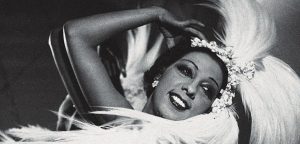
Pieces are missing. Perspectives are limited. Motives are messy. Although, it can be painfully clear that French négrophilie was anything but love: the outgoing concern, respect, and sensitivity for others. From generalizations to dangerous comparisons, nothing in those motivations point to a sense of *my personal definition* love.
1 Bernard Gendron, “Negrophilia,” in Between Montmartre and the Mudd Club: Popular Music and the Avant-Garde (Chicago: University of Chicago Press, 2002), 107,.
2 Glenn Watkins, Pyramids at the Louvre: Music, Culture, and Collage from Stravinsky to the Postmodernists (Cambridge: Harvard University Press, 1994), 112-18.