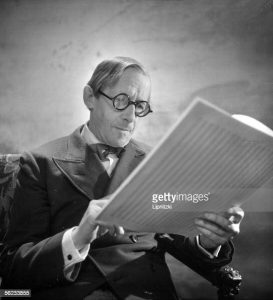
Désiré-Émilie Inglebrecht was a conductor, composer, and writer, debuting as a conductor in 1908 in Paris. He was a student of the Paris Conservatoire, and debuted at the Théâtre des Arts, later known as the Opera, and went on to have a long and exciting conducting career in Paris before his death after WWII in 1965. He was close friends with Debussy, and this friendship was important to his own composition and conducting style. His most prestigious conducting positions were at the Théâtre des Champs Elysées beginning in 1913, the Opéra-Comique in 1924, and the Paris Opéra during WWII. His piano suites titled La nursery garnered attention from the composing world as well. His final works are his famous Vézelay (1954), a Requiem, composed during the second World War, and an opera-ballet called Le chêne et le tilleul (1960) that are considered his most masterful works.
Since Inglebrecht isn’t someone we’ve discussed much in class so far, I needed something familiar that we had already learned about to relate him to–like the Théâtre des Arts that he debuted at. This institution rang a bell because of readings like Simeone’s “Paris – A Musical Gazetteer,” which provides a brief history of music in Paris during this time period. It neatly outlines the conception of most prestigious musical organizations in Paris in the early 1600s, as well as how they developed through the centuries into the Opera that Inglebrecht conducted. This gives context on what kinds of organizations Inglebrecht was a part of as his career began and continued through two world wars and a modernist/Impressionist art movement in Paris.
Simeone’s writings also talk about the Expositions Universelles, which involved a lot of large music organizations in Paris like the Théâtre des Champs Elysées, which Inglebrecht was conducting in 1913.

Although it’s not stated in this specific article, I wonder if Ingelbrecht was involved in these expositions. The Société Nationale de Musique was formed around the same time that Inglebrecht debuted, and since he was friends with Debussy, a member of this society, and a busy conductor and supporter of “French” music at the time, I am eager to find sources that link Ingelbrecht to these nationalist organizations that we’ve been so heavily discussing in class.