As a pianist, I’ve been playing works by Debussy, Ravel, and Satie for a long time. I’ve always enjoyed the music and it always stuck out to me as unique from other genres of classical music, but it wasn’t until this class that I understood why. From nationalism, to exoticism, to class, race, gender, and sexuality, music in the Parisian 1920s was unlike the different forms of classical music that came before it.
One of the clearest ways that Parisian 1920s music diverges from previous Romantic styles can be seen in the French search for national identity. In pre-World War I Europe, tensions between Germany and France were high, and music became an outlet for those worries and anti-German feelings. In pieces like Debussy’s Golliwog’s Cakewalk, or Satie’s vexations, it was clear that these French composers were influenced by German music and copied it in the most disrespectful way. They made light jokes out of serious music, which evolved into the new French impressionist sound. Eventually, the French used this sound to make their mark in classical music. Music escaped from concert venues into salons, private events, and other parts of daily life (for the elite classes of course). The Ballet Suedois became a threat to the Ballet Russes, and French concert pieces started becoming more trendy than traditional symphonies. Whether or not they succeeded in winning over Germany, the French definitely made a name for themselves when it came to classical music.
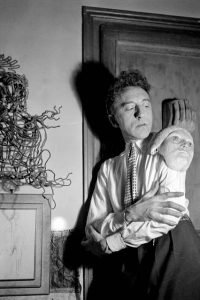
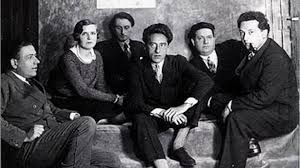
Jean Cocteau became one of the most influential writers during this time, which helped these French composers to really take off. After publishing Le Coq et L’Harlequin, it became clear that French art, music, and literature was threatened by Germany and they needed to revamp their reputation in the arts. Les Six, a group of six influential composers, became Cocteau’s prodigés, and they really built the empire that was Music in Paris in the 1920s. Each one contributed pieces that caused uproar in the public view, and Cocteau ate it up. From concert music, to Auric’s film music, to Tailleferre’s salon music, Les Six started to infiltrate the musical scene in Paris.
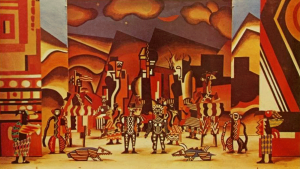
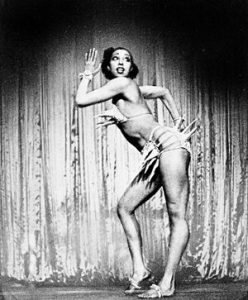
The French desire to be unique and revolutionary brought them to incorporate “scandalous” things. Using music from Africa and South America as composer influences? Listening to Jazz Music? Creating ambiguously gendered characters in ballets? SCANDALOUS. Bringing in performers like Josephine Baker, who was not only a sexualized woman, but she was black, making her “exotic.” The outrageous costumes worn by performers and in Ballets were another non-musical aspect of the culture of 1920s Parisian music. Taking influence from Picasso and surreal and dada artists, the art surrounding these musical performances made it even more bizarre and drew loads of attention.
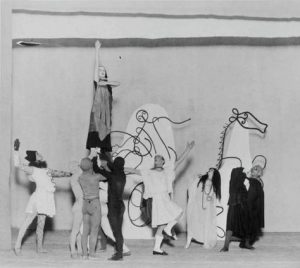
My main takeaway from this course was that music in Paris in the 1920s was rarely about the music itself. These French musicians wanted to stand out, make statements, and make a name for themselves and their country. Testing the boundaries when it came to symphonic music, operas, and ballets was the only way that Parisian music became so unique and seen in the lens that we see it in today. French pride, sexuality, exotic ideas, and elitism were just the start of creating an art and music scene so bizarre. Everything had a purpose, whether discreet or indiscreet, and Parisian 1920s composers knew how to express it.