A lot of things were going on the night of November 2, 1928. Verdi’s “La Traviata” was being performed at the Met in New York City, Henry Cowell programmed Ive’s first violin sonata on a New Music Society concert in San Francisco, and the opera house in Paris was performing a new work by Stravinsky called Le Baiser de la fée. Meaning “The Fairy’s Kiss,” this one-act ballet is comprised up of four movements:
- Sinfonia
- Danses suisses
- Scherzo (Au moulin)
- Pas de deux
- Adagio
- Variation
- Coda
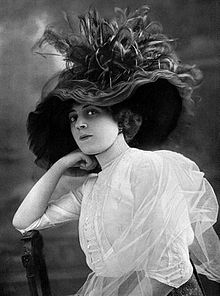
As I’ve been researching this work, a name kept popping up: Ida Rubinstein. This beautiful, remarkable, intelligent woman was also a badass. Born into a wealthy Russian family, Rubinstein started her career as an actress, dancing in “indecent garb”. Her brother-in-law was so appalled that he literally had her committed to an insane asylum to save the family’s honor (her family back in Russia heard the news and quickly got her out). After this fiasco, she married her first cousin in order to have a little more freedom. By the age of 26 she was performing the title role of Cleopatra at the Paris ballet in 1909. In 1911, Rubenstein left the Paris ballet to start her own dance company (YESS female entrepreneurs!). Rubinstein was bisexual, and in 1911 she began a three-year affair with the painter Romaine Brooks, who created several striking portraits, including one of the dancer as a nude model for Venus. Rubinstein actually caught the eye of several artists, and was a muse for sculptors, painters, and costume designers. She went on to work with Debussy, starred in several hipster silent films, and started working with her awesome female friend Bronislava Nijinska. Together, they funded and choreographed a little ballet of Stravinsky’s called Le Baiser de la fée in 1928. The rest is history.
Sources
Crane, Debra & Mackrell, Judith. The Oxford Dictionary of Dance. Oxford University Press, Oxford, 2000.
https://imslp.org/wiki/List_of_works_by_Igor_Stravinsky