In order to understand the arguments made by Samuel Dorf about Erik Satie’s Socrate, it’s important to talk about Elizabeth Wood’s conception of Sapphonics. Wood’s central conceipt in her essay Sapphonics that it makes sense to have a lens for understanding music through sexuality, and that there exists a transgressive form of communication in music between lesbians (and implicitly, bisexual women as well). Since it is a lens through which people experience and understand life, it is a relevant lens to understand music through. Wood’s understanding and description of Sapphonics is useful, and follows many of the established trends of analysis of literature through a lesbian view. I’m particularly convinced by Wood’s description of women’s voices, especially Emma Calvé’s, and the “Sapphonic effect”. Wood’s study describes and defines an element of music that I had experienced previously, and even had conversations about, but had never had the tools to really understand or name it. To me, a definition is useful if it gives a name and description to a previously unnamed experience, which this certainly did for me. 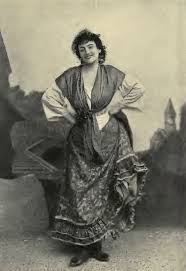
Samuel Dorf’s essay “Etrange, n’est-ce pas?…” makes sense of Satie’s Socrate through Sapphonics. Satie was commissioned by the Princesse de Polignac, and Dorf understands Socrate as being a narrative about Polignac and her social circle and as employing sapphonics to do so. I’m somewhat convinced by Dorf’s argument, but at times felt the essay itself straining a little to prove the point. While I agree with the main argument of the essay, one piece of evidence from Dorf actually served to convince me less of his point. Dorf writes about how Satie’s oratorio-like work differs significantly from the piece Polignac envisioned despite the fact that they worked on the early stages together. While I think other pieces of evidence back up the general claim, I found myself questioning whether Satie could have really employed true sapphonics without Polignac’s direct input. I don’t necessarily have a definite judgement that men cannot write using sapphonics (and that it’s then on the performer to do so if they do so), but I think it’s worth questioning, especially in the context of this essay.
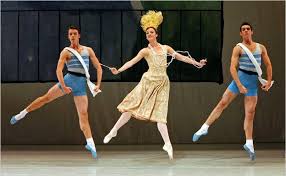
I found myself quite convinced by Christopher Moore’s essay Camp in Francis Poulenc’s Early Ballets, which argues that Poulenc used camp aesthetics (among many other techniques) to make allusions to queerness in his early ballets, particularly Les Biches and Aubade. Moore presents ample evidence, most convincingly excerpts from letters Poulenc wrote about both ballets, and the works of other scholars like Lynn Garafola who argue similar ideas. No one piece of evidence makes the argument persuasive, but the variety and quality of evidence, as well as the straightforward presentation makes it seem almost obvious that Poulenc was trying to communicate his own sexuality through camp in his early ballets. I was particularly struck by the use of the fact that Poulenc said Les Biches was based on the “erotic atmosphere” of his younger years. On its own, this piece of evidence doesn’t necessarily signal anything, but Moore contextualizes it in such a way that it was exceedingly clear that this means Les Biches is about “unconventional sexualities”.
Works Cited:
Samuel Dorf, “‘Etrange, n’est-ce pas?’ The Princesse Edmond de Polignac, Erik Satie’s Socrate, and a Lesbian Aesthetic of Music?” FLS: Queer Sexualities in French and Francophone Literature and Film 34 (2007), 87-99.
Christopher Moore, “Camp in Francis Poulenc’s Early Ballets,” Musical Quarterly 95 (Summer-Fall 2012), 299-342.
Elizabeth Wood, “Sapphonics” Queering the Pitch: The New Lesbian and Gay Musicology (New York: Routeledge, 2006).