Both Dorf and Moore argue retroactively for queer readings of pieces that have been typically interpreted in more traditional ways. Both are convincing to some degree, but Dorf less than Moore. I find Dorf to be less persuasive because his argument is more assumption based than fact based.1 He derives his queer reading from two main premesis. First, Socrate is different from the rest of Satie’s output: less exoticized and more simple than his other Greek inspired works (90). Second, that Polignac, who was known to be lesbian, comissioned and collaborated heavily with Saite on the libretto for Socrate. He deems this important to this work because “restraint and decorum were paramount to [both Satie’s and] Polignac’s survival in Paris” (93). These are interesting ideas, but really don’t prove anything because they rely more on what Socrate isn’t than what it is. It isn’t like Satie’s other works, and it isn’t overtly sexual because the composer and commissioner couldn’t afford for it to be societally.
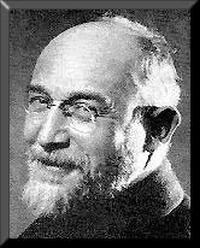 Erik Satie, https://interlude.hk/erik-satie/
Moore’s argument, on the other hand, is much more persuasive because he uses many primary source examples that directly support his thesis (through his interpretation of course).2 He uses many anecdotes that all point towards very specific tendencies of camp, or “lies that tell the truth” (303), which mainly center around the musical and personal theme of costume parties and cross dressing (304). Moore also uses interpretations of works from those Poulenc worked closely with (318) as well as critics from the time (305). Moore addresses musical evidence, including who Poulenc quoted and the music and literature that influenced him (309-316). Most convincing, were the quotes of Poulenc talking about his homosexuality and how much these pieces meant to him in a letter to Diaghilev about Les Biches choreography (306-307) and various letters about Aubade (320). Moore’s argument was much more successful than Dorf’s because he drew information from many sources that came from a wide variety of places. Furthermore, Moore’s argument is based on realities rather than inferences from the lack of a reality.
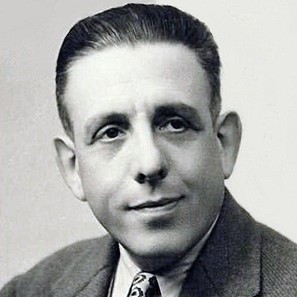 Francis Poulenc, https://www.seattlechambermusic.org/composers/francis-poulenc/