I think it is undeniable that Satie’s Socrate and some of Poulenc’s ballets—such as Les Biches and Aubade—are better understood through a queer reading. From my readings, I find that Moore’s analysis of camp in Poulenc’s early ballets makes a stronger argument than Dorf. I agree with Dorf in that a queer reading of Socrate helps understand its style, but it also inadvertently makes excellent points about the influence of patronage in composition.
In my understanding, Dorf is essentially positing that though Satie’s Socrate can’t readily be classified in terms of style it can be better understood by looking at Satie and the Princesse de Polignac’s ideas of queerness and the setting for which the piece was originally presented.

I agree with Dorf that a queer reading sheds some light on the nature of the piece, but I do think the article potentially overstates the importance of it. In general, I think that Dorf proved well that the Princesse de Polignac had extraordinary influence on the piece’s composition. He cites many biographies, and it is salient that he depicts an accurate representation of their persons. However, in my estimation he seems to come up short in fully supporting his statement about the piece’s nature. He uses evidence that is believable, such as Sappho’s non-erotic poems and the idea of women reading Greek being inherently Sapphonic. Yet, this evidence is somewhat tangential in my mind, but definitely not invalid. I just feel he neglected to explore some other avenues in what influenced Satie’s compositional style and didn’t provide enough evidence to remove my doubts about the numerous other cultural factors that could affect his compositional style.
Moore’s analysis of camp in Poulenc’s early ballets makes a strong case.
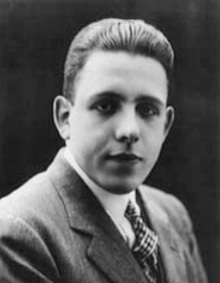
He distinctly proves through many primary sources Poulenc’s sexuality and expression and provides a clear connection to how Poulenc depicted them in his ballets. He also provided great analysis of the ballets and specifically how Poulenc both subverted and confirmed heteronormative expectations. I didn’t find much to disagree with in this paper, as it was well sourced and discussed, but rather I would be interested to see potentially more research in how camp was depicted in Poulenc’s other compositions. The article left me wondering if Poulenc maintained some of his subterfuge in less salient pieces. Because I agree with Moore that camp is essential to these ballet’s identities in the way Poulenc conceived them. Here’s a production of Poulenc’s Les Biches:
https://www.youtube.com/watch?v=W5_iYhXAFa4
Looking at the two articles, I think Moore was more successful, but I do believe he was also more set up for success. I find it commendable that Dorf found and used a relatively new musicological lens to examine a complex and distinctly unflamboyant piece to shed new light on it. I think there is a lot more evidence to prove Poulenc’s queer identity shaped his ballets over proving the influence of patronage and the patron’s sapphonic aesthetic. So, even though I felt Dorf’s article lacked a proper thesis and the evidence felt narrow, I do think he raised a lot of excellent points and helped me appreciate the piece in a new way.
In conclusion, while imperfect, in my estimation both Moore and Dorf provided sound evidence that one should take into account an individual’s identity and their music.
Sources
Samuel Dorf, “‘Étrange, n’est-ce pas?’ The Princesse Edmond de Polignac, Erik Satie’s Socrate, and a Lesbian Aesthetic of Music?” FLS: Queer Sexualities in French and Francophone Literature and Film 34 (2007), 87-99.
Christopher Moore, “Camp in Francis Poulenc’s Early Ballets,” Musical Quarterly 95 (Summer-Fall 2012), 299-342.
Elizabeth Wood, “Sapphonics,” in Queering the Pitch: The New Lesbian and Gay Musicology (New York: Routledge, 2006), 27-37.