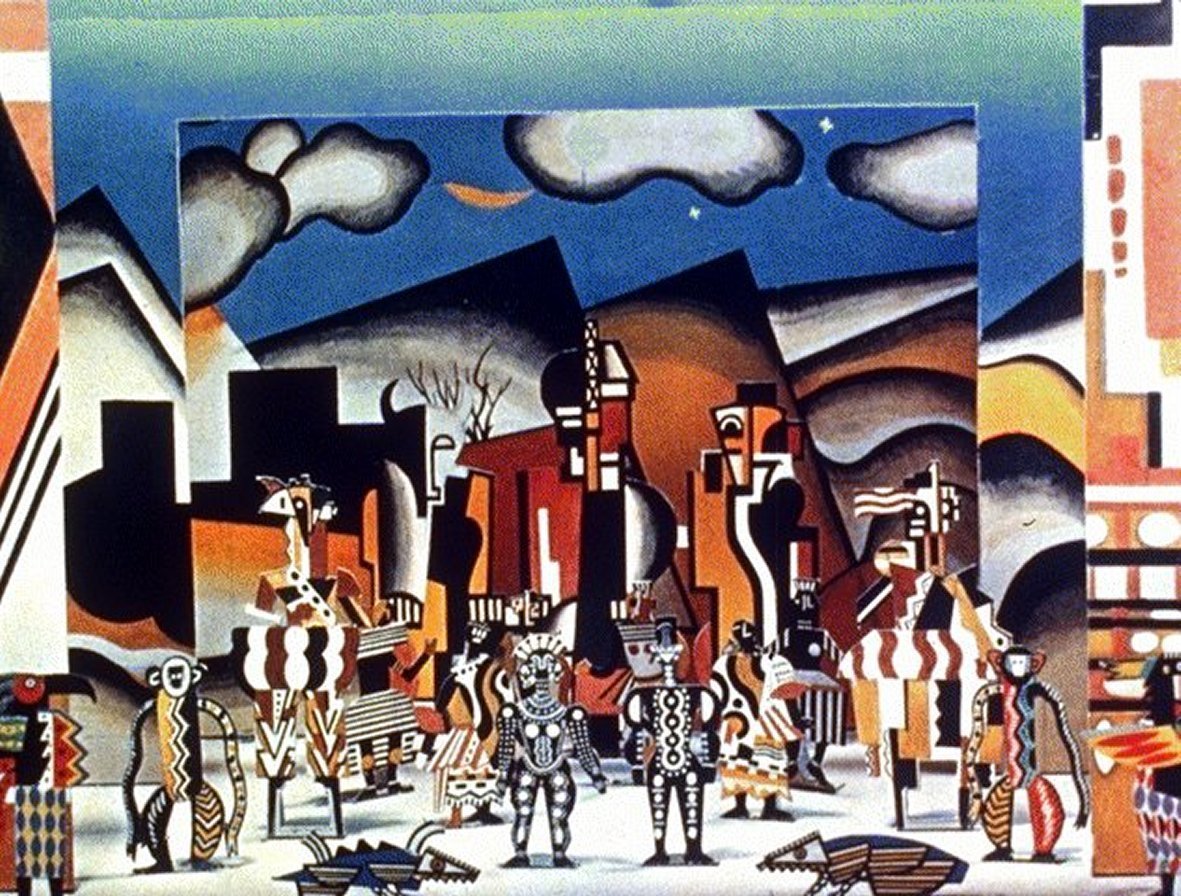
In discussing the Negrophilia in Paris in the 1920s, we need to take a step back and first define what was going on. Negrophilia is a pretty vague concept and many of the audiences and critics in Paris in the 1920s had very different views from one another on the emerging influence of jazz on French culture. Negrophilia encompassed those who legitimately enjoyed and respected artists from Africa or the United States, as well as those who reduced them to racist stereotypes, and everything in between. The common theme is that nobody could reject the popularity of “Negro music” on both the popular culture and the high art being created in France
When reading both secondary and primary sources on Negrophilia, it can be difficult to really understand what people thought about the music that was becoming more and more popular. There were both so many different opinions at the time and one wonders if it is possible to take their writings at face value or if there is a deeper meaning they are trying to convey. One of the ways I’ve found that can be useful in discerning the opinions of Parisians on the jazz that was becoming so popular is to see how they compare it to the folk music from France and other parts of Europe and examine the differences in their conflation of African music and jazz and European folk music and art music.
To begin we can look at the opinion of a well-known critic like Jean Cocteau, he viewed European folk music as an essential source for the rejuvenation of European art music (particularly in France itself) but as a distinct tradition.1 His views on jazz weren’t as nuanced. Cocteau was one of the main players involved in the production of La Creation du Monde, which used jazz music but all the costumes and visuals were primitivist, highlighting his conflation of two distinct traditions.2 The other opinion from our readings comes from Andre Levinson, a French journalist on dance. In his review of “Negro Dancing” he compares it mainly with European folk dancing, emphasizing the differences between ballet (the high art) and folk dance (primitivist). He puts jazz in the primitivist category, with no aspect of high art in it.3 Parisians in the 1920s definitely associated jazz with a kind of primitivist art form, sort of like the folk music of Europe, but in their eyes there is no parallel “high art” that jazz can lend its styles to, this only comes from works like La Creation du Monde or Rhapsody in Blue written by white composers.
1 Jean Cocteau, The Cock and the Harlequin, 2nd ed., trans. Rollo Myers (London: Verso, 1926), 20.
2 Bernard Gendron, “Negrophilia,” in Between Montmartre and the Mudd Club: Popular Music and the Avant-Garde (Chicago: University of Chicago Press, 2002), 105.
3 André Levinson, “The Negro Dance: Under European Eyes,” in André Levinson on Dance: Writings from Paris in the Twenties, ed. Joan Acocella and Lynn Garafola (Hanover: Wesleyan University Press, 1991), 70.