Is it possible to have a musical nationalist identity? In 21st century United States of America, with streaming services exposing avid listeners to everything from Dolly Parton to Kendrick Lamar, I don’t believe it is possible. This place we call a nation is too diverse. We have too many subgroups and cultures within our “nation” to have one cohesive tonal identity. Can the same be said for early 20th century France?
By 1920, France had experienced over 100 years of identity trauma. The French revolution, Napoleonic wars, Prussian wars, and finally World War I, the French people, especially French artists and musicians, were seeking to define French culture. This response to globalist involvement resulted in a musical nationalist movement. However, as one might expect, there was disagreement about what is truly French. Let us examine some specific ideas:

Claude Debussy, widely considered by both contemporaries and historians as the leading French composer of the late 19th and early 20th century, claimed himself to be a composer of French nationalist music. He claimed pieces like Pagodes and Arabesques to be of the French spirit through their sensitivity and clarity. However, Jean Cocteau believed that Debussy’s music had too much German and Russian influence,1 and that Satie (see Parade ) was the flag bearer of French music.
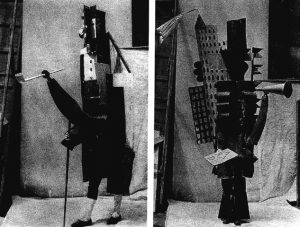
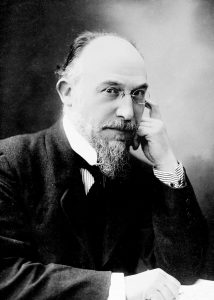
Cocteau and Satie believed in a less existential and more rooted music that you could swim in.2 These two personal examples synthesize the growing divide in French musical culture. While most French composers respected tradition and great baroque composers like Couperin (See Ravel’s Le Tombeau de Couperin), Lully, and Rameau,3 still others were pushing past into more uncharted territory. Debussy himself believed that traditional harmony should be abandoned in schools.4
Examining these composers, two primary ideologies emerge: a conservative style valuing structure and form and a progressive style valuing freedom from tradition. But even pushing against this duality were Les Six who while inspired by neoclassic identities sought to escape older constraints. And through this freedom, each of the six found their own distinct path forward their own idea of a nationalist music.
So, did the French composers of the late 19th and early 20th centuries cement a French nationalist music? Sort of. As evidenced above, the French could not agree on one particular style. In that sense, they obviously were not successful. However, they were able to mostly differentiate (with some exceptions) French music from that of the Germans and Russians, which was mostly the goal from the outset.
Just as we can’t define one musical American identity in the present, neither could the French in the early 20th century. However, the French were able to take control of their music in interesting ways. Through these musical debates and conflicts, French music took on new life producing many excellent and diverse works. Perhaps, the goal should not be to construct one nationalist musical identity, but rather embrace diversity and see what sparks.
Footnotes
1 Jean Cocteau, The Cock and the Harlequin, 2nd ed., trans. Rollo Myers (London: Verso, 1926).
2 Ibid.
3 Barbara Kelly, “History and Homage,” in Cambridge Companion to Ravel, ed. Deborah Mawer (Cambridge: Cambridge University Press, 2000).
4 Claude Debussy, Three Articles for Music Journals in Morgan, Source Readings in Music History, volume 7, The Twentieth Century, ed. Oliver Strunk (New York: W. W. Norton, 1998).