Understanding musical identity is a fraught conversation between idealized perceptions about shared values, and constructed sonic markers interpreted by the whims of composers, musicians, writers, and the public. For French musical figures and writes between 1870 and 1920, some major forces at play in these conversations were lingering tensions with the German empire, and eventually the advent of WW!, or la premiere guerre mondiale.
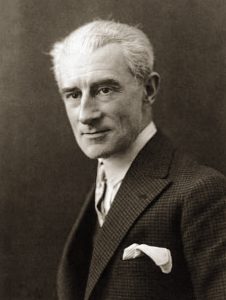
For Maurice Ravel1, this understanding of a musical identity was shaped by his notions of national consciousness, a force shaped by personal reaction, sensitiveness, emotion, an ultimate source of inspiration. In a speech2 at Rice University in 1928, Ravel argues “the national consciousness of musicians distinctly German is expansive, while our French consciousness is one of reserve.” This statement stems from Ravel’s own subtle distaste of a style in contrast with his national identity, German, and his admiration for a French compositional style. Ravel’s 1918 composition, Tombeau de Couperin echoes this investment in a sound of “reserve” while referencing the European tragedy and horror that was WW1.
While war may not currently loom large in the American consciousness, despite the fact that we have been at war since 2001, these questions about what institutions and issues determine American identity ask many of the same questions as Ravel in 1928.
An American institution that is deeply focused on individualism and national identity is the movie industry. One of the traditional markers of progress and identity is the Academy Awards show, the ultimate declaration of what the movie establishment considers relevant and valuable. In past years the hashtag #OscarsSoWhite was made in response to an overwhelmingly white nominee list and voting committee. This year’s Best Picture, Parasite directed by Bong Joon Ho which also took 5 other awards, encapsulates the uneasiness about not only if the Academy Awards are an international project, but how we sort art into categories.
In an interview, Bong Joon Ho remarked “The Oscars are not an international film festival. They’re very local” in response to a question about the precedent for the Academy Awards when it comes to Korean films. A college professor in Seoul made the important point,“People around the world could relate to the polarization it describes,” said Huh Eun, a retired college professor in Seoul and a fan of Mr. Bong’s films. “The film was an extended metaphor for how the deepening rich-poor gap in advanced capitalist societies breeds blind hatred and crimes.”
While Parasite is undoubtedly a Korean film, its powerful depiction of the horrors of capitalism were instantly recognizable by viewers around the world, a distinct response that questions the distinct characteristics of nations in the face of capitalism.
That the debate around Parasite echo the debates around French musical identity should come as no surprise. Emotion inspires, even if it is the product of huge ideologies or projects such as capitalism or war.